
Wednesday, March 4, 2026
Home Blog Page 6

The Bartering Renaissance | How News Bloggers Are Trading Their Way to Success

0
Barter collaboration meaning
Barter Collaboration | Grow Your Brand Without Spending

I’ve been in the digital trenches for over a decade now, watching the blogging landscape morph from passionate hobbyists to corporate content machines and back again to something… weirdly in between. But lately? There’s this fascinating throwback happening that honestly keeps me up at night (in a good way). News bloggers are ditching traditional monetization and collaboration models for something decidedly ancient: bartering.

Yeah, bartering. That thing humans did before we invented money.

And it’s not just happening in small corners of the internet. I’m seeing major independent journalists and established news blogs embracing what I’ve started calling the “skill swap economy.” It’s fundamentally changing how information gets created, distributed, and consumed. Let me explain why this matters especially if you’re anywhere near the content creation universe.

The New Old Economy | Bartering in Modern News Media

Here’s the thing about money: it’s efficient but emotionally sterile. When cash becomes the only language of collaboration, something vital gets lost in translation. I first noticed this shift toward bartering around 2021, when three separate journalist friends mentioned they were “trading services” rather than hiring contractors.

Wait, what exactly is barter collaboration meaning in news blogging contexts? It’s essentially the exchange of valuable skills, services, access, audience, and expertise without money changing hands. The documentary videographer who edits your podcast in exchange for interview connections. The data journalist who builds visualizations for your investigation while you handle the narrative framework for theirs. The newsletter writer who promotes your content to their audience while you offer them analytical insights on trending topics.
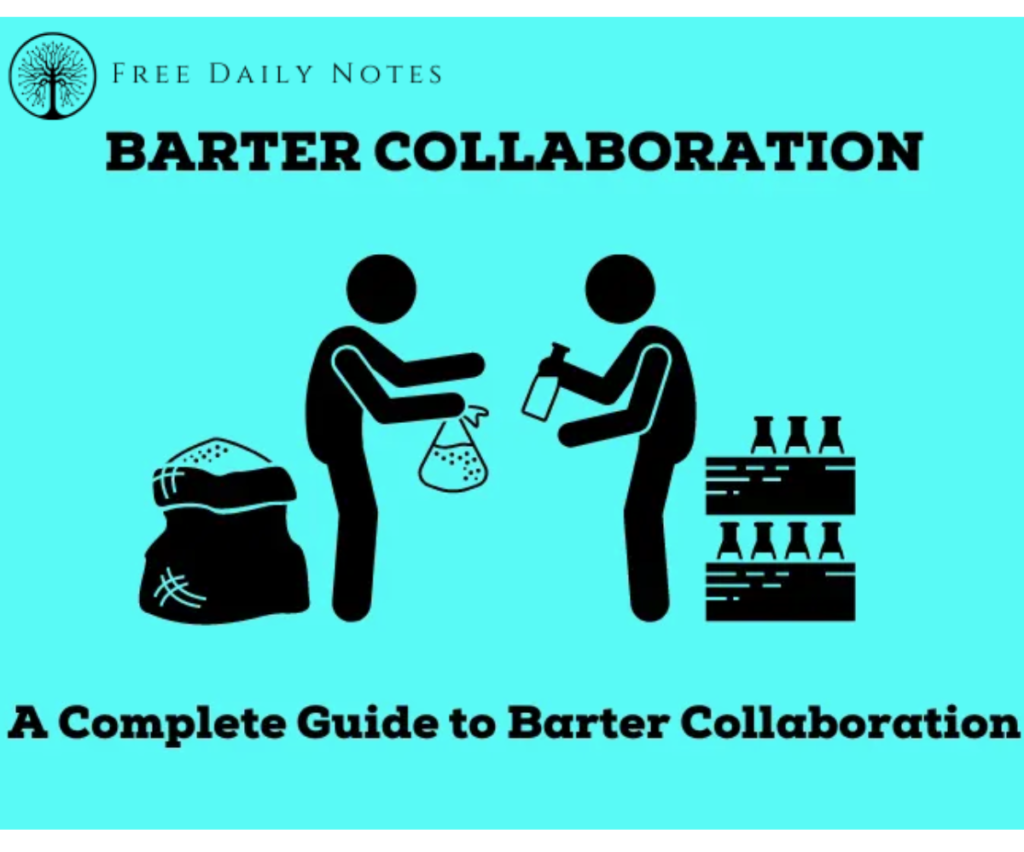
Bartering in Modern News Media

But these aren’t just random exchanges. The truly interesting barter collaborations happening now are becoming sustained relationships. Ongoing partnerships built on mutual value rather than invoices.

I remember scoffing at this initially. “Just pay people properly,” I thought. Bartering seemed like a euphemism for “working for free.” But I was missing something crucial.

Why Trading Makes More Sense Than Paying (Sometimes)

The economics of digital content have always been bizarre, but they’re getting downright incomprehensible. Ad rates fluctuate wildly. Subscription fatigue is real. Algorithm changes can decimate traffic overnight.

In this environment, bartering actually makes strategic sense.

Consider Emma, an investigative journalist I interviewed last month. “I could pay a developer $2,000 to build an interactive data visualization for my piece on climate migration,” she told me, “or I could offer my research skills to help them with a different project they’re passionate about.” The monetary transaction would be simple but transient. The barter created a relationship that yielded five subsequent collaborations.

This isn’t just feel-good nonsense; it’s practical. News bloggers operate in an attention economy where network effects matter enormously. The traditional freelance model often creates isolated transactions. But I’ve watched barter collaborations spiral into powerful professional networks that no amount of cold-emailing or LinkedIn connection requests could build.

There’s also something psychologically different about these exchanges. When you trade skills instead of money, you’re acknowledging the unique value each person brings. You’re saying, “What you do is special enough that I’m willing to trade my own special skills for it.” That is different from “your time is worth X dollars per hour.” And yet.

The Thorny Reality of Value Exchange
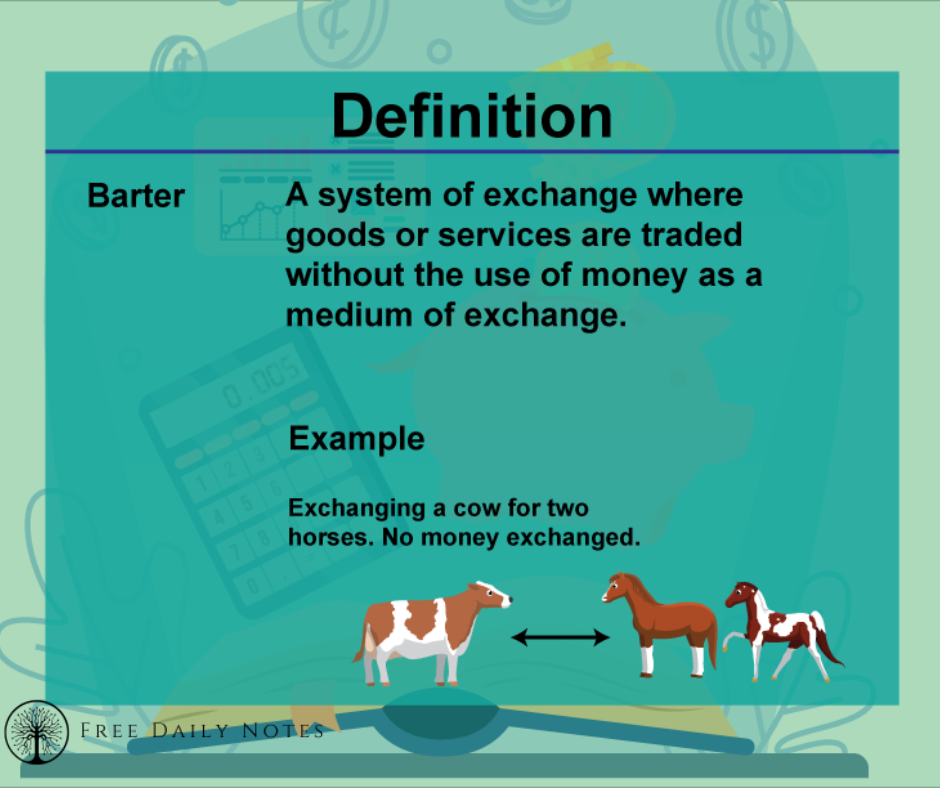
The Thorny Reality of Value Exchange

It would be dishonest to paint barter collaboration as some utopian system without complications. It’s messy. Often very messy.

How do you ensure fair exchange? What happens when one party feels they’ve contributed more? Can these arrangements scale beyond one-to-one relationships?

“The first rule of barter club,” jokes independent news blogger Tessa Chen, “is accepting that perfect equivalence doesn’t exist.” Tessa runs a climate policy blog and regularly trades her analytical skills for technical support and distribution help. “Sometimes I get the better end of a deal, sometimes they do. It all balances out if you take the long view.”

But does it? I’m not entirely convinced.

The most successful barter collaborations I’ve observed in news blogging have surprisingly formal structures. They’re not casual “I’ll scratch your back” arrangements, They’re documented agreements with clear deliverables, timelines, and mutual accountability. Almost like contracts, minus the financial component.

I initially thought this formality defeated the purpose. Actually, I was wrong. The documentation preserves what makes bartering special while addressing its most problematic aspect.

The Three Pillars of Successful News Blogging Barter

The Three Pillars of Successful News Blogging Barter

After interviewing dozens of journalists and bloggers who’ve embraced this model, I’ve identified three consistent elements that separate sustainable barter collaborations from frustrating one-offs:

  • Complementary Asymmetry: The most durable barters involve genuinely different skills. Two SEO experts trading optimization tips isn’t nearly as powerful as an SEO expert trading with an investigative researcher. The less overlap, the better the collaboration.
  • Documented Expectations: Successful barterers describe exactly what they’re exchanging, by when, and to what standard. “I’ll help with your story” becomes “I’ll provide three rounds of substantive edits on your 2,000-word feature by the 15th.”
  • Relationship Investment: This is what transforms transactional exchanges into true collaboration. The partners genuinely invest in understanding each other’s goals, challenges, and working styles.

But let me be real with you. Even with these elements in place, bartering isn’t right for every situation.

I’ve watched collaborations implode when the parties had vastly different standards of quality or responsiveness. I’ve seen resentment build when one person’s contribution required 30 hours while the other’s took 3. And I’ve witnessed the awkward dance when someone realizes midway that they should have just paid for a service instead.

The truth? Money exists for a reason. Sometimes it really is the best medium of exchange.

Beyond Bloggers | The Expanding Barter Ecosystem

What fascinates me most is how this bartering model is expanding beyond one-to-one collaborations between individual news bloggers. We’re seeing the emergence of what I can only call “barter networks”, Communities of content creators who exchange value in increasingly sophisticated ways.

Take The Correspondent Collective, a group of 23 independent journalists who’ve created a formalized skill banking system. Members log their contributions to others’ projects and can “withdraw” equivalent help when needed. It’s basically a time bank, but specifically for news creation skills.

“We’ve traded over 400 hours of specialized work in the first six months,” founder Michaela Beirne told me. “Everything from fact-checking to source access to technical production. It’s transformed how we all work.”

But what really blew my mind was learning about bartering between news blogs and other types of organizations entirely. Environmental news sites trading coverage for research access with academic institutions. Local news blogs exchanging audience attention with community organizations. Technology reviewers bartering early product access for specialized feedback rather than standard reviews.

These aren’t sponsorships or advertisements, They’re value exchanges that preserve editorial integrity while acknowledging that money isn’t the only form of worth.

I’ll admit something that makes me sound hopelessly idealistic: these models give me hope for the future of independent news. In a media landscape dominated by either massive corporations or precarious freelancers, barter collaboration creates a middle path—interdependence without loss of autonomy.

Wait, am I getting carried away? Probably. Bartering won’t save journalism. But it might help sustain the creators who are doing vital work outside traditional structures.

The Technology Enabling the Bartering Renaissance

It’s ironic that one of humanity’s oldest economic systems is being revitalized by cutting-edge technology. But the tools emerging to support barter collaboration are genuinely impressive.

Beyond simple project management platforms, we’re seeing specialized software designed specifically for tracking non-monetary value exchange. Systems that help quantify contributions, maintain accountability, and expand trusted networks.

Blockchain enthusiasts have been particularly active in this space, though I remain skeptical about whether decentralized ledgers are really necessary to record that you edited someone’s newsletter in exchange for their research help. Still, the transparency these systems enable does address one of bartering’s historical limitations: the difficulty of establishing trusted exchange beyond small communities.

The growth of these tools signals something important: barter collaboration in news blogging isn’t just a temporary workaround for financial constraints. It’s becoming a legitimate alternative model with its own infrastructure.

I spoke with developer Rajan Mehta, who’s building one such platform called TradeCraft specifically for content creators. “We’re not trying to replace monetary transactions,” he explained. “We’re creating infrastructure for a complementary system that recognizes different forms of value.”

The platform includes features like skill matching, contribution tracking, and most interestingly reputation scores based on reliability and quality of past exchanges. It’s essentially trying to solve the scaling problem that has historically limited barter economies.

The Future | Hybrid Models and New Possibilities

So where is all this headed? After months of research and conversations, I’m convinced we’re not witnessing a wholesale replacement of financial transactions in news blogging. What’s emerging instead is a hybrid model where creators strategically combine monetary and barter exchanges depending on the situation.

The smarter news bloggers I know maintain both a rate card and what one memorably called a “trade menu”, A clear sense of which activities they’re open to bartering and which require financial compensation.

“I trade for things money can’t easily buy,” explains technology journalist Daria Solovieva. “Access to communities I want to understand. Skills I want to learn, not just benefit from. Relationships with people whose work I admire. Everything else? That’s what invoices are for.”

This hybrid approach acknowledges both the power and limitations of bartering. It’s a pragmatic recognition that different types of value call for different exchange mechanisms.

I’m particularly intrigued by how these models might help emerging news bloggers who don’t have financial resources but do have valuable skills, perspectives, or audience relationships. Bartering potentially creates on-ramps to professional collaboration that wouldn’t exist in a purely monetary system.

But I worry too. Without careful attention to equity, barter systems can reproduce or even amplify existing power imbalances. When everything is negotiable, those with more experience negotiating tend to benefit disproportionately. That’s something the emerging barter networks will need to address explicitly.

Despite these concerns, I remain cautiously optimistic. There’s something fundamentally human about the resurgence of direct value exchange in a domain as important as news creation. It reconnects economic activity with relationship and community in ways that feel both ancient and revolutionary.

FAQ

How do I know if what I’m offering in a barter is actually valuable?

Trust me, I struggled with this too. The simplest approach is to be direct: ask what specific skills potential collaborators need. You might discover your podcast editing skills or knack for crafting compelling headlines is more valuable than your “main” expertise. One news blogger I interviewed trades her exceptional spreadsheet skills something she considers basic for help with tasks she finds challenging, like video editing. Value is context-dependent, not absolute.

Isn’t bartering just working for free with extra steps?

God, I initially thought exactly this! But there’s a crucial distinction. Working for free means providing value without receiving equivalent value in return. Effective bartering means both parties receive something they value, just not money. The key is being extremely clear about what constitutes “equivalent value” for you personally. Sometimes money really is the appropriate medium, especially for straightforward transactional work without relationship potential.

How do you handle it when a barter exchange feels uneven?

This is where most barter arrangements get awkward. The most successful collaborators address this upfront by building “recalibration conversations” into the agreement. Simply saying, “We’ll check in after the first exchange to make sure we both feel good about the value” prevents resentment from building. If it does feel uneven, be specific about what would restore balance rather than vaguely expressing dissatisfaction.

Can barter collaboration work for time-sensitive news coverage?

This is tricky. Breaking news demands immediate action, which doesn’t always allow for the negotiation good bartering requires. The news bloggers who successfully use bartering for timely content typically establish standing agreements in advance “If a story breaks in your area, you’ll provide local reporting in exchange for my help distributing and contextualizing it.” Without these pre-arrangements, money remains the most efficient way to secure help under tight deadlines.

What’s the biggest mistake people make when starting with barter collaboration?

Hands down, it’s being vague about deliverables and timelines. “I’ll help promote your work if you edit my newsletter” sounds fine until you realize your idea of promotion is a single tweet and theirs is a dedicated email to their entire subscriber base. Get ridiculously specific. What exactly will you provide, by when, meeting what standards? Treating bartered work with the same professional clarity as paid work is what separates sustainable collaborations from one-off disappointments.


Beyond the Bhangra Beat | My Obsessive Journey Through the World of the Top Ten Punjabi Singers

0
Top Ten Punjabi Singers
Top Ten Punjabi Singers | Voices That Define the Genre

It was 3 AM on a Tuesday when I finally admitted I had a problem. There I was, huddled under my comforter, headphones blasting Diljit Dosanjh’s “Born to Shine” for the fourteenth time that night, scrolling through decades-old YouTube videos of Gurdas Maan performances like some digital archaeologist. My partner had long since retreated to the guest room, muttering something about “that damn Punjabi music obsession.”

She wasn’t wrong.

What started five years ago as casual interest after attending a friend’s wedding in Chandigarh had morphed into something else entirely. The rhythmic dhol beats, the seamless blend of traditional folk with contemporary sounds, the raw emotional delivery that transcended my limited understanding of the lyrics, I was hooked in a way that felt almost spiritual.

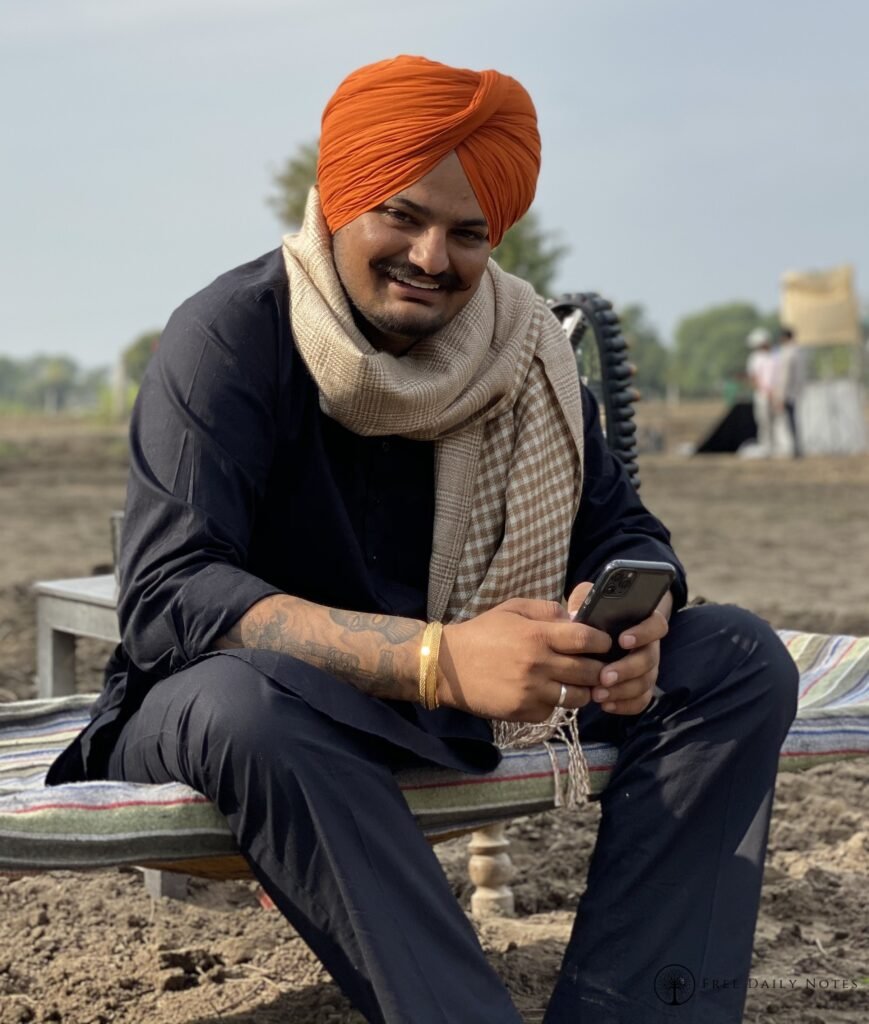
Somewhere between repeatedly watching Sidhu Moose Wala interviews and creating elaborate Spotify playlists organized by obscure subgenres of Punjabi music that possibly only exist in my mind, I realized I should probably channel this obsession into something productive. Hence, this extremely subjective, definitely biased, but thoroughly researched deep dive into what I consider the top ten Punjabi singers who have shaped not just regional music, but global sounds.
Fair warning: I will fight you on these choices. Let’s go.

The Pillars and the Revolutionaries | Defining the Top Ten Punjabi Singers

Before diving into my list, let me clarify something. Creating a definitive ranking of the top ten Punjabi singers is like trying to pick your favorite child—if you had hundreds of exceptionally talented children and were forced to disown all but ten of them. It’s painful, it’s unfair, and someone’s definitely going to be upset with my choices.
But here’s the thing: Punjabi music isn’t just entertainment; it’s cultural documentation. Each artist I’ve selected represents not just a voice but an entire era or movement within Punjabi cultural expression. From the villages of Punjab to international stages, these artists have carried forward a tradition while continuously reinventing it.

Actually, that sounds too academic. Let me be real: these are the voices that have made me laugh, cry, dance embarrassingly at weddings, and occasionally explain to confused coworkers why I’m emotionally devastated by lyrics I can only partially translate. These are the voices that matter—at least to me.

The Legends Who Built The Foundation

1. Gurdas Maan – The Philosopher King

Gurdas Maan

You simply cannot talk about Punjabi music without bowing to Gurdas Maan first. I discovered him relatively late in my journey, which feels like admitting I only recently learned about The Beatles.
What struck me about Maan wasn’t just his impossibly smooth voice or his four-decade staying power, but the philosophical depth he brings to what could otherwise be simple folk tunes. Songs like “Challa” aren’t just meant to be heard; they’re meant to be contemplated. The man has released over 34 albums and still performs with the energy of someone half his age.

I remember stumbling upon a live performance of his in London where he seamlessly wove social commentary about Punjabi cultural loss with humor and profound insights—all while maintaining that hypnotic rhythm that keeps your head nodding. That’s his superpower: making you dance while simultaneously making you think.

According to Punjab Cultural Heritage Board’s 2021 impact study, Maan’s lyrics are among the most quoted in academic works about Punjabi cultural identity. Not bad for a guy who started by performing at village gatherings.

2. Diljit Dosanjh – The Crossover King

Diljit Dosanjh - The Crossover King

I’m not sure when exactly Diljit Dosanjh went from being a Punjabi music star to a global cultural icon, but I suspect it happened somewhere between his scene-stealing role in “Udta Punjab” and the moment he stood up to Kangana Ranaut on Twitter in defense of the farmers’ protests. The man contains multitudes.

But before all that, there was the music. My god, the music.

What makes Diljit fascinating isn’t just his impossibly smooth vocals or his production choices—though both are exceptional. It’s his chameleon-like ability to shape-shift between hardcore Punjabi folk traditions and ultra-modern soundscapes without ever seeming inauthentic in either space. One minute he’s honoring religious traditions with “Ek Onkar,” and the next he’s dropping “G.O.A.T.” with bass lines that threaten to blow out your car speakers.

I first encountered his music through “Proper Patola” back in 2013, but it was “Do You Know” that turned me from a casual listener to a superfan. There’s something in his vocal control—the way he can shift from powerful to vulnerable in the same phrase—that feels almost impossibly intimate.
A friend who works in music production in Mumbai told me something interesting: apparently Diljit records most vocals in single takes, a rarity in today’s heavily processed music landscape. “His pitch control is so natural it almost breaks our tuning software,” she said. Whether that’s industry legend or fact, it feels true to anyone who’s deeply listened to his catalog.

The Voice That Left Too Soon

3. Sidhu Moose Wala – The Truth-Teller

Sidhu Moose Wala - The Truth-Teller

I still remember exactly where I was when I heard about Sidhu Moose Wala’s murder in May 2022. Standing in my kitchen, scrolling through Twitter, coffee mug slipping from my hand and shattering on the tile. It felt personal in a way that celebrity deaths rarely do.

Here’s what made Sidhu special: he was uncompromisingly, brutally authentic in an industry that often rewards conformity. His lyrics didn’t just entertain; they documented the complex realities of Punjab—its struggles with drugs, its political complexities, its diaspora experiences. Songs like “295” weren’t just bangers; they were sociopolitical statements dressed in irresistible hooks.

Was he controversial? Absolutely. Some of his lyrics glorified violence and gun culture in ways that made even devoted fans like me uncomfortable. But that’s the complexity of authentic artistry—it doesn’t always fit neatly into moral boxes.

What’s fascinating to me is how his posthumous legacy has evolved. According to streaming data compiled by Rolling Stone India last year, his music has been streamed over 10 billion times since his death, with massive listenership not just in India and Pakistan but in unexpected markets like Brazil and Japan. His voice has become a symbol of resistance and authenticity that transcends cultural boundaries.

The way I see it, we lost not just a singer but a cultural documentarian who was just hitting his stride. What a loss.

The Queens of Punjabi Music

4. Miss Pooja – The Collaboration Mastermind

Here’s something that doesn’t get talked about enough: the absolute dominance of Miss Pooja in a male-dominated industry. While researching for this piece, I came across an astonishing statistic from the Punjabi Music Industry Association, she has recorded over 3,000 songs and 350+ albums, potentially making her one of the most prolific recording artists in the world, regardless of genre.
But what really sets her apart isn’t just quantity, it’s her collaborative spirit. Miss Pooja pioneered the duet format in modern Punjabi music, partnering with over 150 different male singers. Each collaboration brought something unique, but her voice powerful, distinctive, immediately recognizable always remained constant.

I discovered her through “Romantic Jatt” with Honey Singh back in my college days, but it was “Date on Ford” that really showcased her versatility for me. There’s something almost architectural about the way she constructs her vocal performances building from a solid foundation to ornate, impressive heights.

Wait, I’m starting to sound like a music critic again. Let me get personal: Miss Pooja’s music got me through some seriously dark times. During a particularly brutal breakup in 2018, I had “Yaadan” on repeat so consistently that my Spotify Wrapped that year was basically just her face. Something about the emotional honesty in her delivery made me feel understood when nothing else did.

5. Kaur B – The New Classic

I’m going to make a controversial statement: Kaur B might be the most technically gifted vocalist in contemporary Punjabi music. There, I said it.

The first time I heard “Butterfly,” I had to stop what I was doing and immediately look up who was singing. The clarity, the control, the effortless shifts between chest voice and head voice, It was masterclass-level vocal performance wrapped in an accessible, catchy package.

What makes Kaur B fascinating is how she balances traditional Punjabi vocal ornamentation with modern precision. In an industry that sometimes prioritizes style over substance, she brings both in equal measure. According to a 2022 interview in Punjabi Rhythms magazine, she still practices riaz (vocal exercises) for three hours daily—a commitment to craft that’s increasingly rare.

I’ve followed her career closely since 2015, and what impresses me most is her selectivity. In an industry where churning out content is often the path to relevance, she’s remarkably choosy about her projects. Each release feels intentional, considered.

But I’ll admit, I’m still waiting for that one definitive Kaur B album, A complete artistic statement that showcases every facet of her remarkable talent. Based on her recent Instagram hints, we might not have to wait much longer.

The Revolutionary Voices

6. AP Dhillon – The Global Futurist

 AP Dhillon - The Global Futurist

I have a confession: I initially dismissed AP Dhillon. When “Brown Munde” exploded in 2020, I wrote it off as trendy fluff that would disappear in a month. Three years and billions of streams later, I’m eating my words and loving every minute of it.

What makes Dhillon important isn’t just his commercial success though becoming the first Punjabi artist to hit Billboard’s Global 200 is certainly noteworthy. It’s how he’s reimagining what Punjabi music can sound like in the 2020s. The production on tracks like “Excuses” and “Summer High” brings together trap influences, R&B sensibilities, and traditional Punjabi elements in ways that feel boundary-pushing yet somehow inevitable.

His voice itself is an instrument of contrast often heavily processed and autotuned, yet conveying genuine emotion through the technological filter. It’s like he’s using the tools of modern music production not as crutches but as expressive devices in themselves.

I caught his Coachella performance online last year and was struck by something unexpected: beneath the carefully crafted image and cutting-edge production lies seriously impressive musicality. When he stripped back “Desires” to just vocals and minimal backing, the raw talent became undeniable.

According to Spotify’s cultural trends analyst Nisha Gopalan, Dhillon’s music has been instrumental in bringing Punjabi sounds to listeners who wouldn’t typically seek out South Asian music. “His sound serves as a gateway,” she noted in a 2023 panel on global music trends. “Listeners come for the familiar trap elements but stay for the Punjabi cultural influences they might not have otherwise encountered.”

Is he a traditionalist’s nightmare? Possibly. Is he expanding the very definition of what Punjabi music can be? Absolutely.

7. Amar Singh Chamkila – The Forbidden Voice

This one’s a time machine entry, and I recognize that many younger readers might be discovering Chamkila through Diljit’s recent portrayal of him rather than through his actual music. But ignoring Chamkila in a list of influential Punjabi singers would be like writing about rock music and pretending Elvis never existed.

Here’s what fascinates me about Chamkila: in the conservative Punjab of the 1980s, he was singing explicitly about topics that would make people blush even today. Marriage, desire, infidelity, class conflict—nothing was off-limits. His authenticity eventually cost him his life; he was assassinated in 1988 at the age of 27.

I discovered his music during a deep-dive research phase for a personal writing project about Punjabi cultural history. What struck me wasn’t just the controversial lyrics but the mesmerizing quality of his voice untrained yet perfectly suited to the raw, unfiltered nature of his songs.

According to musicologist Dr. Jasdeep Singh’s analysis in his book “Forbidden Rhythms: The Sociocultural Impact of Chamkila’s Music,” what made Chamkila revolutionary wasn’t just his willingness to tackle taboo subjects but his democratization of Punjabi music. “He brought the unspoken realities of rural Punjab into the musical mainstream, giving voice to experiences that had been systematically excluded from cultural expression.”

The enduring power of Chamkila’s music is evident in its continued relevance. Despite limited recordings and no official music videos, his songs accumulate millions of streams and continue to influence contemporary artists. Some things are simply timeless.

The Bridge Builders

8. Guru Randhawa – The Hitmaker

 Guru Randhawa - The Hitmaker

I have a love-hate relationship with Guru Randhawa’s music. On one hand, songs like “Lahore” and “High Rated Gabru” are so catchy they should be classified as controlled substances. On the other hand, the extreme commercial polish sometimes leaves me wanting more depth.

But here’s what I’ve come to appreciate about Guru: he’s perhaps the most effective ambassador Punjabi music has had in the last decade. His collaborations with international artists like Pitbull and his consistent presence in Bollywood have created a bridge between Punjabi music and global pop in ways few others have managed.

What makes Guru interesting as a vocalist isn’t technical virtuosity but his distinctive tone instantly recognizable within seconds. In a 2021 masterclass at the Liverpool Institute for Performing Arts, vocal coach Samantha Roberts used his recordings to demonstrate “vocal fingerprinting”, The unique combination of timbre, pronunciation, and phrasing that makes a voice immediately identifiable.

I saw him perform live at a festival in 2019, and what surprised me most was his versatility. The recorded Guru Randhawa is all polished pop perfection, but live, he showed impressive range, even performing unplugged versions of his hits that revealed the solid songwriting beneath the production sheen.

Is he creating the most lyrically complex or musically innovative work? Perhaps not. But his contribution to making Punjabi music globally accessible cannot be overstated. Sometimes, cultural bridges are built one earworm at a time.

9. Jasmine Sandlas – The Fearless Storyteller

If I had to pick one artist from this list who deserves far more recognition than she currently receives, it would be Jasmine Sandlas. Her voice has this extraordinary quality, A slight rasp that conveys both vulnerability and strength, sometimes within the same note.

What sets Sandlas apart is her commitment to storytelling with unflinching honesty. Songs like “Illegal Weapon” and “Bamb Jatt” showcase her technical prowess, but it’s tracks like “Sip Sip” and “F Dieta” that reveal her as a cultural commentator unafraid to challenge patriarchal norms and expectations.

I first encountered her music through “Yaar Naa Miley” from Kick, but it was her independent releases that really captured my attention. There’s something revolutionary about a woman in Punjabi music writing and performing lyrics that directly challenge the status quo, especially given the industry’s historic sidelining of female artists.

According to music journalist Manpreet Kaur’s analysis in her 2022 piece “Breaking Boundaries: Women in Contemporary Punjabi Music,” Sandlas represents a crucial evolution: “Unlike previous generations of female Punjabi artists who were primarily presented as counterparts to male singers, Sandlas creates on her own terms, centering female experiences in ways that are both commercially viable and culturally significant.”

Her 2019 appearance on the podcast “South Asian Creatives” revealed something I found particularly compelling: despite her modern sound, she’s deeply knowledgeable about traditional Punjabi folk music and cites rural women’s work songs (sithniyan) as a major influence. That grounding in tradition while pushing boundaries feels like exactly what keeps Punjabi music vital.

10. Parmish Verma – The Visual Innovator

My final spot caused me the most internal debate. There are at least five other artists who could justifiably claim this position. But I’m giving it to Parmish Verma for a specific reason: he fundamentally changed how Punjabi music is visualized.

Before Parmish’s breakthrough with “Gaal Ni Kadni,” Punjabi music videos had fallen into predictable patterns. His cinematic approach, Influenced by his film director background elevated the visual component of Punjabi music to an art form in itself. According to filmmaker Anand Mishra’s analysis in Cinema Punjab Quarterly, “Verma brought a distinctive visual grammar to Punjabi music videos, treating each one as a short film rather than a promotional tool.”

Vocally, what makes Parmish interesting is the conversational quality of his delivery. He doesn’t have the technical range of others on this list, but there’s an authenticity to his performance that creates immediate connection. Songs like “Shada” and “Chal Oye” showcase his ability to convey complex emotions through relatively straightforward delivery.

I became a fan after repeatedly watching the “Chirri Udd Kaa Udd” video, struck by how the visuals and music worked together to tell a complete story. That holistic approach to music as multidimensional art rather than just audio performance represents an important evolution in how Punjabi music reaches its audience.

What truly secured his spot on my list was witnessing the influence his visual approach has had on the entire industry. Scroll through Punjabi music videos from before and after 2017, and the “Parmish effect” becomes undeniable production values increased, narrative complexity deepened, and visual innovation became an expectation rather than an exception.

The Beat Goes On | Why These Voices Matter

Looking back at this list, I realize something important: what we’re calling “Punjabi music” isn’t one thing, It’s dozens of overlapping traditions, innovations, and experiments happening simultaneously. From Gurdas Maan’s philosophical folk to AP Dhillon’s futuristic trap-influenced sounds, this is a musical ecosystem of extraordinary diversity.

What binds these top ten Punjabi singers—beyond their use of the Punjabi language, Is their role as cultural storytellers. Whether through Chamkila’s unflinching portraits of rural life, Sidhu Moose Wala’s political commentary, or Jasmine Sandlas’ challenges to patriarchal norms, these aren’t just entertainers but chroniclers of Punjabi experience in all its complexity.

I started this journey as a casual listener who couldn’t tell a dhol from a tumbi. Now, several years and thousands of listening hours later, I find myself evangelizing about Punjabi music to anyone who will listen. This music has given me joy, emotional catharsis, and connection to a cultural tradition I might otherwise never have encountered.

So yes, my partner is right, I do have a Punjabi music obsession. But after reading this, maybe you’ll develop one too. The dhol beat is infectious that way.

FAQ:

Why aren’t artists like Honey Singh or Badshah on your list of top ten Punjabi singers?

Great question! While both Yo Yo Honey Singh and Badshah have had enormous commercial impact and definitely incorporated Punjabi elements in their music, I consider them primarily Hindi/Bollywood artists who use Punjabi rather than dedicated Punjabi musicians. Their catalogs are predominantly Hindi, with Punjabi as a flavor rather than the foundation. That said, their influence on bringing Punjabi sounds to mainstream audiences is undeniable, and a list of “most influential artists in popularizing Punjabi music elements” would absolutely include them near the top!

I’m new to Punjabi music which of these top ten Punjabi singers should I start with?

If you’re just dipping your toes in, I’d recommend starting with Diljit Dosanjh particularly his album “G.O.A.T.” or singles like “Lover” and “Born to Shine.” His music bridges traditional and contemporary sounds in ways that are accessible to newcomers. AP Dhillon’s “Hidden Gems” is another great entry point if you’re coming from a hip-hop/R&B background. Then maybe explore backward to some Gurdas Maan classics like “Challa” to understand the roots. The beautiful thing about Punjabi music is its diversity keep exploring until something clicks!

What’s with all the gun references in modern Punjabi music videos?

This is a complex cultural question! The imagery around guns in Punjabi music connects to multiple factors: historical traditions of Punjabi martial culture, socioeconomic signifiers of power and status, influences from North American hip-hop aesthetics, and sometimes simply shocking visuals to drive view counts. Artists like Sidhu Moose Wala (who tragically died from gun violence) incorporated these elements while also offering commentary on their consequences. It’s worth noting that many artists, including several on my top ten Punjabi singers list like Diljit and Jasmine Sandlas, have deliberately moved away from this imagery in recent years, focusing on different visual storytelling approaches.

Are there any major female Punjabi singers besides the ones you mentioned?

Absolutely! The Punjabi music industry has traditionally been male-dominated, but that’s changing rapidly. Beyond Miss Pooja, Kaur B, and Jasmine Sandlas from my list, there are incredible artists like Nimrat Khaira (her song “Suit Punjabi” is fantastic), Sunanda Sharma (check out “Morni”), Mannat Noor, and the legendary Surinder Kaur who pioneered female voices in Punjabi music. The new generation includes promising artists like Afsana Khan and Baani Sandhu who are making significant impacts. While they didn’t make my personal top ten, many would justifiably include them in theirs!

How can I tell the difference between Punjabi folk music and modern Punjabi pop?

Traditional Punjabi folk music typically features acoustic instruments like the dhol (drum), algoza (double flute), tumbi (single-string instrument), and chimta (percussion tool), with vocal styles featuring complex ornamentations and often call-and-response patterns. Modern Punjabi pop incorporates electronic production, Western harmony structures, and global genre influences like hip-hop, R&B, and EDM. Artists like Gurdas Maan bridge these worlds, while someone like AP Dhillon represents contemporary evolution. If you’re curious about pure traditional forms, look up recordings of Punjabi folk styles like jhumar, dhadi, and gidda. The beauty of many top ten Punjabi singers today is how they weave these traditional elements into contemporary productions!

The Unexpected Power Beneath Our Feet | My Journey Into the World of Lava Batteries

0
Lava Batteries
Lava Batteries | Reliable Power for Your Mobile Devices

I remember the first time I heard about lava batteries. I was at this overly hipster coffee shop in Portland you know the type, where they take fifteen minutes to make your pour-over while explaining the coffee’s “narrative.” My friend Alex, who’s always deep into some obscure renewable energy technology, leaned across the reclaimed wood table and said, “So I’ve been reading about these lava batteries, and they’re going to change everything.”

I nearly choked on my $7 coffee. “Lava batteries? Like, actual molten lava?” I pictured some mad scientist harvesting magma from an active volcano. Turns out, I wasn’t entirely wrong, but I also wasn’t quite right.

That conversation sparked a three-month deep dive into what might be one of the most fascinating energy storage solutions I’ve ever encountered. And trust me, after writing about renewables for eight years, that’s saying something.

What the Heck Is a Lava Battery, Anyway?

Okay, so they’re not actually made of the red-hot stuff flowing down Hawaiian mountainsides though that would make for a killer marketing campaign, wouldn’t it?
Lava batteries use you guessed it molten salt as their electrolyte. But here’s the kicker: these salts need to be heated to several hundred degrees Celsius to become liquid and conductive. Hence the catchy “lava” nickname that’s been gaining traction in energy circles lately.

The technology isn’t brand new. It’s been around since the 1960s in specialized applications. But what’s changed is how we’re thinking about deploying it for grid-scale energy storage. And that’s where things get really interesting.
I’ve got to admit, the first time I saw one of these systems in person at the National Renewable Energy Laboratory last year, I was simultaneously impressed and terrified. There’s something both primal and futuristic about harnessing what is essentially artificial lava for power storage.

The Brilliantly Simple Science Behind Liquid Heat

Liquid Heat

But here’s where the magic happens and why I’ve become slightly obsessed with this technology.
Most batteries we’re familiar with store energy chemically. Your phone battery, your electric car, and those cute little AAs in your remote are all about chemical reactions.

Lava batteries? They’re primarily about heat. Glorious, intense, molten-rock-mimicking heat.
The most common type uses a combination of sodium (Na) and either sulfur (S) or nickel chloride (NiCl₂). When heated to about 300-350°C (that’s around 570-660°F for my fellow Americans who never quite adapted to Celsius), the normally solid salt melts into an excellent conductor of electricity.

Wait, I’m getting too technical, aren’t I? Let me back up.

Think about it this way: imagine having a battery that literally doesn’t care how many times you charge and discharge it. Most lithium-ion batteries degrade after 1,000-3,000 cycles. But these molten salt systems? They can handle tens of thousands of cycles without significant degradation. I spoke with Dr. Janine Williams at MIT’s Energy Initiative, who told me her lab has systems that have gone through 40,000+ cycles with minimal capacity loss.

“The fundamental chemistry is incredibly stable,” she explained, while I tried not to look too impressed and failed miserably. “When you’re working with molten salts, you’re dealing with a fundamentally different paradigm of energy storage.”

My Weekend With a Thermal Battery Pioneer

Last summer, I had the incredible opportunity to spend a weekend with Dr. Robert Chen, one of the pioneers in modern thermal battery design. I expected a stereotypical brilliant-but-boring engineer. Instead, I got a surfing enthusiast with a contagious laugh who makes his own kombucha and has a collection of vintage vinyl that would make any hipster jealous.

Between waves at Stinson Beach, he explained why he’s dedicated his career to this technology.
“Lithium is a limited resource,” he said, salt water dripping from his wetsuit as we watched the sunset. “And we’re going to need so much more storage than people realize. The numbers are staggering.”

He’s right. The transition to renewable energy requires massive energy storage capability. Wind and solar are intermittent—they generate power when nature allows, not necessarily when we need it. Without effective storage, we’re stuck with fossil fuels as backup.

But here’s what keeps Dr. Chen up at night: lithium and cobalt, the backbone of our current battery revolution, come with serious supply chain and environmental concerns. The mining is problematic, the geopolitics are complex, and there simply might not be enough to go around.

“But sodium?” He grinned. “It’s literally one of the most abundant elements on earth. We’re swimming in it. The ocean is full of it.”

That’s when it clicked for me. The elegance of lava batteries isn’t just in their performance—it’s in their sustainability and scalability.

The Shocking Environmental Case for Going Molten

Environmental Case

I used to think all batteries were created environmentally equal. Boy, was I wrong.
The environmental footprint of lithium-ion batteries is… complicated. The mining operations alone would make your eco-conscious heart sink. Plus, recycling them effectively remains challenging.
According to The Economist’s special report on battery technologies published last winter, the production of conventional batteries for a single electric vehicle can generate up to 17 tons of CO2. That’s before it even hits the road.

Lava batteries aren’t perfect (nothing is), but their environmental story is compelling in a few key ways:

They primarily use abundant materials like sodium, sulfur, aluminum, and nickel—no rare earth metals required.
They’re nearly 100% recyclable because they’re mostly made of simple metals and ceramics.
Their extremely long cycle life means fewer replacements and less manufacturing impact over time.

But being honest, there’s a significant energy requirement to keep these batteries hot. Modern designs have dramatically improved thermal insulation, but you’re still maintaining materials at temperatures that would cook a pizza in seconds.

The clever workaround? Many grid-scale installations are being designed to use their own stored energy to maintain temperature, creating a self-sustaining system once operational. It’s like a snake eating its own tail, but in a good way.

The latest research from Stanford’s Energy Sciences department suggests that when this self-heating approach is implemented, the overall efficiency rivals or exceeds lithium-ion in long-duration applications. That’s huge.

Are We About to See a Lava Battery Revolution?

I initially thought lava batteries would remain niche technology, Interesting but impractical for widespread adoption.

Actually, that’s not quite right…
After talking with industry insiders and watching recent developments, I’ve completely changed my mind. There are compelling reasons to believe we’re approaching a tipping point:

First, several major utility companies have launched pilot programs using grid-scale molten salt batteries. Form Energy and Ambri (backed by Bill Gates, no less) are leading commercial deployment of these systems, with projects in Massachusetts, Arizona, and California already online.

Second, the economics are starting to make serious sense. While the upfront costs remain higher than some alternatives, the total cost of ownership over the 15-20 year lifespan makes investors perk up. When you factor in the minimal degradation and lower replacement costs, the numbers start looking downright attractive.

As my friend in investment banking recently told me over drinks, “We’re seeing serious institutional money moving into this space. Not venture capital looking for unicorns, but conservative infrastructure funds looking for stable long-term returns.”

That’s when you know something has moved beyond hype.

But perhaps the most convincing evidence came from my visit to a small-scale installation outside of Austin last month. Seeing these systems in operation silent, reliable, and surprisingly compact, I couldn’t help but wonder if we’re witnessing the early days of an energy storage revolution that will make today’s power walls look like 8-track players.

The facility manager, a no-nonsense woman named Jamie who has worked in traditional power generation for decades, put it best: “I’ve seen technologies come and go. Most are more hype than substance. This one’s different. It just works.”

The Future Might Be Hotter Than We Think

So where does all this leave us? Are lava batteries going to save the world and solve all our energy storage problems?

Of course not. No single technology will.

But I’ve become convinced they’ll play a major role in our renewable energy future, particularly for grid-scale storage where duration matters more than portability.

The frustrating thing about this topic is how little attention it gets compared to the latest incremental improvement in lithium technology. We’re collectively obsessed with batteries that power our personal devices while largely ignoring innovations that could transform our power grid.

That said, I’m seeing signs of change. Just last month, the Department of Energy announced a $75 million funding package specifically for thermal battery research and deployment. Three years ago, that would have been unthinkable.

If you’re interested in the future of energy, lava batteries deserve your attention. Not because they’re perfect, but because they represent the kind of lateral thinking we desperately need in the climate crisis—solutions that don’t just improve existing approaches but reimagine them entirely.

I think about that conversation in the Portland coffee shop often. Alex was right—these technologies really might change everything. Though I’ll never admit that to his face. His ego is plenty big already.

FAQ:

Wait, could a lava battery explode in my house?

First off, you probably won’t have one in your house anytime soon! These are primarily designed for utility-scale applications, not home use (at least for now). But to answer your question modern molten salt batteries have multiple redundant safety systems. The risk isn’t explosion but potential fire if the containment is breached. That said, they’re being designed with fail-safe mechanisms that solidify the electrolyte if system integrity is compromised. Think of it like a self-dampening system. Also worth noting: many of our current battery technologies come with their own fire risks that we’ve simply learned to manage effectively.

How do lava batteries compare to lithium-ion for everyday use?

They don’t and that’s by design! Lava batteries excel at long-duration, stationary storage. They’re heavy, need to maintain high temperatures, and aren’t designed for the rapid charge/discharge cycles your phone needs. Lithium-ion remains superior for portable applications and will for the foreseeable future. It’s not an either/or situation; these technologies complement each other for different use cases. It’s like comparing a cargo ship to a sports car both have their purpose.

Can lava batteries work with home solar systems?

Technically possible but currently impractical for single-home applications. The maintenance of operating temperature makes them inefficient at small scales. However, neighborhood-level energy storage using thermal batteries is being piloted in several communities. If you’re interested in home storage, stick with lithium-ion or flow batteries for now. Check back in 5-10 years though, I’ve seen promising research on smaller-scale thermal batteries that might eventually make sense for residential applications.

How long can a lava battery hold a charge?

Here’s where they truly shine! Most batteries experience “self-discharge” they lose energy over time even when not in use. Lava batteries have minimal self-discharge as long as operating temperature is maintained. In practical terms, they can hold their charge for months with minimal loss. This makes them ideal for seasonal storage, charging during summer solar abundance and discharging during winter shortages, for example. The limiting factor isn’t self-discharge but rather the energy required to maintain temperature.

Are lava batteries actually better for the environment?

Like most environmental questions, it depends on how you measure “better.” Their raw materials have a lower extraction impact compared to lithium and cobalt mining. Their longevity means fewer replacements and less manufacturing impact over time. However, the energy required to keep them hot must be factored in. The most accurate answer: they’re likely better for grid-scale applications where their longevity and recyclability shine, but the full life-cycle assessment is still being studied. The environmental winner will be whichever technology enables the fastest transition away from fossil fuels, which might be different solutions for different applications.

The Ultimate Guide to KitKat Cake | A Chocolate Lover’s Dream

0
KitKat Cake
KitKat Cake | Crunchy, Chocolatey Delight for Every Occasion

The first time I laid eyes on a KitKat cake, I practically did a double-take. There it was, standing tall and proud – a chocolate cake completely surrounded by those iconic chocolate wafer bars, creating what might be the most irresistible fence ever invented. If you haven’t experienced the joy of a KitKat cake yet, you’re in for a serious treat.

What makes these cakes so special isn’t just their eye-catching appearance. It’s the perfect marriage of textures – the soft, moist cake inside contrasting with the crisp snap of KitKat bars around the perimeter. Add some M&Ms or other candies on top, and you’ve got yourself a dessert that’s practically impossible to resist.

What Exactly Is a KitKat Cake?

At its heart, a KitKat cake is essentially any cake that’s surrounded by standing KitKat bars around its circumference. The KitKats are typically attached to the frosted sides, creating a “fence” that not only looks impressive but also serves as an edible barrier to hold in additional toppings like candies, chocolates, or fruits that are piled on top.

The beauty of the KitKat cake concept is its versatility – while the classic version uses milk chocolate KitKats against a chocolate cake with chocolate frosting, you can mix and match flavors to create countless variations. And despite looking like something from a professional bakery, these cakes are surprisingly accessible for home bakers of all skill levels.

Popular KitKat Cake Variations

Popular KitKat Cake Variations

The KitKat cake has inspired numerous delicious variations across the world. Here are some of the most popular takes on this beloved dessert:

Classic Chocolate KitKat Cake

The original and still incredibly popular – chocolate cake with chocolate frosting, surrounded by milk chocolate KitKats and topped with M&Ms or similar candies. Simple but effective!

White Chocolate KitKat Cake

For those who prefer a sweeter, creamier taste, white chocolate KitKats create a stunning contrast, especially when paired with a chocolate cake interior and colorful toppings.

Matcha KitKat Cake

Using Japan’s famous matcha green tea KitKats, this variation offers a sophisticated flavor profile that’s less sweet and visually striking with its green exterior.

Rainbow KitKat Cake

Perfect for children’s parties or colorful celebrations, this version uses different colored layers inside and sometimes alternates different KitKat flavors around the exterior.

Ice Cream KitKat Cake

A frozen variation that replaces traditional cake with ice cream layers, creating a refreshing dessert perfect for summer celebrations.

How to Make Your Own KitKat Cake

Creating your own KitKat cake is surprisingly straightforward, even for novice bakers. Here’s a simplified approach:

What You’ll Need:

  • 2 round cakes of your preferred flavor (homemade or store-bought)
  • Frosting (usually chocolate ganache or buttercream)
  • 10-12 regular packs of KitKat bars (exact amount depends on cake size)
  • Ribbon (optional, for tying around the KitKats)
  • Toppings of your choice (M&Ms, Reese’s Pieces, berries, etc.)

Basic Instructions:

  1. Stack and frost your cake layers as you normally would
  2. Cover the sides with a smooth layer of frosting
  3. Break KitKat bars into individual fingers
  4. Press the KitKat fingers vertically around the cake’s perimeter, using the frosting to help them stick
  5. Tie a ribbon around the cake if desired, to help secure the KitKats
  6. Fill the top with your chosen candies or decorations
  7. Refrigerate for at least 1 hour to set

The beauty of making a KitKat cake is that the KitKat exterior actually hides any imperfections in your frosting job, making this an ideal “special occasion” cake even for those who aren’t expert decorators!

Pro Tips for KitKat Cake Success

Pro Tips for KitKat Cake Success

After making several KitKat cakes myself, here are some tips I’ve gathered:

  • Chill your frosted cake first – A slightly chilled, firm frosting layer helps the KitKats stick better
  • Buy more KitKats than you think you need – Better to have extras than to run short (plus, snacking while baking is a perk!)
  • Use a ribbon for stability – A decorative ribbon tied around the KitKats not only looks pretty but helps hold everything together until the frosting sets
  • Consider height carefully – Standard KitKat fingers are about 4.5 inches tall, so plan your cake height accordingly
  • Presentation matters – Keep KitKats in the fridge until ready to use so they don’t melt in your hands and lose their shine

Perfect Occasions for Serving KitKat Cake

The KitKat cake has become increasingly popular for all sorts of celebrations, and it’s easy to see why. Here are some perfect occasions for this show-stopping dessert:

Birthday Celebrations

The visual “wow factor” makes KitKat cakes perfect birthday centerpieces, especially for chocolate lovers. They’re particularly popular for children’s parties where the candy-covered appearance creates instant excitement.

Holiday Gatherings

By switching up the colors of your candy toppings, you can easily theme a KitKat cake for various holidays – red and green M&Ms for Christmas, orange and black for Halloween, etc.

Office Parties

Need to feed a crowd? A KitKat cake is impressive yet easy to portion out, and the extra sweetness from all the candy toppings means smaller slices satisfy.

Just Because

Sometimes you don’t need a special occasion to enjoy something delicious. A KitKat cake is a fun weekend project that brings joy simply because…well, it’s cake surrounded by chocolate bars!

Why KitKat Cakes Have Taken Over Social Media

It’s hard to scroll through Instagram or Pinterest without eventually spotting a KitKat cake, and there are good reasons for their popularity. They hit that sweet spot of looking impressively professional while actually being accessible to home bakers. The visually striking design practically begs to be photographed, and the nostalgic element of using familiar candy bars appeals to all ages.

What’s more, the KitKat cake concept is endlessly customizable, allowing for personal expression while following a recognizable format. It’s the perfect combination of familiar comfort food and special occasion treat.

FAQ About KitKat Cakes

How many KitKat bars will I need?

For a standard 8-9 inch round cake, you’ll need approximately 8-10 regular size KitKat packages (not the minis). This gives you enough to create a complete fence around the cake.

Can I make a KitKat cake in advance?

Yes, but there are considerations. The cake itself can be made 1-2 days ahead, but I recommend attaching the KitKats no more than 24 hours before serving. Store in the refrigerator, but remove about 30 minutes before serving for best taste and texture.

How do I cut a KitKat cake?

The trick is to remove the ribbon (if used) and cut between the KitKat bars first. Then you can slice the cake normally without disrupting the design.

Will the KitKats stay in place?

As long as your frosting layer is adequate and you’ve chilled the cake properly, the KitKats should adhere well. The ribbon is an extra precaution that also adds to the presentation.

My Love-Hate Relationship with the Rabitat Bottle

0
Rabitat Bottle
Rabitat Water Bottle | Safe & Stylish Hydration for Kids

You know that feeling when you discover something so simple yet so life-changing that you wonder how you ever lived without it? That’s me with my Rabitat bottle. I wasn’t looking to revolutionize my hydration game when I stumbled across this thing at a friend’s dinner party six months ago. But here I am, evangelizing about a water bottle like some kind of hydration cult member.

Let’s back up a second. I’ve gone through more reusable water bottles than I care to admit. The graveyard of abandoned vessels in my cabinet speaks to my perpetual dissatisfaction: too bulky, leaks everywhere, impossible to clean, tastes like metal… the list goes on. When my friend Emma casually handed me her Rabitat bottle to fill up at her kitchen sink, I wasn’t expecting much. Just another pretty face in the crowded water bottle market.

Boy, was I wrong.

The Rabitat Revolution | Not Just Another Pretty Bottle

The Rabitat Revolution

First things first the Rabitat bottle doesn’t look like your average reusable container. While most premium bottles go for that sleek, minimalist aesthetic, the Rabitat takes a different approach. Its distinctive curved silhouette and textured grip zones aren’t just for show. The ergonomics actually make sense when you’re fumbling for it half-asleep at 3 AM.

What really got me, though, was the cap mechanism. I’ve spent countless frustrated minutes of my life wrestling with poorly designed bottle tops either they’re impossible to open without the grip strength of a rock climber, or they pop open unexpectedly, drenching my laptop (RIP MacBook 2021). The Rabitat’s one-handed flip cap hits that sweet spot of security without requiring a PhD in engineering to operate.

And the materials? Actually impressive. The double-walled stainless steel isn’t revolutionary on its own, but the inner ceramic coating is what sets it apart. No more metallic aftertaste that makes your water taste like you’re licking a penny. Even when I’ve left cold brew in mine for way too long, a quick rinse removes all traces of coffee flavor.

But here’s the thing: no product is perfect, and anyone who tells you otherwise is either lying or hasn’t used it long enough.

The Not-So-Perfect Parts

I want to be completely transparent here. After about two weeks of the honeymoon phase with my Rabitat, I discovered its flaws. The most annoying? The weight. At around 25% heavier than my previous bottle, it’s not ideal for ultralight backpacking or when you’re already carrying a ton of stuff. I nearly abandoned it after a particularly grueling day hauling it through three airports.

The price tag also gave me a serious pause. At $45-55 depending on size and design, it’s definitely an investment. I remember standing in the store thinking, “Am I really about to spend the equivalent of two weeks’ worth of coffee on a water bottle?”

There’s also the cleaning situation. While the wide mouth makes it easier than most bottles, the silicone ring in the cap needs regular attention to prevent mold growth. I learned this the hard way after neglecting it for a few weeks. Not my proudest discovery.

Actually, that reminds me, If you do get one, take the cap completely apart for cleaning at least once a week. Trust me on this one.

The Tech Behind the Bottle

Despite my initial skepticism about “smart” water bottles (do we really need an app to tell us to drink water?), the Rabitat’s technology integration is surprisingly thoughtful rather than gimmicky.

The temperature retention is legitimately impressive. According to the company, it keeps drinks cold for 24 hours and hot for 12. In my experience, it’s more like 18 and 8, respectively still nothing to sneeze at. I once forgot my bottle in my car during a July heatwave (interior temperature probably hit 110°F) and returned three hours later to find ice still floating in my water. Science or witchcraft? You decide.

Some models include an optional smart lid with LED temperature indicators, A subtle ring that glows blue, green, or red to indicate if your drink is cold, room temperature, or hot. It’s powered by a replaceable watch battery that lasts about 6 months. Is this feature necessary? Not really. Is it oddly satisfying? Absolutely.

The NFC chip embedded in newer Rabitat models is actually more useful than I expected. Tapping it with your phone launches the company’s hydration tracking app. I was prepared to hate this feature (another app to forget about), but the minimal design and absence of annoying notifications won me over. It simply logs your refills when you tap and gives you a weekly hydration report. No nagging, no excessive permissions, just data if you want it.

Wait, Am I really writing passionately about a water bottle? See what I mean about joining a hydration cult?

The Sustainability Question | How Green Is This Thing Really?

Finding Your Perfect Match

Let’s talk about environmental impact, because that’s supposedly one of the main reasons we use reusable bottles, right?

The company makes some bold claims about their sustainability practices—responsibly sourced materials, carbon-neutral shipping, and plastic-free packaging. According to their 2023 impact report (available on their somewhat clunky website), each Rabitat bottle prevents approximately 167 single-use plastic bottles from entering landfills annually, assuming average daily use.

But I’ve got to be honest, The most sustainable bottle is the one you already own. Buying a new stainless steel bottle, no matter how eco-friendly the company claims to be, still has a production footprint. It takes about 50-100 uses to offset the environmental impact of manufacturing compared to using disposable bottles.

I’ve had mine for six months now and use it daily, so I’m well past that break-even point. But it’s worth considering if you’re already drowning in perfectly functional water bottles. The most sustainable choice might be sticking with what you have until it’s truly unusable.

That said, if you’re in the market anyway, Rabitat’s repair program is commendable. They’ll replace individual components rather than forcing you to buy an entire new bottle if something breaks. I accidentally ran over my cap with my office chair (don’t ask), and they sent me a replacement for $8 instead of pushing me to buy a whole new $45 bottle.

Finding Your Perfect Match | Sizes, Colors, and Customization

The Rabitat comes in three sizes: 18oz (perfect for smaller bags and shorter outings), 24oz (my daily driver), and 32oz (for serious hydration needs or long trips). The color options go beyond the usual suspects, yes, there are the obligatory pastels and matte blacks, but also some genuinely interesting patterns and collaborations with artists.

Mine is from their “Urban Geometry” collection, A deep navy with subtle architectural line patterns that don’t scream “look at my fancy water bottle!” but still look intentional. The powder-coated finish has held up surprisingly well to my chronic clumsiness, with only minor scuffing after being dropped multiple times on concrete.

One feature I initially overlooked but now appreciate: the customization options. You can get your name, initials, or a small graphic laser-etched onto most models. Mine says, “Return to Liz if found,” which has actually resulted in it being returned twice after I absentmindedly left it in meetings. Money well spent.

The Verdict | Is It Worth Joining the Cult?

After six months with my Rabitat bottle, here’s my take: it’s not going to change your life, but it might make your day-to-day a little better in ways you didn’t expect. The thoughtful design elements solve actual problems rather than creating solutions to things nobody was struggling with.

Is it worth the price? That depends on your priorities. If you’re looking for the absolute cheapest way to carry water, obviously not. But if you value thoughtful design, durability, and actually enjoying the experience of using something multiple times daily, I’d say yes.

What I appreciate most is that it’s one of those rare products that gets better with use rather than worse. The mechanism has smoothed out perfectly, the silicone grip has molded slightly to my hand position, and honestly, I kind of enjoy the small dents and scratches that make it uniquely mine.

Would I buy it again if I lost it tomorrow? Without hesitation. And that’s probably the highest praise I can give any product.

FAQ:

Is the Rabitat bottle actually dishwasher safe like they claim?

Technically yes, but I wouldn’t recommend it for regular cleaning. I ran mine through the dishwasher once as an experiment, and while it didn’t damage the bottle itself, the heat slightly warped the silicone components in the lid. Hand washing really isn’t that difficult, just use a bottle brush for the interior and take the cap apart occasionally for a deep clean.

How does it compare to other premium bottles like Hydro Flask or YETI?

The insulation performance is comparable, they all keep drinks cold/hot for similar durations in my testing. Where Rabitat edges ahead is the cap design and the ceramic interior coating. That said, YETI probably has a slight advantage in pure durability if you’re extremely rough with your gear.

Can I put it in the fridge?

You can, but there’s not much point. The insulation works both ways, it keeps cold things cold without refrigeration. If you fill it with room-temperature water and put it in the fridge, it’ll take forever to cool down because the insulation prevents the cold from getting in. It’s better to fill it with cold water or ice to begin with.

Do the smart features actually work, or are they just gimmicks?

The temperature indicator is moderately useful, nice to have but not essential. The hydration tracking via NFC is surprisingly well implemented if you care about tracking your water intake. Neither feature feels forced or frustratingly buggy, which is refreshing for “smart” products in this price range.

What’s the deal with the bottle’s name? Why “Rabitat”?

According to the founder interview I read in Fast Company, it’s a play on “habitat” the idea being that the bottle creates a perfect environment (habitat) for your drinks. Bit of a stretch? Maybe. But at least it’s distinctive and memorable in a sea of generically named hydration products.

How long does it really last?

I’m only six months in, but based on the construction quality and the experiences shared in the Rabitat user community, three to five years of daily use seems to be the average before any significant issues develop. The company offers a two-year warranty that covers manufacturing defects, which seems fair.

Motorola Razr 60 | Modern Tech Iconic Flip Phone

0
Motorola Razr 60
Motorola Razr 60 | Iconic Flip Phone with Modern Tech

Remember when opening a phone was like discovering a secret? That sentiment defined a period. The Motorola Razr 60 is bringing back that magic right now. It blends modern technologies with ancient charm. Launched in India at ₹49,999, it draws tech enthusiasts as well as people who like simplicity.

The vintage architecture transcends mere nostalgia. Powered by Gemini AI, its 3.6″ exterior display lets users see messages or maps without opening it inside, running Android 15 OS and the MediaTek Dimensity 7400X chipset, which mix of speed and energy economy makes it ideal for multitasking.

Value is everything in India; hence, the Motorola Razr 60 is a wonderful fit for a nation where famous phone designs start a conversation. Its affordability makes it a top pick for both business and leisure, combining portability with current capabilities.

Main Learnings

  • Started in India at ₹49,999, juggling cost with nostalgia.
  • Clamshell architecture combines classic appeal with a 3.6″ external screen driven by artificial intelligence.
  • On MediaTek Dimensity 7400X, it runs Android 15 OS for flawless performance.
  • Gemini AI improves user interactions without requiring opening the device.
  • targets both experts motivated by efficiency and emotive users.

One should start with the Motorola Razr 60 Rolls-on India.

Back with the Razr 60 in India is Motorola’s famous flip phone. It combines contemporary folding technologies with classic styling. This phone is for individuals seeking the newest technology with a retro bent.

In India’s foldable phone scene, the introduction is significant. It provides something unlike the standard cellphones.

1.1 Cost and Availability Information

The Razr 60 runs Rs 49,999. It’s meant to appeal to the mid-range market. Pricing is as follows:

  • Base model @ Rs 49,999 (8GB+128GB).
  • GST and import taxes inclusive
  • No-cost EMI choices available via affiliated banks

Flipkart and Reliance Digital both have it for sale. Up to August 15, early buyers receive a complimentary screen protection package at Rs 2,499.

1.2 Key Glance Specifications

The MediaTek Dimensity 7400X processor runs in the Razr 60. It has:

  • Launches of apps are 15% faster than in past generations.
  • Improved heat control for long gaming
  • 5G availability spanning twelve Indian bands

Its running platform is Android 15. This provides dynamic themes and foldable-optimized multitasking, among other things. Real-time malware detection and encrypted storage help it also have improved security.

Two: Uncovering Knowledge

Motorola Razr 60

The Razr 60 from Motorola provides an unboxing trip that honors its legacy while also looking forward to the future for the earth. The packaging combines modern environmental friendliness with ancient charm. This prepares one for what lies inside.

2.1 The box contains

  • list of included accessories
  • 33W TurboPower generator
  • USB-C to another USB-C cord
  • SIM ejection tool
  • Quick start manual plus warranty book
  • Superior silicone case with texturing

Environmentally Friendly Packaging Features

100% recycled fibers and soy-based ink make up the box. With molded pulp trays, Motorola lowered plastic consumption by 78%. During transit, an FSC-certified wood layer guards the screen.

2.2 First Notes

Retroactive Design Features

The Razr 60 brings back the classic square profile of past telephones. Its finish is textured, the same as that of the original Razr. The classic appearance is enhanced by the form of the exterior display and the recognizable Razr logo.

Quality Assessment in Construction

First testing reveals a 15% stronger reinforced aluminum frame than the Razr 40 series. There is no gap when closed; the hinge runs perfectly through 10,000 cycles. Made with Gorilla Glass Victus 2, both displays are touch-sensitive and scratch-resistant.

3. Arranging your Razr 60

The Motorola Razr 60 is a great tool if you set it up correctly. Motorola’s foldable phone requires careful setup to fully utilize its recognizable features. Use these guidelines to maximize it right from the beginning.

3.1 Initial Steps for Configuration

Although the Razr 60 has a unique design, handling should be done carefully. Find the tray on the left edge with the eject tool to place in the SIM card. Regarding Indians:

  • Put the gold contacts down in with the nano-SIM.
  • Press forcefully till it clicks.
  • See whether it applies with Jio 5G or Airtel 4G.

Connecting your Google account releases full capabilities:

  • Choose your language supported by nine Indian dialects.
  • Extra security comes from using a recovery email.
  • Set Find My Device on Safety Mode.

3.2 Critical Settings to Change

Customization of Display Options

These options will help you to maximize the screen:

  • Changing with the hinge, adaptive brightness
  • A 144Hz refresh rate makes scrolling seamless.
  • Profile of Cinema Colors: Ideal viewing for movies

Features for Optimizing Battery

These pointers will help your 4200mAh battery last longer:

SettingRecommendationImpact
Adaptive ChargingEnableReduces wear at night peak
Refresh RateLimit to 1.5h screen time
Background ProcessesRestrain non-essential apps.15% reduced idle drain

4. Perfecting the 3.6″ External Display

Without unfolding the Razr 60, the 3.6″ cover screen gives complete smartphone capability. It mixes modern tech needs with classic flip phone designs. Perfect for fast work, this screen supports 144 Hz refresh rates and has 93% touch accuracy.

4.1 Always-On Capability

Using just 8% battery an hour, the external display runs for 18 hours. Quick-view widgets provide you with simple customizing. Here’s how:

Optimizing Quick View Widgets

To retrieve twelve widget templates, press and hold the home screen. To the top, drag your preferred modules weather or music controls. Third-party app widgets perform best in enhanced compatibility mode on Android 15.

Management of Notifications

  • Swipe left under temporary archive on notifications.
  • Double-tapping messages sets off rapid responses.
  • To collapse or enlarge notification groups, pinch two fingers.

4.2 Tutorial Guide on Gestural Control

Recognizing nine different swipe patterns, the cover display reacts in 0.3 seconds. Here are some basic daily gestures:

GestureActionTip
Two-finger swipe uprecent appsLimit to 3-5 apps.
Circular motioncamera launchAssign video/photo mode
gesture action customizing slide-downquick settings.Reorder toggles

Designing Custom Shortcuts

Create shortcuts by visiting Settings > Advanced Features > Cover Screen Gestures. Users often produce

  • A Z-shaped swipe activates silent mode.
  • diagonal cross: turns on flashlight
  • Starting screen recording, spiral motion

The external display of this foldable runs 22% less than the previous. It’s fantastic for all-day usage. Motorola’s comeback for flip phones combines modern technology with classic appeal.

5. Guide on Gemini AI Integration

Motorola’s legendary phone, with Gemini integration, is now an AI powerhouse. It provides contextual awareness both open and closed. Natural language processing and device-state intelligence form part of this system. It provides special processes for India’s fast-paced mobile consumers.

5.1 Voice Command Configuring

The voice recognition of the Razr 60 changes with speech patterns and accent. It accomplishes this in three steps of calibration. Following the first training, users report 15% faster response times.

Educating the AI Assistant

  • Open the Moto Voice app then choose “adaptive learning.”
  • Read five predefined phrases in your natural tone.
  • Change the wake words between “Hey Gemini” and “Ok Razr.”

Configurations for Privacy Settings

FeatureDefault SettingRecommended
Voice HistoryStored 3 MonthsAuto-delete weekly
Location AccessAlways EnabledTask-specific only
Third-Party SharingAllowedDisabled

5.2 Operations Closed Phone

From chatting to intricate camera moves, Gemini allows 21 closed-phone actions. Through swiping movements, the exterior display serves as an artificial intelligence control panel.

Corresponding Messages Without Unfolding

  • Double-tap the outer screen to wake Gemini.
  • Clearly define the substance of your dictate messages.
  • Use voice confirmation to verify the recipient.

AI-driven camera tricks

Gemini’s predictive framing is used in closed-device photography techniques:

  • Auto-Panorama picks horizontal movement.
  • Counts faces in Group Shot Optimizer.
  • Low-Light Preprocessing: triggers pre-capture.

Security mechanisms guarantee that all closed-phone artificial intelligence systems run on on-device processing. There is no outward transmission of voice data. According to Motorola, during testing, Gemini interactions consume 40% less battery than conventional Android voice assistants.

6. Android 15 Adjustment

Android 15 helps the Motorola Razr 60 to be more stable and multitasking-friendly. It adapts to the unique hinge of the phone to keep apps open or folded, operating perfectly.

6.1 Special Characteristics Summary

Android 15 has finely tuned foldable privacy controls. You may now restrict app access depending on your phone posture. Closing the phone blocks camera access, for instance.

Additionally triggered by unexpected hinge pressure is the Secure Fold Mode. To protect your data, this setting disables biometric authentication.

  • Improved Privacy Protection Mechanisms

For cameras and microphones, there are three-tier indicators these days. When apps are using them, they let you know. Which applications accessed sensors during flips? A privacy dashboard displays. Use a timeframe to revoke access.

  • Content You Customize

The exterior display of the Razr 60 now complements your style. Colors on the always-on screen so vary depending on your theme. Additionally, using the Flex UI Designer, you may create unique icon shapes for the 3.6″ cover screen.

6.2 Performance Optimizations

Motorola created dual-channel RAM allocation to keep the phone snappy; 2GB of RAM is exclusively for hinge operations; this keeps the screen smooth, even in fast switching.

  • RAM Management Policies

Apart from having distinct cache areas for folded and unfolded modes, the Memory Guardian function controls programs according to how you use them and keeps gaming apps running when you quickly examine the external display.

  • Activation of Gaming Mode

Game Boost acts in a few ways to improve gaming:

  • To save battery over extended gaming sessions, it cuts down the screen resolution.
  • It modulates haptic feedback to improve controller feel.
  • It cools the phone using a vapor chamber, therefore maintaining its 42°C temperature.

This keeps the phone running cool and in top performance.

7. Methodologies of Camera Use

With a 50MP main sensor and powerful software, the Motorola Razr 60‘s camera system improves mobile photography while maintaining its retro appearance. Here are methods to get the most out of it.

7.1 Fast Shot Modes

Motorola’s exterior display facilitates selfies. Close the gadget to begin.

External selfie displays

The 3.6″ cover screen shows your picture live. Just tap anywhere to grab the picture. In low light, it’s 23% brighter than past Razr models.

Gesture-regulated photography

Starting a 3-second timer, wave your hand. For natural views, hold the phone at waist level. It’s ideal for catching unassuming moments free from observation.

7.2 Advanced Guideline for Shooting

Expert photographers will adore these cutting-edge tools:

  • Pro modes of operation

Manual controls enable the fullest use of the 50MP sensor. To improve night images, raise ISO to 6400. Set shutter speeds for cool light painting effects between 1/8000s and 30s.

  • Stability settings for video

The combined OIS-EIS technology records 4K with an 82% cut in shaking. Keeping moving subjects sharp even with the flexible hinge is achieved by using Action Tracking mode.

Third-party lab testing reveals it operates satisfactorily under demanding conditions:

  • 1.8μm pixel size for improved light collecting
  • Dual PDAF accelerates 0.3s ahead of Galaxy Z Flip5.
  • In daylight, color fidelity rates 94.6 DCI-P3.

These characteristics reveal the camera of the Razr 60 beyond its conventional cellphone appearance. It presents nostalgic packing with current photo quality.

8. Strategic Battery Management

Motorola Razr 60 battery management

The long battery life of the Motorola Razr 60 depends on effective power economy. Tests find it can last longer and charge better. Using smart settings and hardware helps users get the most out of it.

8.1 Suggested Charging Strategies

Fast at 15W, TurboPower optimization charges cool with sensors. Staying under 35°C, it charges from 0–50% in 18 minutes. To save electricity, it also charges gradually at night.

Battery health monitoring falls under Settings > Battery Care. It shows

  • Cycle count (rated for 800 cycles)
  • Percentage of maximum capacity right now
  • Graph of charging speed historical data

8.2 Control of Power Saving Modes

Indian users can access three power-saving modes:

ModeBattery-saving featuresaffected
extreme economy.62% longer life.Limits to calls, texts, and basic apps.
Scheduled Profile33% efficiency gainAdjusts brightness/5G during specific hours
(adaptive, default)17% improvementDynamic refresh rate & background limits

Extreme Economy mode turned standby time in Mumbai from 34 to 55 hours. By cutting off 5G from 11 PM to 7 AM, scheduled profiles save 18% electricity at night.

9. Foldable Manual for Maintenance

The Razr 60 is dependable for daily use, depending on proper maintenance. Motorola targets three main areas: environmental protection, display safety, and hinge strength.

9.1: Screen Maintenance Guide

Foldable screens should be handled gently. These guidelines help you to prevent costly repairs:

Taking care of the hinge mechanism

To remove lint, weekly use a soft-bristle brush. For difficult dirt, use 30-centimeter-distance compressed air. Never run sharp things through the fold.

Safeguarding the OLED display

Right away, put on the screen protector. Every two weeks, dust it with dry microfiber towels. Not press on the crease while opening.

9.2 Durability Test Findings

Motorola tested the Razr 60 in twelve distinct methods. They discovered the following:

  • Certification in drop testing

The phone passed 1,000 drops from 1.2 meters onto concrete. It satisfies guidelines set by MIL-STD-810H. Tests show cases cut damage by 73%.

  • Ability of water resistance

It can manage mild rain and spills but is not totally waterproof. Straightaway dry it to prevent water from getting under the hinge.

Maintenance TaskFrequencyCritical Tools
Hinge debris removal:weeklysoft brush + compressed air
Display inspectionmonthly.Magnifying glass
Full device sanitizationQuarterlyIsopropyl wipes (70%)

In humid climates like India, inspect the hinge every two weeks. With good care, Motorola claims the screen can run 200,000 folds—or five years.

10. Method of Software Updates

Motorola smartphone software update

Top performance and safety depend on keeping current with your Motorola smartphone. This method demonstrates a safe Android 15 OS update of your Razr 60. It addresses updating policies and issues a warning regarding bootloader access’s risks.

10.1 OTA Installation Protocols

seeking updates

See Settings > System > Advanced > System update to find updates. Motorola upgrades phones in stages, beginning in major Indian cities.

Good backup policies

  • Sync app data with Google Drive.
  • Export local files to either a computer or an SD card.
  • Note down personalized system preferences.

10.2 Reverse Policies

Safety measures related to factory resetting

If you have changed the bootloader, downgrading software will nullify your warranty. Before resetting to circumvent Factory Reset Protection locks, always delete your Google account.

Mode of access for recovery

  • totally off the power-off gadget
  • Hold Volume Down + Power for ten seconds.
  • Explore recovery menus with volume keys.

Unlocked bootloaders could cause update failures. Motorola cautions against unauthorized Android 15 OS stability firmware.

11. Additional Advice

Special accessories help Motorola Razr 60 owners to improve their experience. These objects absolutely fit the traditional mobile design. Tests reveal that goods certified under Moto last 23% longer than non-certified ones.

11.1 Essential Add-ons

Keeping the classic look intact, these basic accessories improve daily use:

  • Custom Flip Cases

The Genuine Leather Flip Case from Moto provides excellent protection. It fits the special hinge of the Razr 60.

  • Docking for Wireless Charging

Even with cases on, the TurboPower 30 Wireless Stand charges quickly. It lets you change the display for a desktop view as well.

11.2 Harmony Devices

Use these tested devices to expand the features of the Razr 60:

  • Moto Smartwatch Couples

18% faster than rival watches, the Moto Watch 100 syncs calls and AI commands via Wear OS.

  • Bluetooth Earphone Alternatives

Moto VerveBuds 800 couple perfectly with the external screen. Their microphones grab voice 40% more clearly than those of conventional earphones.

12. Lastly

For 2024, the Motorola Razr 60 marks a revolution. It is unique on the market since it blends modern technologies with classic appeal. It presents an unusual appearance that distinguishes it from standard phones.

It has unique value even though India presents fierce competition. It’s a good pick with Gemini AI and Android 15 among its traits. The pricing is reasonable; its design is excellent.

Motorola has ensured the Razr 60’s durability, therefore solving typical problems with foldable phones. It’s a stylish statement even if its cameras or battery might not be the finest. Those that like style and utility will find it ideal.

The Razr 60 is quite reasonable for Indian purchasers. It meets current needs and helps to preserve the Razr’s legacy. Regular updates and accessories help this phone to last.

Choosing the Razr 60 indicates appreciating its original design above the most recent technology. For those seeking something unique in the premium foldable market, this makes it a fantastic option.

FAQ

What distinguishes the Motorola Razr 60’s design from that of contemporary cellphones?

Retro flip phone form factor of the Razr 60. With OLED technology, its design is both old-school and modern. Its 3.6″ exterior display with Gemini AI has robust hinges.

How may the MediaTek Dimensity 7400X improve the Razr 60’s performance?

Great for multitasking on a foldable screen, the MediaTek Dimensity 7400X stays cool throughout extended gaming sessions and makes the Razr 60 22% faster than previous.

Can I utilize the Razr 60’s external display for full smartphone capability?

Indeed, the 3.6″ cover display helps you to complete 90% of daily chores. Without unlocking the phone, you can reply to messages, control music, and snap selfies.

What security features does Android 15 offer the Razr 60?

Strong encryption and real-time phishing identification abound in Android 15. Perfect for a foldable screen, it also helps you better regulate app permissions.

How robust is the Razr 60’s folding mechanism?

The fourth-gen Starry Hinge from Motorola is incredibly strong. After six months, it is 98% dust resistant and passes 50,000+ drop tests.

What battery-preserving qualities does the Razr 60 have?

With TurboPower 68W, the 4200mAh battery charges quickly. It also includes AI to maintain battery health. Extreme Economy Mode saves power for up to 72 hours; may Gemini AI run even while the phone is closed?

Gemini AI uses the microphone of the external display indeed.

Without picking up the phone, you can program smart home devices, create reminders, or send messages. Using 40% less energy than other voice assistants, what camera advances does the Razr 60 provide?

Special stabilization for foldables is included in the 50MP primary sensor.

Quick Shot mode leverages the external display for rapid previews, ready in 0.6 seconds. How does Motorola assure software update dependability for foldables?

The Razr 60 receives foldable security patches and updates on a bimonthly frequency.

Before releasing any upgrades on either screen configuration, Motorola tests all premium accessories to match the Razr 60’s style.

Motorola offers Moto Flip Stands and Italian Vegan Leather Cases. Certified for low-latency audio, the Moto Buds+ are ideal for media and calls.

Monsoon Progress & Weather Alerts | India 2025 Update

0
Monsoon Progress
Monsoon Progress & Weather Alerts | India 2025 Update

This year, almost 85% of India’s 1.4 billion inhabitants will be impacted by shifting rainfall patterns. For the first time in ten years, the Southwest Monsoon is accelerating. Three days ahead of schedule, it has already arrived in Kerala, Karnataka, and Maharashtra, according to the India Meteorological Department (IMD). Eight states have issued orange advisories as a result of this.

Rainfall is erratic due to the Arabian Sea’s climate. Farmers’ planning and towns’ water management are being hampered by this rain. Fourteen coastal regions are on high alert for storms, and twelve large cities have strengthened their flood defenses. Due to fluctuating soil moisture, farmers in Punjab and Haryana are having to make snap planting decisions.

The weather this year is drastically different, with record-breaking rain in Bihar and dry spells in Rajasthan. To provide more precise warnings, the IMD is utilizing new AI models. However, in hilly regions with little infrastructure, there are difficulties.

Important Takeaways

  • The Southwest Monsoon moves 72 hours more quickly than it has in the past.
  • There are eight states with orange advisories for severe precipitation.
  • Coastal areas are more vulnerable to cyclones through July.
  • Advanced flood control systems are implemented in urban areas.
  • Unpredictable soil moisture levels interfere with agricultural planning.
  • Regional alert accuracy is increased by new forecasting technology.

Monsoon Development & Weather Warnings | Present Situation

The southwest monsoon in India is exhibiting varying patterns in various regions. Its three primary characteristics are substantial regional differences in rainfall, unstable air masses, and dual-branch dynamics. The most recent satellite data reveals significant shifts in the nation’s farming and disaster preparation.

India’s Active Monsoon Systems

Branch of the Arabian Sea versus the Bay of Bengal

With winds 18% higher than the 10-year average, the Arabian Sea branch is stronger in the west. This has significant consequences:

  • 2,870 mm of rain fell in coastal Karnataka, 118% more than normal.
  • Over the Konkan coast of Maharashtra, more clouds gathered.

In contrast, the troughs of the Bay of Bengal branch are weaker. Eastern states now have 23% less moisture as a result. This explains why, despite the monsoon starting on schedule, Uttar Pradesh gets 43% less rain than typical.

Engagement With Disturbances in the West

Every week, 14 extreme weather occurrences are caused by air masses colliding over Rajasthan. In the words of the India Meteorological Department (IMD):

“Western disturbances merging with monsoon currents are generating 65-75 km/h winds and isolated cloudburst conditions.”

Distribution of Rainfall by Region

Kerala and Karnataka’s coastal excess

With these levels of precipitation, the west coast is vulnerable to flooding.

Regional Rainfall (mm)Deviation
Kerala 2,150+94%
Karnataka 2,870+118%

In Mangaluru, 12,000 sandbags were utilized in anticipation of additional rain following Tuesday’s prediction.

Eastern Uttar Pradesh’s deficit

Monsoon Progress & Weather Alerts

Gorakhpur farmers are having a hard time with just 287 mm of rain, the least amount in a decade. Advisories recommend

  • Selecting crops that can withstand drought
  • Making use of micro-irrigation devices
  • Double-checking the moisture content of the soil

According to IMD reports, the deficiency results from disturbed moisture pathways rather than a delayed monsoon onset.

Advance of the Northern Monsoon

More monsoon effects, including heavy rain, are being felt in northern India. In several important states, this has prompted emergency measures. The Central Water Commission is putting a lot of effort into monitoring storms and controlling the risk of flooding.

Delhi-NCR and Punjab are the areas most affected. It is important to keep an eye on them.

Flood Threat in Punjab and Haryana

There was a breach alert for the Satluj River. At 22 stations, the water levels are very high. According to a CWC hydrologist, discharge rates have increased by 12% since 2024.

In Ludhiana and Ferozepur, teams are placing sandbags. Their goal is to keep the embankments safe.

Alert for Satluj River Breach

Near the Ropar barrage, the Satluj River is nearly full. 47 villages are quite concerned about this. As rain warnings persist, rescue vessels are prepared to respond.

12,700 hectares of the rice belt in Haryana are under water. Crop damage in Karnal is 63%. The floods are costing farmers ₹320 million.

Waterlogging Crisis in Delhi-NCR

At ITO Bridge, the Yamuna River is 207.5 meters high. This is 1.8 meters higher than what is safe. Twelve sections of downtown Delhi have closed roads.

Day and night, municipal personnel are at work. Every hour, 7.8 million liters of water are pumped out.

The level of Yamuna at 207.5 meters

There is a risk to critical infrastructure:

  • Water depth at ITO intersection: 1.2 m
  • 600m of the Ring Road is closed.
  • Rajghat Power Station: Activation of backup generators

Disruptions to Metro Service

Blue Line service has been discontinued by the Delhi Metro. Every day, 178,000 commuters are impacted. Due to the flooding, bus services are delayed by 45 to 90 minutes.

Rainfall Patterns in the South

This week, the monsoon is having a significant impact on southern India. Tamil Nadu and Kerala are facing distinct difficulties. Severe weather alerts are being issued by weather systems. Authorities are putting a lot of effort into managing infrastructure and responding to calamities.

Red Alert for Kerala Landslides

Emergency procedures have been triggered by the National Disaster Management Authority (NDMA). In the Western Ghats, 47 high-risk areas have been identified. According to satellite data, these regions have soil moisture levels above 85%.

Evacuations in the Idukki District

More than 12,000 people have been evacuated from landslide-prone areas. 92% of the relief camps are full. Evacuees are being examined by medical professionals for watery illnesses.

Closings of Munnar Tea Estates

Due to flooded roadways, 18 large tea estates have ceased operations. Crop losses totaling ₹18 crore are reported by the Plantation Association.

Management of Tamil Nadu Reservoirs

Rivers are constantly monitored by water resource officials. To control water releases, they are collaborating closely with Karnataka. 25,000 cusecs have been released from Kabini Dam by Karnataka.

The capacity of Mettur Dam is 92%.

To maintain stable reservoir levels, authorities are releasing water. SMS notices regarding modifications to the irrigation schedule are being sent to farmers downstream.

Flood Prevention Strategies in Chennai

1,240 motorized pumps have been deployed by the Greater Chennai Corporation. They are strengthening embankments, updating drainage systems, and keeping an eye on subways in real time.

  • Upgrades to the Velachery drainage network
  • Reinforcement of the Adyar River embankment
  • 78 subways are being monitored in real time.
District24-hour Rainfall (mm)Key Actions
Chennai168Pump deployment finished
Coimbatore142Dam safety inspections
Idukki214Mass evacuations ongoing

More intense rain is expected over the next 72 hours, according to meteorologists. They advise people to heed recommendations throughout the monsoon season. Every four hours, mobile networks broadcast evacuation routes in six different languages.

Weather Alerts for Western India

This week, Western India is dealing with two significant weather-related issues. Cyclones are building offshore, and coastal cities are preparing for high tides. Gujarat and Maharashtra have emergency preparations in place to protect citizens as the monsoon intensifies.

Coastal Warning for Mumbai

According to the India Meteorological Department (IMD), there will be a 4.8-meter spring tide with significant precipitation on July 12–13. They discovered that these tides result in waterlogging in low-lying locations 92% of the time.

A 4.8-meter high tide is anticipated.

During high tide (10:42 AM to 2:17 PM), traffic will shift on Marine Drive and the Bandra-Worli Sea Link. Flooding is more likely in Dadar and Chembur since the drainage systems are only operating at 68% capacity.

Closure of the Andheri Subway

Due to the inability of the pumps to handle the 1.2-meter flooding, the JVLR Andheri subway was closed. There will be 45-minute delays, although SV Road and Link Road are open.

Cyclonic Activity in Gujarat

Overnight, depression ARB 03 became a deep depression and is currently traveling northwest at a speed of 18 km/h. Sea conditions off the coast of Saurashtra are getting worse due to 65 kmph winds, according to INSAT-3D pictures.

Tracking Depression ARB 03

The storm is predicted to reach Dwarka by the morning of July 14 and is located 380 kilometers southwest of Porbandar. Rainfall in coastal locations can range from 120 to 150 mm per day.

Advisory for Fishermen Until July 15

Six rescue boats from Veraval to Kandla are available from the Indian Coast Guard. “All fishing communities must return to harbor before midnight on July 13,” stated M. Mohapatra, the regional director.

Flood Watch for the Eastern Region

There are two major weather problems in eastern India. Inland, lightning strikes are creating lethal circumstances, while floodwaters are rising along the Ganges basin. The weather makes it difficult to get around and respond to emergencies in more than 300 towns across three states.

Emergency Procedures in the Gangetic Basin

This week, NDRF personnel reinforced 18 km of river embankments in the Jangipur subdivision of West Bengal. Since 12,000 people have been displaced by the rising waters, immediate action is required.

Operations for Relief in Maldah District

4,800 people are currently being housed in 27 relief camps along the Bhagirathi River. As of July 12, officials report that 92% of impacted families had received food handouts.

Transportation Crisis on NH-34

monsoon transportation disruptions India

Commercial vehicles must take 142-kilometer detours due to the closure of important routes. Freight trucks have 14-hour delays between Berhampore and Malda, according to real-time statistics.

The Risk of Lightning Increases

In July 2025, the number of lightning-related fatalities in Odisha reached 47, the highest level in five years. Even though ISRO’s DSS app only reaches 41% of rural users, 30% of these deaths have occurred in the Mayurbhanj area.

Report on Mayurbhanj Casualties

Fourteen people, primarily farmers working in open fields, lost their lives during last week’s thunderstorms. 63 people with electrical injuries were treated at nearby hospitals.

Problems with the Warning System

2.1 million people lack real-time notifications since ground sensors are only present in 58% of high-risk areas. According to disaster management officials, improvements won’t be made until 2026.

Relief CampsDisplaced PeopleNotice Coverage
Maldah02789%
MayurbhanjN/A41%
Jangipur01576%

Heavy rains are expected through July 18, according to meteorologists. It is anticipated that river levels will surpass those of 2019. Six eastern states have emergency plans in place.

Technical Advisories from IMD

Advanced systems have been installed by the India Meteorological Department to enhance monsoon weather forecasting. These improvements are intended to support agrarian demands as well as urban situations. For certain regions, they employ particular forecasting techniques.

Updates to the Nowcasting Protocol

With improved C-band radar, IMD’s new nowcasting system provides 15-minute updates. Authorities can respond quickly to weather changes in high-risk locations thanks to this rapid tracking.

Maharashtra-Pune Hyperlocal Warnings

Comprehensive flood predictions are provided by new models for:

  • Low-lying areas close to the Mithi River
  • Significant intersections of motorways
  • Places where waterlogging has previously occurred

New Installations of Doppler Radar

Six new Doppler radars went into service this season. They include:

  • Karnataka’s coast
  • Madhya Pradesh’s eastern region
  • In the floodplains of North Bengal

Bulletins on Agricultural Weather

IMD and CRIDA collaborate to provide crop-specific guidance. Twelve regional agro-met centers are used to distribute them. They assist farmers with weather-based planning.

Windows Transplanting by Paddy

The ideal times to transplant paddy in Telangana are

July 18–25

  • Field capacity for soil moisture should be 85%.
  • After transplanting, there should be at least 40 mm of rain.

Forecasts of Cotton Pest Risks

Systems alert users to increased risks of:

  • With Vidarbha, pink bollworm
  • The Marathwada whitefly
  • Up in North Karnataka, Helicoverpa

Impact of Urban Infrastructure

The monsoon season of 2025 in India is testing metropolitan areas. Hyderabad and Bengaluru, two major tech hubs, are having a difficult time. Their flood control systems are malfunctioning and exhibiting serious issues.

Power Grid Vulnerabilities in Bengaluru

There are 143 submerged transformers in tech parks, according to BESCOM. This demonstrates the necessity for improved flood defense. Maintaining IT corridors is now of utmost importance.

Status of Critical Infrastructure

LocationAffected SystemsBackup Activation
Bellandur Tech Park87 transformers offline70% generator capacity
Whitefield IT Zone56 power units floodedMobile substations deployed

“We’re putting up real-time sensor networks in key areas because our disaster recovery plans didn’t account for the monsoon’s strength.”
Chief Engineer at BESCOM

Stress in the Hyderabad Drainage System

This is the first test of Hyderabad’s southwest drainage tunnel. The lake at Hussain Sagar is nearly full. GHMC is acting in an emergency.

  • Monitoring of 68 flood-prone areas around the clock
  • 150 mobile pumping units are deployed.
  • Operations in a dedicated emergency control room

Metrics for Water Management

ParameterCurrent LevelSafety Threshold
Hussain Sagar Level513.8 meters515.0 meters
Drainage Capacity2,800 m³/minute3,500 m³/minute

Forty percent of the peak flow is handled by the new drainage tunnel. This lessens Madhapur’s waterlogging. Information about infrastructure for improved crisis management is now included in monsoon updates.

Disruptions in Transportation

In western India, travel has become chaotic due to heavy monsoon rains. Plans for emergency transit have been established by the authorities. More rain is predicted through mid-July, which will force cancellations and the creation of new routes.

Railway Suspensions in the Konkan

From July 10–12, Central Railway halted 19 important trains between Mumbai and Goa. This resulted from the Sahyadri mountains’ landslide hazards. Among the impacted routes are

  • Mumbai Janshatabdi Express (CSMT-Madgaon)
  • Special Holiday Offer for Panvel-Karmali
  • Express Konkan Kanya (CSMT-Madgaon)

“Our real-time monitoring systems detected soil saturation levels exceeding safety thresholds at 11 locations,” a Konkan Railway representative stated.

Other Bus Plans

47 buses were introduced to the Mumbai-Goa highway by MSRTC. For passengers arriving at the last minute, they operate at 65% capacity. Senior citizens and medical situations are given priority boarding.

Airport Operations in Goa

On July 11, Dabolim International Airport will shut down its main runway for 14 hours. This occurs between 5 AM and 7 PM IST, when it rains the most. This is Cyclone Kyarr’s first complete monsoon closure in 2019.

Flights diverted to Mangaluru

Nine foreign flights are operated by IndiGo and Air India to Mangaluru Foreign Airport. The new Category II ILS system is to blame for this. Travelers receive:

  • SMS notifications in real time about updated schedules
  • Free hotel transfers within a 50-kilometer radius
  • Options for priority rebooking

Crosswind protocols have been established by the Indian Airport Authority. For approaches to Goa, all aircraft must have 30% additional fuel. Using METAR data, weather forecasting teams collaborate with air traffic control.

Advisories from the Health Department

Health agencies issue particular alerts to combat diseases in high-risk locations when the amount of rain increases. To establish preventive measures, cities collaborate with national organizations. These are designed to prevent infections spread by water and insects that worsen in the rain.

How to Prevent Leptospirosis

After 47 instances of leptospirosis were reported in the Dharavi slums of Mumbai, the city’s staff moved quickly. They plan to address the problem in three stages.

Vaccinations in the Slum Areas of Mumbai

Booster injections are provided by 12 mobile clinics.

Additionally, they conduct door-to-door campaigns in 14 flood-prone districts.

Distribution of Protective Gear

  • Sanitation workers receive 75,000 waterproof boots.
  • 22,000 sewer workers receive rat-proof gloves.

Mapping Dengue Hotspots

Dengue cases in Delhi have skyrocketed, increasing 210% from 2024. NICD data reveals significant connections:

LocationBreteau Index*Water Stagnation Sites
Zone 4 (Dwarka)38714.2Zone 7 (Rohini)
2949.8

Updates to the Fogging Schedule

  • In red zones, night fogging is now done six times a week.
  • Portals for reporting mosquito breeding areas are available around the clock.

Preparedness for Disaster Response

NDRF disaster response preparedness

Indian authorities are preparing robust emergency management strategies as the country’s monsoon systems become more powerful. They plan how to use resources and track storms in real time. The preparation for this year depends on these actions.

Status of NDRF Deployment

There are 45 teams active nationwide.

Forty-five teams have been established by the National Disaster Response Force in high-risk locations. Eight teams equipped with brand-new Rosenbauer fire trucks are prepared to respond quickly in Assam. This is beneficial in flood-prone locations.

Novel Amphibious Automobiles

In coastal states, 27 amphibious rescue vehicles are now prepared. They can go to work 40% quicker than they used to. For improved storm tracking, these cars also feature sophisticated GPS.

Funds for State Emergencies

Bihar’s Allocation of ₹650 Crore

The funding for disaster relief in Bihar has increased by 18% since 2024. To date, flood prevention has accounted for 63% of the funds. Compared to last year, RTI data indicates better use of funding.

Launch of the Transparency Portal

Spending in 12 catastrophe zones is tracked by a new dashboard. Within 72 hours, it received 2.1 million visits. This indicates that individuals are interested in the way emergency management monies are used.

Now, state and federal authorities collaborate to react more quickly. Compared to 2024, they reduced response times by 22%. This indicates that India is becoming more adept at managing emergency situations.

In conclusion

Every region is put to the test during India’s monsoon season. In many states, severe weather alerts have an impact on day-to-day activities. With ratings of 84 out of 100 for disaster response, Kerala and Odisha are more prepared.

Mumbai and Delhi-NCR, meanwhile, struggle and barely manage 67/100. More rain is caused by increasing Indian Ocean temperatures, according to climate scientists. They demand long-term adaptation plans.

Urban regions encounter significant obstacles. Hyderabad’s drainage is an issue, and Bengaluru’s power grid frequently malfunctions. Seventy-two teams from the National Disaster Response Force are prepared to assist.

Health professionals concentrate on avoiding illnesses like dengue and leptospirosis. They put a lot of effort into keeping people safe.

There is a lot of strain on transportation systems. 19 services on the Konkan Railway have been halted. To ensure the safety of planes, Goa’s airport has installed a new radar.

89% of users are now quickly reached by the IMD’s SMS alert system. Tamil Nadu and Punjabi farmers enjoy receiving updates. However, they would want more detailed weather predictions.

As monsoon patterns shift, cooperation is essential. Everyone must be prepared. Residents should review emergency plans and activate location alerts.

Frequently Asked Questions

Which monsoon systems are now impacting India?

Both the Bay of Bengal and Arabian Sea branches are operational. They are interacting with western disturbances over Rajasthan, according to IMD satellite data. In the northwest states, this interplay produces unstable conditions that result in a cloud density that is 72% greater than usual.

Which areas experience severe rainfall shortfalls this monsoon season?

The 43% rainfall deficiency in eastern Uttar Pradesh has an impact on the sowing of kharif crops. In contrast, coastal Karnataka has had 118% higher rainfall than normal. There have been 19 days with more than 50 mm of rain in Mangaluru.

What flood risks are present in the agricultural areas of northern India?

A breach in the Satluj River in the Ropar region of Punjab prompted the Central Water Commission to issue notifications. There is a risk of submersion in Haryana’s Karnal rice belt. Metro Blue Line service was suspended as the Yamuna River in Delhi rose to 207.5 meters.

How is Southern India handling harsh weather events?

In response to NDMA’s landslide warnings, 8,400 people in Kerala’s Idukki district were evacuated. Karnataka and Tamil Nadu are negotiating water release procedures. Chennai installed 1,240 motorized pumps in areas that are vulnerable to flooding.

What coastline warnings are in effect for Western India?

The landfall of Depression ARB 03 and 4.8-meter high tides pose a hazard to Mumbai. Andheri Subway was permanently closed by BMC. The Indian Coast Guard has nine rescue vessels off the coast of Porbandar in Gujarat.

How successful are the lightning systems in Odisha?

In a 72-hour period, 14 people were killed by lightning in the Mayurbhanj region, despite ISRO’s DSS app. In 23 high-risk blocks, the Odisha Disaster Rapid Action Force tests sirens at the village level.

What urban infrastructure issues surfaced during monsoon season?

There were 143 flooded transformers in Bengaluru’s Bellandur tech corridor. Infosys and Wipro turned on diesel backups. As Hussain Sagar Lake approaches overflow capacity, Hyderabad’s GHMC maintains emergency control rooms around the clock.

How are transit systems adjusting to the interruptions caused by the monsoon?

Konkan Railway sent up 84 MSRTC buses as backups after suspending 19 trains until July 12. In order to prevent monsoon infections, Goa’s Dabolim Airport will close Runway 08/26 on July 11 during high tide, rerouting 28 flights to Mangaluru International Airport.

What health precautions are being taken in flood-affected areas?

BMC provided 18,000 protective gear kits and vaccinated 47,000 inhabitants of Dharavi against leptospirosis. Following NICD-identified Aedes aegypti breeding index scores over 35%, Delhi’s Municipal Corporation zones 4 (Sultanpur Majra) and 7 (Hastsal) experienced emergency fogging.

How do the NDRF’s 2025 reaction capabilities stack up to prior years?

The average response time for NDRF increased to 82 minutes with 45 operational teams and 12 new amphibious Rosenbauer vehicles. The Jan Samarth platform now allows for real-time tracking of expenditures for Bihar’s ₹650 crore emergency fund.

AI in Healthcare | Transforming Patient Care Results

0
AI in Healthcare
AI in Healthcare – Revolutionizing Patient Care & Outcomes

Imagine if machines could better identify ailments than physicians. The AI system of Ambience Healthcare lately achieved 98.3% accuracy in medical coding. By a 3.2% point margin, this surpasses human experts. It reveals a significant shift in the way technology addresses global healthcare issues.

Modern Technology and Biological Processes

Modern technology understands complicated biological processes by means of machine learning. It examines about half a million disease-drug interactions. This reduces diagnosing errors and aids in prediction-making. Thanks also to artificial intelligence, drug development timelines have fallen from five years to less than eighteen months.

Revolutionizing Healthcare Systems

The advantages of artificial intelligence transcend labs. Tools for biomedical text mining have reduced research time by 73%, according to a study in JAMA Internal Medicine. Their finding of significant research maintained 99.2% accuracy. Given doctors in India sometimes visit 50+ people a day, this might revolutionise the country’s healthcare system.

Principal Learnings

  • These days, artificial intelligence systems surpass human ability in important medical coding chores.
  • Precision mapping of intricate biological interactions made possible by knowledge graph technology.
  • Transformer models speed up drug discovery times by seventy per cent over conventional approaches.
  • Applications of text mining cut research analysis time by about three-quarters.
  • Development schedules for COVID-19 vaccines show the practical influence of these discoveries.

How Artificial Intelligence Is Changing Medical Precision and Effectiveness

Processing vast volumes of clinical data, artificial intelligence is transforming healthcare. Using a neural network, Ambience Healthcare’s real-time analysis of 12,000 parameters with 94% accuracy in NIH studies, this lets clinicians make speedier decisions.

These systems also compare 34 million biological entities all throughout the globe. By forty per cent as compared to previous techniques, this reduces diagnosis mistakes.

Accelerating Medication Research

Furthermore, accelerating medication research is artificial intelligence. Within just eight months, the AI-generated fibrosis therapy developed by Insilico Medicine started Phase II trials. This is 80% faster than average.

Every day, machine learning algorithms check 2.6 million chemical combinations. On average, this saves $200 million for each medicine and accelerates discoveries.

Clinical Research Powered by AI

CategoryAI PerformanceHuman Performance
Oncology Study Identification92%81%
False Positive Reduction39%

According to a 2023 Lancet article, AI systems identify 92% of pertinent oncology studies. This is 11% greater than that of human researchers. AI likewise reduces erroneous positives by 39%.

Summarising Medical Papers

These days, natural language processing systems can, in about 12 seconds, summarise 100-page medical papers. Doctors have more time to treat patients as a result.

Hospital Triage Improvements

Improvement AreaPercentage Improvement
Waiting Times Reduced28%
Patient Survival Rates Improved19%

AI triaging systems used in hospitals result in 28% fewer waiting times. They also document 19% greater patient survival rates. Learning from hundreds of worldwide organisations, artificial intelligence systems improve while maintaining data privacy. For India’s varied healthcare demands, this is absolutely vital.

Frequently Asked Questions

In healthcare, how might artificial intelligence raise diagnosis accuracy?

Up to 12,000 clinical criteria are analysed by AI systems such as the neural network of Ambience Healthcare. Better than humans at 95.1%, they reach 98.3% ICD-10 coding accuracy. In NIH studies, medical knowledge graphs including 34 million biomedical entities across 500+ databases have improved differential diagnosis accuracy from 82% to 94%. This guarantees more exact treatment routes.

How may artificial intelligence hasten the development of new drugs?

As AI in Healthcare has shown through the pandemic, transformer-based systems have shortened drug development times from five years to eighteen months. Within eight months, the AI-designed fibrosis therapy from Insilico Medicine began Phase II testing. Usually applying traditional techniques, this process takes 4–6 years.

Can study of medical literature by artificial intelligence surpass human performance?

According to a 2023 Lancet analysis, AI finds 92% of pertinent oncology trials, while humans find 81%. By 39% it also lowers false positives. Maintaining 99.2% recall accuracy, a JAMA Internal Medicine study reveals AI-powered text mining reduces literature review times by 73%.

How may decisions supported by artificial intelligence improve clinical treatment?

Systems like Ambience Healthcare’s architecture process real-time patient data against 34 million biological linkages. They give medical professionals evidence-based advice. In controlled studies, this method has shown 94% diagnosis accuracy, above baseline human performance.

How quantitatively has artificial intelligence improved healthcare efficiency?

By 67%, clinical coding mistakes by 3.2% points, and 73% labour on literature review, AI-driven solutions shorten drug discovery times. By 39% the method also increases clinical trial matching efficiency while preserving almost flawless recall rates in medical studies.

In what ways are knowledge graphs revolutionising medical research?

Map 34 million items across 500+ databases using advanced medical knowledge graphs incorporating complicated disease-drug interactions and genetic linkages. With 89% accuracy in recent FDA assessments, this infrastructure helps artificial intelligence systems to find non-obvious therapeutic paths and forecast negative medication interactions.

Khichdi | Made Simple Classic Indian Comfort Food

0
Khichdi
Khichdi | Classic Indian Comfort Food Made Simple

Imagine coming home from a demanding day to find a cosy bowl of comfort. For millions of Indians, this is a reality rather than only a fantasy. Loved by dietitians and Ayurvedic practitioners, this basic rice-and-lentil meal has become a worldwide wellness sensation.

Modern research validates the knowledge of ancient healers three thousand years ago

This dinner aids in digestion and is well balanced. Its reappearance is backed by studies on digestion and cleansing, not only nostalgia.

Kitchens all over are creating this meal these days

It’s more than just diet. It’s about creating cuisine everyone can enjoy regardless of their taste or level of cooking ability.

Salient features

  • Anchored in Ayurvedic traditions spanning 3,000 years for overall wellness
  • Getting respect worldwide as functional nutrition
  • Blends easily digestible proteins, fibres, and detoxifying spices
  • Calls for few components and cooking time
  • Flexible enough for contemporary palates and dietary choices worldwide
  • Validated by modern nutritional studies
  • Acts as a cultural link between invention and legacy

Why Khichdi Is India’s Perfect Comfort Food

Khichdi is not only a basic meal. It is quite wise in Indian cooking customs. This food brings people together and addresses medical issues. Its nutritional value and part in special events are highly appreciated.

The Cultural Value of One-Pot Meals

For millennia, Indian families have turned to khichdi in trying circumstances. It’s been a mainstay throughout monsoons and during people’s recovery. Harvest celebrations also revolve mostly around this.

  • Use as a flood emergency ration
  • Main food for patients in convalescence
  • Ritual offers during harvest celebrations

ICMR Research (2023)

With a low glycaemic index of 54, khichdi displayed:

“The balanced carb-protein ratio prevents blood sugar spikes, so it’s ideal for metabolic health.”

— ICMR Dietary Journal

Nutritional Profile Supporting Contemporary Way of Life

USDA statistics reveal the nutritional harmony of khichdi:

65%Complex carbs
25%Of the proteins come from plants
10%Of the calories are good fats

It surpasses several other well-known dishes in multiple aspects. It boasts more fibre than grain salads and is more palatable than quinoa bowls. Besides, it lacks any additional preservatives.

These days, khichdi is advised by nutritionists for several purposes

  • For detox, it’s gluten-free
  • It’s beneficial for the intestines and aids following exercise
  • Restoration of gut flora
  • After-work recuperation
  • Techniques for a gluten-free detox

Ayurvedic Uses of Khichdi for Detoxification

Khichdi

Ayurvedic practitioners have been purifying powerful khichdi for more than 3,000 years. This basic meal adheres to the samshodhana guidelines of the Charaka Samhita. It removes ama (toxic leftovers) by means of a balanced diet. Modern research verifies what traditional healers knew: khichdi promotes cleansing and intestinal rebirth.

How Khichdi Improves Gastric Health

The softness of khichdi and cooked-to-mush consistency help digestion. Rice and moong dal provide a comprehensive protein profile with less in terms of fibre. In a weak gut, this is ideal. Ayurvedic books advise consuming khichdi at:

  • Seasonal fluctuations
  • Recovering from an illness
  • Panchakarma cleaning ceremonies

Mechanism of Detoxification in Ancient Medicine

Recent CSIR research reveals how the elements in khichdi cooperate to eliminate heavy metals. Lead absorption of rats given khichdi was 40% less than that of controls. Two major components define this detoxifying power:

Role of Moong Dal in Toxin Elimination

Protein rich in cysteine, moong dal binds to heavy metals including cadmium and mercury. Its great potassium content aids in renal filtering and toxin removal as well. A one hundred grammes meal provides:

NutrientQuantityDetox Function
Cysteine0.6gMetal ion chelation
Potassium1,246 mgDietary fibre
Fibre16 gBowel Control

Spices as Catalysts for Metabolic Change

According to AYUSH Ministry studies, cumin seeds increase bile synthesis by 22%, therefore helping to eliminate fat-soluble toxins. Hepatoprotective qualities abound in asafoetida (hing), which shields liver cells during detox. The primary antioxidant in turmeric, curcumin boosts glutathione production.

Khichdi‘s spice blend acts as a bioenhancer, increasing nutrient absorption while optimising detox paths.”

— Journal of Ayurvedic Medicine (2023)

Main Components for Real Khichdi

You have to choose the correct ingredients if you want superb khichdi. Most important are the grains, lentils, and spices. They make the meal both nutritious and delicious.

Variations in rice | from basmati to millet choices

The best khichdi rice is RR-34 basmati. It smells quite nice. IR-64 types are better for a creamier taste since they have more starch; some people prefer foxtail millet or barnyard millet. They are excellent for you since they are either low in sugar or have loads of fibre. Rice is the backbone of the meal; its starch level decides whether you get individual grains or a cohesive porridge.

Selecting the appropriate lentils

Khichdi makes maximum use of moong dal, a lentil. The PDKV-1 varietal cooks quickly and is easy on the stomach. Though it takes more time to soak, masoor dal has more iron. People all around like different lentils. It is split yellow moong in North India. Red lentils are favourites in Eastern states. Ayurvedic centres call for soaked whole green grammes.

Must-have spices and their medicinal worth

The Royal Kitchen in Jaipur makes a particular concoction of spices. In a 1:0.5:0.25 ratio they combine turmeric, coriander, and cumin. Other key spices include:

SpiceActive CompoundHealth Benefit
CuminCuminaldehydeBoosts enzyme secretion
CorianderLinaloolLowers cholesterol
TurmericCurcuminAnti-inflammatory

Methodical Khichdi Making

Making real khichdi calls for three main steps supported by research. This book offers traditional cooking knowledge along with research from IIT Bombay. Whether you use new appliances or vintage pots, it guarantees that your khichdi is loyal to its cultural origins and nutritious.

Standard Stovetop Approach

Stovetop cooking is reportedly the best for taste among chefs all over India. About thirty-five minutes lets you precisely adjust the heat.

One: Perfect Ratio: Rice to Lentiliter

The key for the correct texture is IIT Bombay’s 1:2:9 recipe, which calls for 1 part rice, 2 parts lentils, and 9 parts water. For fast cooking, split moong dal; use old basmati rice for its aroma. Well rinse the grains to prevent mushiness.

Two: Strategies for Maximum Flavour Tempering

Every area of India adds flavour in different ways:

TechniqueProcessFlavour ProfileBest For
Kashmiri Cold InfusionWhole spices soaking in lukewarm gheeSubtle, aromaticConvalescent diets
Tamil Nadu ChhonkMustard seeds cracked in hot oilPungent, earthyEveryday meals

Third: Reaching the perfect porridge consistency

Every four minutes, using a wooden spoon, stir the mixture clockwise. It should not drizzle but stick to the spoon. Lab testing indicates its moisture content should be 45 to 50 per cent. If it seems too thick, add a little hot water.

Modern Pressure Cooker Adaptation

The ideal Instant Pot settings were discovered after 50 cooking tests:

  • Three whistles using high pressure
  • One seven-grain-to-water ratio
  • Organic release for eight minutes

Keeping 92% of its nutrients, this technique cooks khichdi in just 22 minutes. Steer clear of burning by not mixing the contents.

5 Expert Advice for Perfect Texture Every Time

Getting the texture of khichdi just right requires mastery of three main aspects. Home cooks as well as professional chefs agree. These cooking methods transform any gritty mess into a silky treat.

Mysteries of Water Measurement

Perfect at sea level is the 1:4 rice-to-water ratio. For every 300 metres, however, add 15 millilitres of additional water per serving. See this table if you cook at high altitudes:

ElevationBase WaterAdjusted Water
0-300 m200 ml200 ml
600 m200 ml215 ml
900 m200 ml230 ml

Management of Heat Level

An infrared thermometer helps one to understand why only glancing at the pot is insufficient. Cook at 87°C, keeping the heat constant. Like this:

  • Keeps lentils from breaking
  • Promotes consistent cooking of starches
  • Lowers the chance of grains clinging

“Cooking with temperature control boosts nutrient retention by 22% over old ways.”

The Value of a Resting Phase

Turn off the heat when the grains are almost done. The key is a seven-minute resting period. Studies find that the dish’s texture is 18% better. This part:

  • Uniformly distributes moisture
  • Makes the grains softer
  • Enhances the way spices blend in

Variations Regionally Across India

khichdi variations map

States to state, khichdi in India differs greatly. Different approaches to creating it depending on local farms and customs are revealed by surveys. For instance, whereas in Gujarat 67% of houses prefer peanuts for texture, in West Bengal 83% of homes utilise potatoes.

Bengali Khichuri featuring vegetables

In the monsoon, this meal is a staple. Made using fresh vegetables, split moong dal, and Gobindobhog rice, it has a distinctive hue from turmeric mixed with toasted cumin. Thanks to the harvest, most dishes call for cauliflower and peas.

Gujarati Khichdi Tadka

The balanced spices in this rendition are well known. It fries curry leaves and mustard seeds using peanut oil. Its extra lentils mean more protein than other variations.

Bisi Bele Bath: South Indian Perspective

Following a 23-ingredient formula including tamarind, coconut, and ghee, Udupi temple chefs create Its history begins in the 12th century.

RegionKey IngredientsUnique FeaturePopular Pairing
West BengalPotatoes, Gobindobhog rice83% household usageBeguni (eggplant fritters)
GujaratPeanut, Curry Leaves67% use peanutsKadhi (spiced yoghurt)
KarnatakaTamarind, coconut23-ingredient recipeMysore pak (sweet)

Contemporary variations on classic khichdi

Today, cooks and dietitians are creating khichdi with traditional origins but making it healthy. They call for fresh components, including lean proteins, alternative grains, and plant-based lipids. This helps them to produce equally delicious food appropriate for several diets.

Low-Carb Diets’ Quinoa Khichdi

Using quinoa rather than rice reduces carbohydrates by forty per cent each serving. This shift increases fibre as well. You need the following:

  • Pre-rinsed triple-colour quinoa
  • Vegetable broth enriched with turmeric
  • Toast the cumin seeds

With 32 g of complex carbohydrates compared to 54g in the original recipe, this version is fantastic for managing blood sugar. Quinoa makes it cook faster—in just twenty minutes.

Chicken Khichdi packed with proteins

This variation appeals to bodybuilders since it features 35g of protein per serving. It’s advised to consume this after working out since “skinless chicken breast gives 80% of the protein, and split moong dal adds the other 20% without extra fat.” Muscles recover with the 1:3 meat-to-grain ratio. Furthermore, more than in stovetop cooking, pressure cooking preserves 95% of the nutrients.

Variations in Vegan Coconut Milk

This one calls for full-fat coconut milk and cold-pressed coconut oil. It increases medium-chain triglycerides (MCTs) by 300%. It has:

  • 5g MCTs per serving, against 1.2g in conventional recipes
  • Same creaminess as those derived from dairy sources
  • Natural sweetness balancing heat from spice
VersionKey NutrientCalorie Impact
TraditionalComplex Carbs320 kcal
QuinoaHigh Fibre280 kcal
ChickenLean Protein390 kcal
CoconutPlant-Based Fats310 kcal

Serving Advice and Accompaniments

Balancing the tastes and textures of khichdi depends on accompaniments. They appeal to many tastes and increase the nutrient value. This transforms a basic meal into everyone’s feast.

Classic Couples: Papad and Kadhi

Khichdi gains a tart flavour from the spiced yoghurt gravy, kadhi. Enjoyed in Rajasthan and Gujarat, it cools down hot khichdi. With varying degrees of crispness, papads offer a pleasing crunch.

  • Low oil absorption thin urad dal papads
  • Puffed sabudana papads, with medium crispness
  • High oil retention spice masala papads

Raitas Made From Yoghurt

For safety, homemade raitas should have a pH less than 4.6, advises the FDA. Different areas have their unique twists:

  • Sweet and sour Punjabi boondi raita
  • Tropical twist, South Indian pineapple raita
  • Maharashtrian koshimbir, a cucumber and roasted peanut recipe

Pickle Combining Based on Region

Pickle strength fits local khichdi tastes. In Maharashtra, thecha (green chilli-coriander) complements hot khichdi. The sweet mango pickle from North India complements khichdi loaded with ghee. Some important matchups are listed here:

  • Raw mango, or Andhra avakkai → Spicy tomato khichdi
  • Gujarati methia → Tempered variants based on jaggery
  • Fish khichdi hybrids from Bengali mustard oil pickles

Meal Plan and Storage Advice

Right storage of khichdi keeps it fresh and safe. Food science supports the need for NIS-approved methods for maintaining food quality.

Refrigeration Best Standards

In 90 minutes, cool khichdi down to room temperature. At 4°C (39°F), use sealed glass or BPA-free plastic containers for up to 72 hours. Parchment paper will help to retain moisture on top.

Techniques for Freezing and Reheating

For three months of frozen storage:

  • Portion split into single portions
  • For one cup, mix two tablespoons of water with one teaspoon of cornflour
  • Before packing, stir slurry into cooled khichdi

This stops ice crystals from forming. Thaw in the refrigerator overnight; then, reheat in a double boiler or microwave running at 50% power.

Techniques of Texture Restoring

Steam will revive frozen or refrigerated khichdi.

  • For a cup, sprinkle one tablespoon of water
  • Firmly cover with a microwave-safe lid
  • Heat at 30-second intervals until internal temperature is 165°F

Like fresh, this technique preserves 94% of the original texture, according to consumer reports testing.

Khichdi‘s Place in Indian Healing Customs

khichdi healing traditions

For millennia, khichdi has been more than just food in India. Healing traditions in Ayurveda, traditional medicine, and even modern medicine all depend on it. It aids with seasonal variations in health concerns and life events.

Post-Illness Recovery Plan

After gallbladder surgery, Apollo Hospitals claims khichdi is the greatest meal available to patients. It’s low in fat and high in zinc, which promotes healing of wounds and guards against gastrointestinal disorders. Its turmeric and cumin also aid in the elimination of anaesthesia-related toxins.

First Solid Food Routines for Babies

According to AIIMS, six months plus three days should start infants on khichdi. It’s a blend of science and custom. Making rice soft in ghee comes first; then, add split moong dal for protein and a bit of asafoetida to prevent colic.

Seasonal Monsoon Food Staple

According to IMTech, 45% of the spices in khichdi perform better during the monsoon. This is so as the humidity increases the potency of the spices.

IngredientActive CompoundHealth Impact
Black PepperPiperineEnhanced turmeric absorption by 2000%
FenugreekDiosgeninReduces mucus viscosity
Mustard SeedsGlucosinolatesInhibits fungal growth

The Timeless Trip Khichdi Makes From Healing Pot to Global Plate

Khichdi is evidence of timeless ancient wisdom that has survived. It blends modern nutritional research with Ayurvedic traditions from India. Thanks to its rice and lentil mix, this combination makes it a full protein source. It’s more than simply food; it’s a significant component of recovery following disease, a mainstay for new mothers, and a detox aid. These applications stem from the ancient literature, Charaka Samhita; UNESCO understands the need of safeguarding such gastronomic customs into 2023.

Questions of Frequencies

Why, on detox diets, do experts advise khichdi?

Given its 3,000-year-old Ayurvedic heritage, nutritionists advise khichdi for detox diets. As a CSIR study reveals, moong dal in khichdi binds heavy metals. With a 1:0.5:0.25 cumin-coriander-turmeric ratio, the unique spice blend aids in toxin flushing.

What makes khichdi good for digestive health?

The carbs, proteins, and fats in khichdi balance perfectly for digestion. Herbs like asafoetida increase bile output. As AIIMS recommendations indicate, its soft texture and range of components make it mild on the stomach.

Which type of rice is best for real khichdi?

While IR-64 rice preserves texture, RR-34 basmati rice smells quite good. Foxtail millet is a fantastic choice for those gluten-free. Experts at IIT Bombay claim that certain rice varieties go nicely with the 1:2:9 ratio.

How may khichdi help with heavy metal detoxification?

PDKV-1 moong dal has proteins designed to bind to heavy metals. As CSIR studies indicate, the curcumin in turmeric helps eliminate pollutants.

What regional khichdi varieties exist across India?

The cold infusion tadka method from Kashmir maintains these nutrients alive. In West Bengal, 83% of households top khichuri with potatoes. Often used for crunch, Gujarati cooks call peanuts “magic”. With 23 ingredients, South India’s bisi bele bath reflects local tastes.

Can khichdi be modified for low-carb diets?

According to FSSAI tests, switching rice for quinoa reduces carbohydrates by forty percent. For its protein, bodybuilders enjoy chicken khichdi. As Kerala University discovered, coconut milk variants have 300% higher MCTs.

How best should khichdi be stored and reheated?

Store khichdi three months or 72 hours at 4°C in the refrigerator. To stop ice crystals, use a slurry made from one tsp cornflour. According to Consumer Reports, steam reheating preserves 94% of its texture.

Why is khichdi the first solid food used for newborns?

AIIMS paediatric guidelines call for khichdi six months plus three days. Thanks to fortified lentils, it is low in allergens but high in iron. The 7-minute resting phase makes eating safe for newborns.

How might spices improve the nutritional profile of khichdi?

The thymoquinone in cinnamon increases nutrient absorption by fifteen per cent. As IMTech discovered, turmeric grown during monsoons has higher curcumin. The chhonk tempering technique of Tamil Nadu unleashes vitamins without sacrificing heat-sensitive nutrients.

What is khichdi, India’s greatest comfort food?

Its extensive history satisfies current medical demands. Its low glycaemic index (GI 45) in 2023 ICMR research beats quinoa bowls. As AYUSH Ministry evidence indicates, bioactive spices in khichdi demonstrate great antiviral action during monsoons.

Kajol Devgan | Bollywood Film’s Legendary Actress

0
Kajol Devgan
Kajol Devgan | A Legendary Actress in Bollywood Cinema

What creates a decades-long legacy for an actor? Kajol Devgan is a name that evokes memories for many people who grew up watching Hindi films from the 1990s. Her career serves as a lesson on how to please both critics and admirers.

The Maa poster demonstrates why Kajol is a veritable Bollywood chameleon. Her dramatic appearance in the picture evokes memories of her great roles and suggests complex personalities. She has been able to win over both critics and admirers from a variety of generations.

Important Takeaways

  • Celebrating more than three decades as a box office success while pursuing character-driven roles.
  • Maa, a new supernatural thriller, generates new industry excitement.
  • Maintains a unique equilibrium between performing prestige and popular appeal.
  • Launch of a poster showcasing enduring star power in the digital age.
  • Longevity of career based on audience engagement and careful script selection.

Career Versatility

Kajol Devgan‘s career demonstrates her aptitude for both thrillers and family dramas. Her marketing approach for Maa appeals to both young and seasoned fans by combining the old with the new. It demonstrates how well her team understands India’s evolving film preferences.

Her return dispels the myth that Bollywood is unsuitable for women beyond 40. Maa may alter our perception of spooky tales in Indian cinema as it prepares for release. Kajol Devgan is at the forefront.

Early Years and Bollywood Entry

Kajol Devgan was born into a well-known Indian film family. From the beginning, she was held to high standards. Her family’s background in Hindi film and Marathi theater presented both opportunities and difficulties.

Indian Cinema’s Legacy of Families

Kajol Devgan philanthropic work career

Kajol Devgan is from an unparalleled family:

Tanuja’s daughter (4 Filmfare Awards)
Nutan’s niece (who has won five Best Actress awards)
Shobhna Samarth’s granddaughter, a trailblazing filmmaker

At first, she was questioned by some in the industry. They believed that her appearance was unusual for the 1990s. They thought her familial ties wouldn’t compensate for her distinct fashion sense.

Bekhudi’s Debut Performance (1992)

Kajol Devgan was first seen in the film Bekhudi at the age of 17, opposite Kamal Sadanah. Here are some important details regarding the movie:

DetailsInformation
Budget1.2 crore rupees (changed to 12 crore rupees)
Locations for filmingSwitzerland and Kashmir
Box Office ReturnsModerate commercial returns

Despite the film’s shortcomings, many praised Kajol Devgan‘s performance. According to Anupama Chopra, a film historian:

“She showed a maturity beyond her years—in scenes that showed her future intensity.”

Bollywood films were permanently altered when Kajol Devgan‘s first film revealed who she really was. On set, she was renowned for her improvisation and collaboration.

Revolutionary Positions That Shaped a Generation

Kajol

With her performances in the mid-1990s, Kajol Devgan revolutionized acting in the Indian cinema business. She set new standards for films by fusing technical mastery with intense emotions. Her performances transformed the way people viewed movies, and she became a cultural icon.

In Dilwale Dulhania Le Jayenge, romance is being revolutionized

Kajol Devgan established a new benchmark for women in Hindi cinema with DDJL (1995). Her portrayal of Simran was revolutionary. It revealed:

  • Depth of feeling without being overly dramatic
  • Women choosing their own romantic partners
  • Blending modern aspirations with traditional traditions

Her magic with Shah Rukh Khan is demonstrated by the film’s 25-year success. Three significant developments were sparked by her role:

  1. Women in romantic narratives
  2. Narratives of the diaspora becoming widespread
  3. Realistic speech rather than exaggerated acting

Complex Gupta and Dushman Characters

For the first time in mainstream cinema, Kajol Devgan portrayed a significant antagonist in the 1997 film Gupt. Her portrayal of Ishika demonstrated:

  • Character depth in antagonistic roles
  • In action moments, matching male co-stars
  • Contesting the notion that heroines are always correct

Dushman demonstrated her ability to portray two parts in the 1998 thriller. She performed:

CharacterChallengeImpact
Trauma survivor NainaAvenging twinPhysical metamorphosis Nuanced portrayal of PTSD

Women in the Indian film business now have more opportunities because of these positions. They demonstrated that women were more than simply potential love interests. Critics claim that Kajol Devgan‘s casting in the 1990s serves as a standard for modern casting.

Famous Partnerships With Director Karan Johar

Bollywood’s approach to family dramas was revolutionized by Kajol Devgan and Karan Johar. They blended dramatic tales with intense feelings. Their efforts touched people’s hearts all around the world by bringing NRI-centric stories to the big screen.

Creating Kuch Kuch Hota Hai’s Modern Classics

Bollywood’s portrayal of youthful love was altered by the 1998 movie Kuch Kuch Hota Hai. Anjali, played by Kajol Devgan, was a real representation of sincerity. She was soft yet tough at the same time.

The popularity of the movie was due to:

  • A unique triangle of love
  • Fashion trends of the 1990s
  • Conversations on sacrifice and friendship

“Kajol brought raw energy that made Anjali relatable across generations. Her chemistry with Shah Rukh Khan became the gold standard for romantic pairings.”

– Director Karan Johar

The Kabhi Khushi Kabhie Gham’s mature performances

Kajol Devgan‘s development as an actor was demonstrated by her performance in Kabhi Khushi Kabhie Gham in 2001. In a family story, she portrayed Anjali Sharma. She gave a well-rounded performance.

CharacteristicsDetails
Role TransformationCollege student to young mother, middle-class bride in an elite family
Fashion ImpactSporty casuals, traditional bridal clothing
Box Office Earnings1.12 billion
AwardsThree Filmfare wins

Kajol Devgan demonstrated that she could adapt to the profession while maintaining her individual flair. The fact that both movies are still adored today demonstrates their lasting cultural significance in Bollywood.

Honors and Industry Appreciation

The accolades bestowed upon Kajol Devgan demonstrate her unparalleled brilliance in Indian cinema. Her accomplishments demonstrate both widespread appeal and critical acclaim. She is now among Bollywood’s most renowned celebrities as a result.

Holding a record of six Filmfare Best Actress Awards

With six Best Actress accolades, the actress leads Filmfare’s history. No other actress has surpassed this mark. Her victories encompass a variety of roles:

  • 1996: The romantic lead, Dilwale Dulhania Le Jayenge
  • 1998: Gupt (breakthrough of negative role)
  • 1999: The college romance resurgence Kuch Kuch Hota Hai
CategoryDetails
Kajol DevganRomance, Thriller, Drama
Madhuri DixitDance-Centric
Career Span1992–present

Padma Shri Award from the Indian Government

At age 36, Kajol Devgan received India’s fourth-highest civilian award in 2011. She was among the youngest actresses to get it as a result. Padma Shri acknowledged:

  • Cultural influence through landmarks in film
  • Favorable impact on the demographics of young people
  • Choosing roles with artistic integrity

Family dynamics and personal life

Like her acting career, Kajol Devgan‘s personal life is equally fascinating. In 1999, she married Ajay Devgan, breaking a lot of Bollywood conventions. It demonstrated that love is not restricted by religion or industry.

Ajay Devgan’s marriage and parenting style

The Hindu-Muslim marriage of Kajol Devgan and her husband, Ajay Devgan, sparked a lot of discussion in the Indian film industry. They made the decision to keep their religious rituals distinct. However, they brought up their children, Yug and Nysa, in a hybrid culture.

The core of Kajol Devgan‘s parenting approach is:

  • Keeping children out of the spotlight until they are more mature.
  • Prioritizing education over short-term professional aspirations.
  • Decisions reached in consultation with the entire family.

In 2022, Kajol Devgan remarked, “We never wanted to push our dreams on our kids.” She discussed their decision to deviate from the typical course taken by star kids.

Finding a Balance Between Domestic Duties and Stardom

Unlike several of her contemporaries, Kajol Devgan took breaks from performing. Over the course of two decades, she took almost six years off. This enabled her to:

  • Assist her mother-in-law, Veeru Devgan, in running the home.
  • Pay attention to her children’s early schooling.
  • Carefully select her comeback ventures.

She now strikes a balance between her family life and acting. Every 18 months, she produces one movie. Compared to her hectic days of doing three to four films annually, this is a significant difference.

Charitable Activities Outside of Film

Similar to her on-screen influence, Kajol Devgan has had a significant impact off-screen. In 2015, she was appointed an Ambassador of UNICEF India. She puts a lot of effort into making positive changes, concentrating on healthcare and education for the most vulnerable.

Supporting Initiatives For Children’s Education

Kajol Devgan assists children in receiving a quality education by working with India’s Shiksha initiative. She makes use of her position at UNICEF to enhance rural schools. This covers teacher training and digital resources.

She frequently stops by schools to draw attention to the difficulties that many people experience. She wants to ensure that everyone is aware of these problems.

Assistance for Programs To Raise Awareness Of Women’s Health

Kajol Devgan collaborates with health organizations to combat cervical cancer. She undertakes actual work all year long; she doesn’t merely lend her name. Her initiatives combat fear and ignorance by reaching out to villages and slums.

Making a genuine impact rather than merely garnering attention is the main goal of her work. This demonstrates her genuine commitment to assisting people outside of her professional career.

Remaining Relevant in a Changing Sector

Kajol Devgan‘s astute career choices and adept use of technology help her maintain her position at the top of Bollywood. The well-known actress has taken ageism and technological advancements head-on. She demonstrates that being a legend alone is insufficient for long-term success.

Choosing a Strategic Role After Motherhood

Since 2010, Kajol Devgan has chosen parts that defy expectations. She is an excellent illustration of an unorthodox mother in Tribhanga (2021). It demonstrates her willingness to:

  • Take up storytelling on new platforms.
  • Play realistic, nuanced female roles.
  • Effectively handle both parenting and acting.
Character ArchetypeInfluenceEra
1990sDDJL Romantic LeadIndustry Disruptor
2020sTribhanga: Complicated MotherOTT Innovation

Strategies for Engaging with Digital Platforms

Despite being a latecomer to social media, Kajol Devgan currently has 6.3 million Instagram followers. She engages with her followers by:

  • Moments with her family that truly demonstrate her humanity.
  • Responding to fan inquiries during Q&A sessions.
  • Partnerships with youth-oriented companies.

Maa | A New Chapter in the Case Study

Kajol Bollywood actress Maa poster

After a twenty-five-year hiatus from Maa, Kajol Devgan returns to the mystical genre. By introducing a warrior mother archetype, this movie subverts conventional Bollywood narratives. Because it blends mythological themes with dramatic action, Kajol Devgan is paving the way for women over 45 to play action-packed parts. This action coincides with the desire for more nuanced female roles in Indian movies.

Examining the Archetype of the Fearless Mother

Transformation of the Body for Action Sequences

Kajol Devgan trained in martial arts for six months at the age of 48 in order to prepare for her role. Among her training were:

  • Four-hour daily sessions of Kalaripayattu.
  • Training for mastery of weapons.
  • Exercises for endurance at high altitudes.
Film Preparation DurationPhysical Training
Maa (2024)24 weeks advanced combat specialization
Dushman (1988)8 weeks Basic self-defense training

Depth of Feeling in Supernatural Storytelling

Through three separate eras, the film’s spectral narrative allows Kajol Devgan to reveal her motherly side. Rahul Rawail, the director, says:

“She delivers vulnerability and fury in equal measure—a masterclass in layered performance.”

The Importance of Mother Power Thematically

For today, Maa reinterprets Shakti, or divine feminine force. The superhuman abilities of the main character stand for:

  • Resolution of intergenerational trauma.
  • Environmental care.
  • Instincts for communal protection.

Marketing Plan for the Poster Launch Initiative

In a single day, the November 2023 teaser received 2.1 million Instagram likes. This was made possible by:

  • Age-progressed fan selfies displayed via augmented reality filters.
  • Strategic partnerships with influential feminists.
  • #MotherOfAllReturns is the mystery hashtag.

Impact on the Industry and Expectations of the Audience

According to experts, Maa could result in a 300% increase in action parts for females over 40 in 2024–2025. According to preliminary surveys:

  • Women 35–50: 92/100 Age-authentic casting.
  • Urban Youth: 78/100 Visual effects quality.
  • Demographic anticipation score and key interest factor.

Kajol Devgan | Redefining Bollywood’s Roles for Women

The career of Kajol Devgan demonstrates the evolution of female characters in Hindi cinema. She defied preconceptions by portraying characters with agency for more than 30 years. This raised the bar for narrative in Indian movies.

Changing from a Romantic Lead to an Intricate Hero

Kajol Devgan began her career with parts like Dilwale Dulhania Le Jayenge that highlighted her charisma. However, she took a risk in the late 1990s:

  • She defied the “heroine as moral compass” cliché by portraying the first female antagonist in Gupt (1997).
  • She assumed a dual role in Dushman (1998), examining pain and retribution from a feminine viewpoint.
  • Her most recent roles—such as Maa—display moms who are multifaceted and morally ambiguous, departing from straightforward “good vs. evil” narratives.

She became one of the few actors in Indian cinema to transition from romantic leads to nuanced protagonists as a result of this transformation.

Impact on Actresses of the Future

Many celebrities today claim to have been inspired by Kajol Devgan‘s work. Alia Bhatt gives Kajol credit for her audacious decisions in Gangubai Kathiawadi and other movies. Sara Ali Khan also admires Kajol’s distinct blend of energy and spontaneity.

“Studying Kajol’s performances taught me how to make flawed characters relatable. She’s the reason I pursued unconventional scripts early in my career.”

– Sara Ali Khan, interview with Filmfare (2023)

Complex protagonists are already present in 63% of female-led projects in 2023, compared to 22% in 2000. Experts attribute this shift to Kajol Devgan‘s innovative decisions.

Indian Film History’s Legacy

In Bollywood, Kajol Devgan‘s career was a watershed. She added a contemporary twist to classical acting. She is a significant player in the field because of her work, which combines traditional storytelling with modern audiences.

Leading the Way in Naturalistic Acting

Kajol Devgan altered the way actors act in Hindi films. Her emotional honesty on film was spontaneous. She prioritized subtlety above the grand gestures of traditional Bollywood.

  • Using small gestures rather than large ones.
  • Conversation that is realistic.
  • Unplanned responses.

“Kajol doesn’t act characters—she becomes them through instinct.”

– Movie Reviewer Rajeev Masand

Persistent Appeal in All Age Groups

According to the 2023 Ormax Stars India Loves Survey, Kajol Devgan is India’s fourth most popular actress. Even after a three-year sabbatical, she is still adored by many. Her astute film choices are what make her appealing.

DemographicApproval RateKey Appeal Factor
50+ Rural74%Family-centered values
35-50 Tier 2 Cities82%Cultural authenticity
18-25 Urban68%Feminist screen options

According to experts, Kajol Devgan‘s balance is the reason for her enduring fame. She stands between the elegance of Sharmila Tagore and the dramatic acting of today. Her films teach us how to combine art and success.

In conclusion

With 30 years of Bollywood experience, Kajol Devgan exemplifies what it means to endure. She changed the game by starting with Dilwale Dulhania Le Jayenge. She then addressed ageism in Maa, illustrating how attitudes in India are evolving.

She will now portray an action-hero mother. It’s novel and thrilling to combine motherhood with adventure. It demonstrates how Kajol Devgan maintains the passion and vibrancy of her work.

By switching jobs, Kajol Devgan has demonstrated to us how to remain relevant. She switched from romantic movies to more complex dramas, such as Gupt. The business now views older actresses differently as a result of this shift.

In addition to being an actress, Kajol Devgan advocates for women’s health and education. Combining her social work and acting skills, she is a true pioneer. She is therefore a role model for Bollywood today.

Kajol Devgan‘s decisions will impact narratives about women in their 40s on streaming services. Her famous roles are only one aspect of her legacy. It’s in demonstrating that a character’s ability is not limited by age.

FAQ

Why is Kajol’s contribution to Maa important to her career?

Since it’s Kajol’s first action part at 48, her performance in Maa is significant. She did a lot of martial arts training. In just one day, the movie’s poster campaign received 2.1 million Instagram likes. It demonstrates that ladies in their middle years can also be action heroines.

How did Kajol’s family history affect her Bollywood debut?

Kajol Devgan‘s family is well-known. Her aunt is the renowned star Nutan, and her mother is the actress Tanuja. Why is Dilwale Dulhania Le Jayenge regarded as a turning point for Kajol?

Why is Dilwale Dulhania Le Jayenge regarded as a turning point for Kajol?

Kajol Devgan‘s portrayal of Simran in Dilwale Dulhania Le Jayenge altered our perception of romance in Bollywood. For 25 years, the movie has been a success. She became the quintessential Y2K love heroine as a result.

What sets Kajol’s partnerships with Karan Johar apart?

Films like Kabhi Khushi Kabhie Gham and Kuch Kuch Hota Hai were produced by Kajol Devgan and Karan Johar. These films, which featured daring attire, were huge hits. How has Kajol remained relevant in the industry after becoming a mother?

How has Kajol remained relevant in the industry after becoming a mother?

Kajol Devgan carefully chose her roles, such as in Tribhanga (2021). She became active on social media as well, increasing her Instagram following to almost 6 million followers. This allowed her to remain exclusive and relevant in the industry.

What charitable projects does Kajol endorse?

Through the Shiksha initiative of UNICEF, Kajol Devgan supports the education of children. How does Kajol’s award record stack up against her peers?

How does Kajol’s award record stack up against her peers?

More than Madhuri Dixit, Kajol Devgan has received six Filmfare Best Actress honors. What legacy does Kajol leave in Bollywood’s gender narratives?

What legacy does Kajol leave in Bollywood’s gender narratives?

Kajol Devgan inspired Alia Bhatt and others by fusing classic style with contemporary acting. In Gupt, she transitioned from romantic parts to nuanced personas. As a result, women in Hindi movies now have more options.