You can probably see him in your head right now, can’t you? Even if you’ve never watched a single wrestling match. The bright yellow bandana. The Fu Manchu mustache that defied all laws of grooming. The impossibly tanned, 24-inch pythons. And, of course, the iconic rip of the red-and-yellow t-shirt. For a generation, that image wasn’t just a man. It was a superhero.
That was Hulk Hogan.
I remember being a kid, catching glimpses of him on TV. It felt like watching a cartoon character walk out of the screen and into a wrestling ring. He was larger than life in a way that’s hard to explain now in our hyper-cynical, internet-saturated world. He wasn’t just a wrestler; he was a phenomenon. A brand. An ideology, almost. He was an American export as potent as Coca-Cola or McDonald’s, a figure whose fame reached every corner of the globe, including the cities and towns of India, where he felt like a mythical god of strength.
But here’s the thing about superheroes. They’re not real. And the story of Terry Bollea the man behind the mustache is infinitely more complicated, messy, and fascinating than the simple tale of a hero who told us to train, say our prayers, and eat our vitamins.
Whatcha Gonna Do, When Hulkamania Runs Wild On You?
You can’t talk about Hogan without talking about Hulkamania. It was a marketing masterstroke, a cultural tidal wave that turned the WWE (then WWF) from a regional spectacle into a global entertainment empire. Vince McMahon didn’t just find a star in Hogan; he found the perfect vessel for the zeitgeist of the 1980s.
Hogan was the “Real American.” He came out to that blaring rock anthem, waving the flag, a patriot fighting off foreign villains like The Iron Sheik and Nikolai Volkoff. It was simple. It was jingoistic. And it worked like a charm.
The peak of this era, the moment that is seared into the memory of every wrestling fan, was WrestleMania III. The main event: Hulk Hogan vs Andre the Giant. Andre was the unbeatable giant, the “Eighth Wonder of the World,” who had never been slammed. Hogan was the unstoppable force. The build-up was legendary. And then came the moment. Hogan, shaking with effort, hulking up, lifts the 500-pound Andre and slams him to the mat. The Pontiac Silverdome erupts. The world erupts.
I’ve rewatched that moment dozens of times. It’s pure theater. Pure mythology. It was the moment that cemented pro wrestling in the mainstream. It was Hogan’s defining achievement as a hero. It established a kind of cultural dominance that few entertainers ever achieve, on par with figures in other fields who define their eras, like the legendary Shah Rukh Khan in Bollywood.
But Then… Hollywood Happened
Heroes get old. And in wrestling, when a hero gets old, they either fade away or they do something drastic. Hogan did something drastic.
By the mid-90s, the red-and-yellow act was getting stale. The world had changed. Grunge music was in, cynicism was cool, and the squeaky-clean superhero felt like a relic. So Hogan left the WWE and went to its rival, WCW. For a while, it was more of the same. But then came Bash at the Beach, 1996.
I can’t overstate how shocking this was. It was the wrestling equivalent of Luke Skywalker joining the Dark Side. In the main event, two invaders, Kevin Nash and Scott Hall, were teasing a mysterious third partner. At the climax of the match, out walks Hogan, to a massive cheer. Everyone assumed he was there to save the day. And then… he attacked his friend, Randy Savage. He dropped the leg. The crowd went from cheers to stunned silence, and then to raining down garbage into the ring.
That night, Hulkamania died, and Hollywood Hulk Hogan was born. Dressed in black and white, arrogant, and calling his fans “garbage,” he formed the New World Order (nWo). It was the single greatest “heel turn” in wrestling history. And you know what? It made him more popular than ever. It was brilliant. It proved he wasn’t just a one-trick pony; he was a master performer who understood exactly how to manipulate an audience’s emotions.
The Messy Reality of Terry Bollea
Here’s where the story gets uncomfortable. Because while Hulk Hogan was a character, Terry Bollea is a real, flawed human being. And his life outside the ring has been a rollercoaster of public trials and personal failures.
There was the steroid trial in the 90s that threatened to expose the inner workings of the industry. There was the very public, very messy divorce and the reality TV show, Hogan Knows Best, that peeled back the curtain a little too far, showing a family in turmoil. And then, the biggest one.
The Hulk Hogan controversy that truly tarnished his legacy. In 2015, a tape was leaked in which Hogan was recorded making disgustingly racist remarks. The fallout was immediate. The WWE fired him, scrubbing his existence from their website and history books. The hero who had preached about vitamins and prayers was revealed to have a dark, ugly side. It was a brutal fall from grace. It forced fans like me to reconcile the childhood hero with the deeply flawed man who said those things. For many, it was impossible.
He has since apologized, been reinstated into the WWE Hall of Fame, and tried to make amends. But it’s a permanent stain. It complicates every memory of the shirt rip and the leg drop. You can find exhaustive coverage of celebrity falls from grace on sites like People.com, but Hogan’s felt different because of the pedestal he was on.
So where does that leave him? Today, Hogan is in his 70s. His body is battered from decades in the ring, with endless stories about his back surgeries and general health struggles. He’s a fixture in Florida, a brand ambassador, a living legend with a complicated asterisk next to his name. A bit like another iconic athlete, MS Dhoni, he represents a specific, unforgettable era for his fans, but the path has had its bumps.
In the end, maybe that’s the real story. Not of a superhero, but of a man who flew closer to the sun than anyone else in his industry, got burned, and is still dealing with the consequences. Whatcha gonna do?
Frequently Asked Questions
So, what is Hulk Hogan’s real name?
His real name is Terry Eugene Bollea. He adopted the “Hogan” name early in his career, and “Hulk” was famously given to him after he appeared on a talk show alongside Lou Ferrigno, the star of The Incredible Hulk TV series. The host noted that Bollea was actually bigger than Ferrigno.
Why exactly was Hulkamania so popular in the 80s?
It was the perfect storm. You had a charismatic, larger-than-life character, a boom in cable television, a clever marketing strategy by the WWE, and a simple, patriotic “good vs. evil” storyline that was easy for kids and families to get behind. He was a real-life superhero at a time when the world was ready for one.
What was the nWo everyone talks about?
The nWo, or New World Order, was the game-changing storyline where Hulk Hogan turned into a villain (“heel”) in 1996. He shed the red and yellow, dressed in black and white, and led a group of “invaders” from the WWE to take over rival promotion WCW. It was so popular it nearly put the WWE out of business.
Why did WWE fire Hulk Hogan in 2015?
WWE fired him after a transcript from a leaked tape revealed him using racist language. They terminated his contract and removed him from their Hall of Fame (temporarily). It was a major scandal that forced a public reckoning with the Hulk Hogan controversy and the man behind the persona.
Is Hulk Hogan still wrestling today?
No, not at all. While he makes occasional appearances for WWE and other events, his wrestling career is long over. Decades of performing, including his signature Leg Drop finisher, have led to numerous back, hip, and knee surgeries. His current role is that of a retired legend and ambassador.
You know that feeling? The one where you’re pretty sure something doesn’t exist, but everyone is talking about it like it’s just around the corner? That’s where I’m at with the Realme 15 Pro. It’s the ghost in the tech machine, a whisper on the forums, a fever dream of leaks and renders. And honestly, I live for this stuff.
Every year, it’s the same delightful, slightly mad cycle. A phone series is launched, we all review it, use it, and before the screen protector has even settled, the rumor mill for the next one starts churning. It’s absurd. It’s also incredibly fun.
So, let’s grab a virtual coffee and do what tech nerds do best: speculate wildly based on a handful of rumors and a whole lot of educated guesswork. Does the Realme 15 Pro exist? Not officially. But can we piece together a pretty compelling picture of what it could be? Absolutely.
The Heart of the Matter | What Chip Will Power This Beast?
Okay, let’s get right to it. The single most important question for any “Pro” phone in the cut-throat Indian market is the processor. It’s the engine. The brain. The thing that dictates whether you can play Genshin Impact without your phone turning into a hot plate.
The Realme Number series has always played a fascinating game with its chipsets. I remember when they were the undisputed kings of “flagship killer” performance for a bargain. Lately, they’ve pivoted slightly, focusing more on design and camera features (like that periscope lens in the 12 Pro+, which was a bold move). So, where does that leave the realme 15 pro specifications?
The rumor mill is torn. One camp says they’ll stick with a powerful mid-range Snapdragon—maybe a souped-up 7+ Gen series chip. This makes sense. It keeps costs down, offers more than enough power for 99% of users, and allows them to spend more on the camera and display. It’s the sensible choice.
But then there’s the other camp. The hopefuls. The performance junkies.
They’re whispering about Realme making a statement. Maybe a MediaTek Dimensity 9-series equivalent, or even an older flagship Snapdragon 8-series chip. This would be a return to their roots. A direct shot across the bow of Poco and iQOO. I’ve got to admit, this possibility excites me more. The idea of a phone with flagship-level performance but a mid-range price is the dream, isn’t it? It’s a core reason why people get excited about brands like this, or even a device like the rumored OnePlus Nord 5.
The Camera | Chasing Megapixels or Chasing Quality?
Realme loves a big camera number. 50MP, 64MP, 108MP, 200MP… they’ve done it all. And for a while, it worked wonders for marketing. But I think we, as consumers, are getting smarter. We know that more megapixels don’t always mean a better photo.
So, for the Realme 15 Pro, I’m hoping for maturity. Instead of just slapping a 200MP sensor on the back and calling it a day, what if they used a top-tier 50MP Sony sensor—one of those big 1-inch or near 1-inch ones—and poured their resources into image processing? That’s where the magic happens. The computational photography that separates a good camera from a great one.
And the periscope zoom. After putting a periscope in the 12 Pro+, they can’t go back, right? It’s become a signature feature. I fully expect the 15 Pro to have one, hopefully with better low-light performance. That’s the next frontier for these telephoto lenses. Taking great zoom shots during the day is one thing; doing it at a dimly lit cafe is another entirely.
It’s this kind of hardware that separates a phone from being just a communication device to something that could complement even the top gaming consoles and accessories for a complete entertainment package.
Let’s Talk About the Realme 15 Pro Price in India
This is the tightrope walk. The one thing that can make or break a phone, no matter how good the specs are. The realme 15 pro price in India has to be aggressive.
The Realme 12 Pro+ launched at around ₹30,000. It’s a psychological barrier. My gut tells me Realme will want to keep the 15 Pro hovering around that same mark, maybe a touch higher if they’ve really packed in the upgrades. If they can offer a significantly faster chip and a better primary camera sensor for, say, ₹32,999… that’s a winner.
But if they get greedy? If the price creeps up towards the ₹40,000 mark? Oof. That’s a dangerous neighborhood. You start competing with “Lite” versions of flagships and offerings from Nothing, OnePlus, and even Samsung. It’s a battle Realme can fight, but it’s not their home turf. Their strength is in that sweet spot, the sub-₹35k segment.
The final piece of this puzzle is the realme 15 pro launch date in India. Looking at their past release cycles for the Realme number series, they seem to favor the first quarter of the year. So, sometime between January and March 2025 feels like a safe bet. It gives the current 12 series a full year in the spotlight before its successor arrives.
Ultimately, all this talk is just that—talk. But it’s built on years of watching this company, understanding its moves, and knowing the market it operates in. The Realme 15 Pro, this ghost of a phone, represents more than just a product. It represents the relentless, hyper-competitive, and wonderfully chaotic nature of the smartphone world. And I wouldn’t have it any other way. For now, we wait and watch the leaks, and you can be sure to find credible takes on the general tech landscape over at sites like CNET while we wait for the official word.
Frequently Asked Questions (That We’re Also Asking)
So, when is the Realme 15 Pro actually launching?
Nobody outside of Realme knows for sure! But based on their historical launch patterns for the main number series, a launch in the first few months of 2025 seems very likely. They typically announce a new series every 10-12 months, and the 12 Pro series launched in early 2024.
Should I wait for the Realme 15 Pro or buy something else now?
Ah, the classic tech dilemma. Here’s my take: if you need a phone *right now*, buy the best one in your budget. There will *always* be something better on the horizon. But if your current phone is working fine and you’re not in a rush, waiting until early 2025 could be smart. You’ll either get the new Realme 15 Pro or see the prices of current models drop.
What’s the biggest upgrade we can realistically expect?
I’m betting on the processor. While the camera and design of the 12 Pro series were great, the performance wasn’t a huge leap. I think Realme knows this and will likely put a much more powerful Snapdragon or MediaTek chipset in the 15 Pro to reclaim its “performance-per-rupee” crown. That and even faster charging are probably the safest bets.
Will the design be much different?
Probably not drastically. Realme invested a lot in the “luxury watch” design of the 12 Pro series, with the big circular camera module and vegan leather backs. I’d expect them to refine that design language rather than completely scrap it. Maybe new colors, a slightly different texture, but the overall silhouette will likely feel familiar.
Anil Ambani ED Raid: Money Laundering Probe Details
There’s a certain ghost that haunts the financial pages in India. It’s the ghost of what was, and what could have been. And right now, that ghost looks a lot like Anil Ambani. It’s a classic tale, isn’t it? The story of two brothers, a colossal inheritance split down the middle, and two wildly different trajectories. One brother built an empire that touches everything from telecom to retail, becoming one of the world’s richest men. The other… well, the other’s story is the reason we’re here.
The recent headlines about the anil ambani money laundering ed raids aren’t just another business-as-usual news item. No, this feels different. This is the culmination of a long, slow-motion collapse that many of us have been watching for years. It’s the moment the abstract numbers on a balance sheet become painfully real, with investigators from the Enforcement Directorate (ED) knocking on the doors of offices belonging to the once-mighty Reliance ADAG Group.
But what does it all really mean? Let’s pour a coffee and try to untangle this mess.
So, What Are These Raids Actually About?
At the heart of it all are two of the Indian government’s most formidable legal weapons: FEMA and PMLA.
First, there’s the Anil Ambani FEMA case. FEMA, or the Foreign Exchange Management Act, is all about managing how money moves in and out of India. The ED’s allegations, in simple terms, are that Ambani and his companies have undeclared assets stashed away in offshore jurisdictions. We’re talking about a staggering amount—over ₹800 crore held in companies in places like the Bahamas and the British Virgin Islands. Think of it as having a secret bank account in another country that the authorities back home know nothing about. That’s a massive no-no under FEMA.
And then it gets heavier.
The other, more serious, angle involves the PMLA, or the Prevention of Money Laundering Act. This is where things turn from a financial misdemeanor to a serious criminal charge. The ED investigation Anil Ambani is facing under PMLA is linked to the infamous Yes Bank loan case. The allegation is that Yes Bank, under its former boss Rana Kapoor, extended huge loans to the struggling Reliance Group financial trouble, which were then potentially siphoned off and never repaid, contributing to the bank’s own near-collapse. When a loan is given with the knowledge that it’s unlikely to be paid back and the funds are then moved around to hide their origin… that’s when the ED starts using words like “money laundering.”
I’ve got to admit, the scale is just mind-boggling. It’s a complex web that connects a troubled bank, a crumbling corporate empire, and a network of shadowy offshore entities. You can learn more about the broader legal battles between India’s institutions in articles like the one on the Supreme Court vs. the ED, which gives some context to the powers at play here.
The Labyrinth of Shells and Shadows
Here’s the thing that always fascinates me about these high-profile financial cases. It’s never simple. It’s never just one guy hiding a bag of cash. The real story is in the structure, the architecture of the alleged deception.
We’re talking about offshore companies. These aren’t inherently illegal, but they can be used for, let’s say, less-than-transparent purposes. Imagine a set of Russian nesting dolls. You open the big one to find a smaller one, and a smaller one inside that, and so on. In the financial world, these are shell companies—entities that exist only on paper, often registered in a tax haven. Their purpose? To hold assets and obscure the real owner. The ED claims to have traced funds from Ambani-linked companies through this kind of labyrinth, making it incredibly difficult to follow the money trail.
This isn’t just about avoiding taxes. When you’re talking about PMLA charges, you’re talking about cleaning ‘dirty’ money—in this case, funds allegedly obtained fraudulently from loans—by passing it through so many layers that it comes out looking legitimate on the other side. It’s a global game of financial hide-and-seek, and the ED believes it’s finally catching up.
From Billionaire to ‘Zero Net Worth’
Wait, there’s something even more interesting here. The backdrop to all this is what makes it a truly compelling drama. Just a few years ago, Anil Ambani famously told a UK court, in a separate case, that his net worth was “zero.”
Zero.
Think about that for a second. A man who once featured on Forbes’ list of the world’s richest people, who lived a life of unimaginable luxury, claimed to be broke. He argued that the value of his investments had collapsed and that his liabilities far outweighed his assets. This claim now looks… well, complicated, when viewed next to the ED’s allegations of hundreds of crores in hidden offshore assets. As detailed by major news outlets like Reuters, the fall has been as spectacular as the rise.
This is more than a story about one man’s finances. It’s a commentary on the boom-and-bust cycle of debt-fueled expansion that defined a certain era of Indian business. The Reliance Group financial trouble wasn’t a secret; companies like Reliance Communications and Reliance Naval were drowning in debt for years. The raids and investigations are the grim reaping after years of questionable sowing.
It’s a story that stands in stark contrast to the broader narrative of India’s economic growth, a reminder that behind the headline numbers, individual fortunes can be built and lost on a foundation of sand.
So, as the ED continues to dig, the questions just keep piling up. This isn’t just about one man; it’s about the system, the banks, the regulators, and the very definition of accountability in modern India.
Frequently Asked Questions (FAQs)
What’s the real difference between a FEMA case and a PMLA case?
Think of it this way: The Anil Ambani FEMA case is like getting a massive penalty for breaking foreign exchange rules—it’s about undeclared foreign assets. It’s serious, but primarily a civil or financial offense. The PMLA case, however, is criminal. It alleges that the money itself is the proceeds of a crime (like a fraudulent loan) and that there was an attempt to launder it. PMLA carries the risk of significant jail time and is a much graver charge.
Why is the Yes Bank scandal always mentioned with Anil Ambani?
Because they are deeply intertwined. The core of the Yes Bank loan case allegation is that the bank, under its previous management, gave out massive loans to stressed companies that couldn’t repay them. The Anil Ambani group was one of the largest recipients of these loans. The ED is investigating if these loans were part of a “quid pro quo” and if the funds were then diverted, which forms the basis for the money laundering investigation.
Could Anil Ambani actually go to jail?
This is the big question. Under FEMA, jail time is rare. But the PMLA charges are a different beast entirely. The PMLA is a very stringent law with a high conviction rate and makes getting bail difficult. If the Enforcement Directorate can prove its case—that funds from the loans were criminally laundered—then yes, imprisonment is a very real possibility. But it’s a long road through the Indian legal system.
What exactly is meant by ‘money laundering’ in the context of the Anil Ambani ED raids?
In this specific case, it’s not about drug money. It’s about allegedly taking huge loans from a bank under dubious circumstances and then, instead of using the money for the stated business purpose, moving it through a complex web of shell companies (the offshore companies) to hide its origin or use it for other things. The “laundering” is the process of making that “dirty” loan money appear “clean.”
OnePlus Nord 5 | Specs, Price, Launch Date & Features
I’ve spent the last decade reviewing smartphones, and if there’s one thing I’ve learned, it’s that the mid-range segment is where the real battles are fought. My desk drawer is literally overflowing with devices that promised the moon but delivered a rock. So when the OnePlus Nord 5 landed in my hands last week, my expectations were… let’s say cautiously optimistic.
My relationship with OnePlus has been complicated. I was one of those early adopters who stood in line for the OnePlus One back in 2014 (remember those ridiculous invites?). But somewhere along the way, as prices crept up and Oxygen OS started feeling more like ColorOS, the magic seemed to fade.
Has the OnePlus Nord 5 recaptured some of that original OnePlus magic? Let’s dive in—but I promise this won’t be one of those reviews that reads like it was copied from a press release. You’ll get my unfiltered thoughts after using this phone as my daily driver for the past week in Mumbai’s unforgiving summer heat.
The OnePlus Nord 5 Design | Finally Something That Doesn’t Look Like Everything Else
The first thing that struck me about the OnePlus Nord 5 was… well, actually, it was the color. The “Nebula Purple” variant I received shifts between deep violet and an almost electric blue depending on how light hits it. In a sea of boring gradient finishes, this one actually made my friends ask “What phone is that?” when I pulled it out at a café in Bandra.
But looks aside, what actually impressed me was the build quality. OnePlus has finally brought back the alert slider to the Nord series (where were you all this time, old friend?). The frame is plastic—no surprise at this price point—but it doesn’t feel cheap. It’s that weird kind of plastic that almost convinces you it might be metal until you tap it with your fingernail.
The front glass is Gorilla Glass Victus, which should theoretically survive most pocket drops. I say theoretically because I’m not brave (or rich) enough to test this claim. Sorry, dear readers, my journalistic dedication has limits.
At 7.9mm thick and weighing 182g, the OnePlus Nord 5 feels substantial without being heavy. After using those massive battery bricks that pass for flagships these days, this feels refreshingly manageable.
One thing though—and this drives me nuts—why is the camera bump so unnecessarily large? It’s like OnePlus decided bigger equals better in consumers’ minds. The phone rocks like a seesaw when placed on a flat surface without a case. Speaking of which, yes, they do include a decent clear case in the box. At least there’s that.
OnePlus Nord 5 Specifications | The Numbers Game
Let’s cut through the spec sheet fluff. The OnePlus Nord 5 comes with the Snapdragon 7 Gen 3 processor. Is it the fastest chip around? No. Will it handle everything you throw at it? Most likely. I ran BGMI on it (because what’s a phone review in India without testing BGMI, right?), and it maintained a steady 60fps on “High” settings with occasional dips during intense firefights. Not bad at all. The thermal management seems improved from previous Nord models—I played for about 40 minutes and the phone got warm but never uncomfortable.
Here’s where I need to give credit where it’s due. The 6.74-inch AMOLED display with 120Hz refresh rate is genuinely excellent. OnePlus has always done displays well, and they haven’t skimped here. It gets bright enough (1100 nits peak) to be visible even under direct Delhi summer sunlight—and that’s saying something.
RAM and storage options are pretty standard: 8GB/128GB, 8GB/256GB, and 12GB/256GB. I’ve got the middle variant, and honestly, for most people, that’s the sweet spot. The RAM management is surprisingly good—I could keep about 15 apps in memory without noticeable reloads.
Wait, I almost forgot—the fingerprint sensor. It’s an optical under-display sensor that works about 9 times out of 10. That’s decent, but not as reliable as Samsung’s ultrasonic ones. Then again, at this price point, I can’t really complain too much.
The Real Deal | OnePlus Nord 5 Price in India and What You’re Getting For It
Let’s talk money, shall we? The OnePlus Nord 5 starts at ₹29,999 for the base 8GB/128GB variant and goes up to ₹35,999 for the 12GB/256GB model. Is that competitive? Well, yes and no. When the first Nord launched, it felt like an absolute steal. The Nord 5 doesn’t quite give me that same feeling. It’s priced fairly for what it offers, but it’s entering a bloodbath of a segment where Realme, Poco, and even Samsung’s A-series are fighting for every rupee.
What makes the pricing more palatable are the bank offers. If you have an ICICI credit card, you can knock off another ₹3,000, bringing the effective price down to ₹26,999. That suddenly makes the OnePlus Nord 5 much more attractive.
But here’s a thought that keeps bugging me: if you can stretch your budget by just ₹5,000 more, you’re in Nothing Phone (2a) Plus territory, which offers a more distinctive design and comparable performance. And if you can go ₹7,000-8,000 higher, you’re looking at the OnePlus 12R with its flagship-class processor.
The Nord series used to be about offering “a little extra” at its price point. The Nord 5 doesn’t quite recapture that magic, but it’s still a solid option if you catch it during sales. Oh, and availability? It’s selling on Amazon, the OnePlus website, and offline retail partners starting next week. Expect the usual flash sale nonsense for the first couple of weeks before regular availability kicks in.
Camera Capabilities | Is the OnePlus Nord 5 Finally a Camera Contender?
Let’s be honest—mid-range phones and cameras have historically been a compromise at best and a disappointment at worst. So where does the OnePlus Nord 5 land? The camera system includes a 50MP Sony LYT-600 primary sensor with OIS, an 8MP ultrawide, and the obligatory 2MP macro that nobody asked for. The front gets a 16MP selfie camera. In good lighting, the main camera is genuinely impressive. The colors are vibrant without being oversaturated (I’m looking at you, Samsung), and there’s a surprising amount of detail. OnePlus has finally found a good balance in its image processing.
I took it to Marine Drive during sunset, and the dynamic range handled the challenging light surprisingly well. The Mumbai skyline against the setting sun came out looking Instagram-ready without any editing.
Low light, however, remains a mixed bag. Night mode helps, but photos still look soft and processed. It’s better than previous Nord models but still not in the same league as flagships or even the Pixel 7a.
The ultrawide is… functional. There’s a noticeable color shift between the main and ultrawide cameras, and the edges get soft. It’s there when you need it, but I wouldn’t rely on it for important shots.
Portrait mode deserves a special mention—it’s actually quite good. Edge detection is accurate most of the time, and the bokeh looks natural rather than the artificial blur some phones produce. Video recording tops out at 4K/30fps, which is standard for this segment. The footage is stable thanks to OIS, but nothing that will make smartphone videographers switch from their iPhones or Galaxy S devices.
For social media and casual photography, the OnePlus Nord 5‘s cameras are more than adequate. For anything beyond that, you’ll still want a proper camera or a flagship phone.
Battery Life and Charging | The OnePlus Nord 5 Won’t Leave You Hunting for Outlets
Battery anxiety is real, folks. And after using phones that die by dinner time, the 5,000mAh battery in the OnePlus Nord 5 feels liberating. On a typical day of moderate use—about 5 hours of screen time including some social media, messaging, calls, a bit of BGMI, and endless scrolling through Instagram Reels—I ended the day with around 30% left in the tank. That’s impressive.
The included 80W SUPERVOOC charger is the real MVP here. It juices up the phone from empty to 100% in about 35 minutes. I timed it during my morning routine—I plugged it in when I started brewing my chai, and it was fully charged before I finished getting ready. Coming from an iPhone, this still feels like magic.
What’s missing? Wireless charging. But at this price point, that’s a luxury few phones offer. Would I have liked to see it? Sure. Is it a dealbreaker? Not really.
One thing to note—the 80W charging does make the phone warm. Not alarmingly hot, but you’ll notice it. OnePlus says this is normal and won’t affect battery health, but only time will tell how the battery holds up after a year or two of rapid charging.
How Does the OnePlus Nord 5 Stack Up Against the Competition?
The ₹25,000-35,000 segment is fiercely competitive in India right now. So how does the OnePlus Nord 5 compare to its rivals? Against the Realme GT Neo 5 SE, the Nord offers a better software experience but loses out slightly on raw performance. The Poco F5 has a slightly better processor but doesn’t feel as premium in the hand. Samsung’s Galaxy A55 has better cameras and longer software support but lags in charging speed and performance.
Then there’s the Nothing Phone (2a) Plus, which offers similar specs with a more distinctive design and clean software. It’s really a matter of priorities.
What gives the OnePlus Nord 5 an edge for many Indian users is the offline service network. OnePlus has greatly expanded its service centers across India, even in tier-2 cities. When your phone needs repair, having a physical location to visit instead of dealing with courier pickups and weeks of waiting makes a huge difference.
The other advantage is OxygenOS. Despite becoming more ColorOS-like in recent years, it still offers a relatively clean experience with less bloatware than you’ll find on Realme, Poco, or even Samsung devices. Yes, there are some preinstalled apps, but most can be uninstalled.
For what it’s worth, I’ve found the software experience on the OnePlus Nord 5 to be surprisingly good. It’s responsive, the animations are smooth, and everything just works without weird glitches or lag.
FAQ:
Is the OnePlus Nord 5 waterproof?
The OnePlus Nord 5 comes with an IP54 rating, which means it’s protected against limited dust ingress and splashes of water. This doesn’t mean you should take it swimming or use it in the rain, but it should survive accidental splashes and light rain. Unlike flagship OnePlus models that offer IP68 protection, the OnePlus Nord 5‘s water resistance is more basic—enough for everyday mishaps but not for underwater photography or monsoon season adventures without a case.
How long will the OnePlus Nord 5 receive software updates?
OnePlus has promised 3 years of Android updates and 4 years of security patches for the OnePlus Nord 5. This means it should receive Android 15, 16, and 17, keeping it current until 2027. This is a step up from earlier Nord models that typically got 2 years of updates. However, OnePlus’s track record with timely updates for mid-range devices has been spotty, so while the promise is there, actual implementation might vary. The OnePlus Nord 5 launches with OxygenOS 14 based on Android 14 out of the box.
Does the OnePlus Nord 5 support 5G networks in India?
Yes, the OnePlus Nord 5 supports all 5G bands currently available in India, including bands n1, n3, n5, n8, n28, n40, n41, n77, and n78. This ensures compatibility with both Jio and Airtel 5G networks across the country. I’ve personally tested it with a Jio 5G SIM in Mumbai, and the speeds were excellent—around 300Mbps in areas with good coverage. The phone also supports carrier aggregation for better network performance in congested areas.
How does the OnePlus Nord 5‘s display compare to other phones in this price range?
The OnePlus Nord 5‘s 6.74-inch AMOLED display with 120Hz refresh rate is among the best in its price segment. It offers 1100 nits of peak brightness, which is excellent for outdoor visibility even under direct sunlight—a common issue in India’s bright outdoor conditions. The display supports HDR10+ content and covers 100% of the DCI-P3 color gamut. Compared to competitors like the Realme GT Neo 5 SE or Poco F5, the OnePlus Nord 5‘s display has better color accuracy and slightly better brightness levels, though the differences are subtle.
Is the OnePlus Nord 5 good for gaming?
The OnePlus Nord 5 handles most games very well. With its Snapdragon 7 Gen 3 processor and up to 12GB of RAM, it can run popular titles like BGMI, Call of Duty Mobile, and Genshin Impact smoothly. BGMI runs at “High” graphics settings with a stable 60fps, with occasional drops during intense moments. The phone includes a gaming mode called “Game Space” that optimizes performance and blocks notifications while gaming. The cooling system manages heat effectively during extended gaming sessions, though it does get warm after about 30-40 minutes of intensive gaming—something to consider if you play for hours in India’s hot climate.
Perchance Story Generator | Create Random Stories Online
Three weeks ago, I found myself staring at a blank document. Writer’s block the silent killer of creativity. My deadline was looming, yet nothing worthwhile was materializing. Then my friend Arjun sent me a link with a casual “Try this.” That link led to Perchance, and suddenly my creative drought ended.
I’ve since spent countless chai-fueled evenings exploring its capabilities. Not just as a writer, but as someone who’s eternally fascinated by the intersection of technology and storytelling, a space where ancient Indian narrative traditions meet modern computational creativity.
What Drew Me to the Perchance Story Generator and Why It Matters
Let me start with a confession: I’m typically skeptical about AI writing tools. Most churn out soulless text that reads like it was assembled in a factory rather than crafted by a human mind. But Perchance feels… different.
Perchance isn’t just another random text generator. It’s more like a collaborative partner that understands the fundamentals of story structure while adding just enough chaos to spark genuine creativity. It’s the digital equivalent of that eccentric writing professor who pushes you to experiment outside your comfort zone.
For those of us in India, where storytelling traditions stretch back thousands of years, from ancient Panchatantra fables to modern Bollywood narratives, having a tool that respects structural elements while encouraging innovation feels particularly valuable.
The most compelling aspect? You don’t need to be technically inclined to use it. My 72-year-old father, who still types with two fingers and considers WhatsApp the pinnacle of technology, managed to create a charming short story about his childhood in Kerala using Perchance. If he can do it, trust me, anyone can.
But how exactly does it work? Let’s unpack that.
The Inner Workings of the Perchance Story Generator | A Peek Behind the Curtain
At its core, the Perchance story generator uses something called procedural generation—a fancy term for creating content through algorithmic methods rather than manual design. Think of it as a sophisticated version of rolling dice to determine what happens next in your story.
The system works by utilizing:
Templates with Variables
The bracketed words are variables that get replaced by random selections from predefined lists. So you might end up with “The weary traveler walked through the misty forest while feeling nostalgic” or “The cunning businessman walked through the bustling bazaar while feeling anxious.”
This is drastically simplifying it, of course. Perchance actually employs much more sophisticated template systems with conditional logic and weighted probabilities that make outputs feel more natural.
Nested Randomization
What makes Perchance particularly powerful is how these random elements can be nested within each other. A location might have its own sub-variables for atmosphere, inhabitants, and history. Each character might have attributes that influence their actions.
This creates exponentially more possibilities than simple word substitution. It’s similar to how in Kathakali performances, the basic structure remains consistent but the nuanced expressions and improvisations make each performance unique.
Wait, I think I’m getting too technical here. Let me back up a bit and talk about what this means for actual users…
Creating Your First Tale Using the Perchance Story Generator | A Step-by-Step Journey
So you want to try Perchance for yourself? Smart choice! Let me walk you through getting started with a distinctly Indian perspective.
Step 1: Exploration Before Creation
Before making your own generator, spend some time playing with existing ones. The Perchance website features hundreds of community-created generators, from simple character creators to complex interactive stories.
I particularly recommend searching for Indian mythology generators—there’s a brilliant one that creates modern retellings of Ramayana episodes that had me laughing out loud at its creative juxtapositions of ancient characters in contemporary situations.
Step 2: Starting Simple
When you’re ready to create your own, start small:
Click “Create” to make a new project
Begin with a basic template structure
Add some simple variables like character names, locations, plot twists
For instance, if you’re creating a Bollywood-inspired romance generator, you might start with lists of typical hero/heroine professions, meeting scenarios, and conflict types.
My first attempt was embarrassingly bad—a clumsy collection of Mumbai street food descriptions that somehow morphed into a detective story. The results were nonsensical but hilariously entertaining. Don’t worry about perfection; that’s not the point here.
Step 3: Adding Complexity
Once you’re comfortable with the basics, you can introduce more sophisticated elements:
Conditional statements
Weighted probabilities
Nested structures
This is where things get interesting! You can create generators that adapt to inputs or previous selections, crafting stories that feel coherent despite being randomly generated.
I spent an entire weekend creating a generator that produced speculative fiction stories set in alternate-history versions of ancient India. Some outputs were genuinely thought-provoking imagining how the subcontinent might have developed if certain historical events had unfolded differently.
Perchance Story Generator | Bringing Indian Storytelling Traditions to Digital Life
What fascinates me about tools like Perchance is how they can both preserve and reimagine cultural storytelling traditions. India’s narrative heritage is particularly rich territory for exploration.
Modernizing Ancient Structures
Indian storytelling traditionally follows certain patterns—the nested stories of Panchatantra, the moral frameworks of Jataka tales, the epic structures of Mahabharata with its stories within stories. Perchance can actually model these complex narrative frameworks surprisingly well.
One educator in Bengaluru I connected with uses a custom Perchance generator to help students understand these traditional structures by creating modern versions that maintain the essential narrative logic while updating settings and characters.
Regional Language Adaptations
Though Perchance primarily works in English, creative users have found ways to incorporate regional language elements. Some generators use transliteration to include Hindi, Tamil, Malayalam, or Bengali phrases and idioms, creating stories with authentic cultural code-switching that many Indian English speakers naturally use.
I’ve seen generators that produce stories with the structural rhythm of Tamil poetry or the distinctive narrative style of Bengali literature. The results aren’t perfect, but they capture something essential about these traditions.
Educational Applications
Several schools in metro cities have begun experimenting with Perchance as an educational tool. Rather than just consuming stories, students build their own generators—a process that requires deep understanding of narrative structure, cultural contexts, and computational thinking.
A teacher from Delhi shared how her students created a generator based on Indian freedom movement narratives, which required them to research historical figures, locations, and events in detail. The educational value came not from the generated outputs but from the careful thought process of creating the system.
Advanced Techniques for the Perchance Story Generator | Taking Your Creativity Further
After you’ve mastered the basics of the Perchance story generator, there’s a whole world of advanced techniques to explore. This is where the real magic happens.
Collaborative Worldbuilding
One of my favorite approaches is using Perchance for collaborative worldbuilding. Several writing groups across India—I’ve personally connected with ones in Pune and Hyderabad—use shared Perchance projects to establish consistent fictional universes for their stories.
Each member contributes elements to the generator, from character archetypes to location details to historical events. The result is a rich, collectively imagined world that individual writers can draw from for their own stories.
Integration with Other Tools
Perchance becomes even more powerful when combined with other creative tools:
Export generated content to writing software
Use generated elements as prompts for visual art
Incorporate outputs into tabletop roleplaying games
Some tech-savvy users even use Perchance outputs as initial prompts for other AI tools, creating interesting hybrid results. A filmmaker in Mumbai told me she uses Perchance to generate initial concept ideas that she then develops with her team.
Breaking Conventional Structures
The most innovative uses of Perchance come from those willing to break conventional narrative structures entirely. By designing systems that generate fragmented, non-linear, or experimental texts, users push the boundaries of traditional storytelling.
I’ve seen fascinating projects that generate stories mimicking the structure of dreams, disjointed yet emotionally resonant scenarios that follow dream logic rather than conventional narrative causality. Another creator designed a system that generates stories inspired by the recursive, nested quality of Indian epic literature, where stories contain other stories that reflect back on the main narrative.
This experimental approach seems particularly valuable in the Indian context, where we’re navigating the intersection of ancient storytelling traditions and contemporary global narrative forms.
Final Thoughts | The Future of Storytelling in Indian Digital Spaces
As I wrap up this exploration of the Perchance story generator, I can’t help but reflect on its significance in the broader landscape of Indian digital creativity. We stand at a fascinating intersection where our rich storytelling heritage meets cutting-edge computational tools.
What excites me most isn’t the technology itself, but how people are adapting it to serve distinctly Indian creative purposes. From educators using it to teach traditional narrative structures to independent writers experimenting with bilingual generators that capture the unique rhythm of Indian English, the innovations are as diverse as our cultural landscape.
I began this journey as a skeptic, unsure whether algorithmic approaches could ever capture the heart of what makes stories meaningful. But I’ve come to see tools like Perchance not as replacements for human creativity but as collaborators that can help us see familiar narratives in new lights.
Sitting in my favorite Bangalore coffee shop, watching rain streak the windows while my Perchance project generates unexpected combinations of characters and scenarios, I’m reminded that creativity has always thrived at boundaries between tradition and innovation, structure and chaos, human and machine.
The stories we tell define who we are. As these tools evolve, the question isn’t whether they can tell our stories for us they can’t but how they might help us discover new dimensions of the stories we’ve been telling for thousands of years.
So go ahead, give the Perchance story generator a try. Your next creative breakthrough might be just a random generation away. And if you create something with an Indian twist, I’d love to hear about it.
Frequently Asked Questions
Is the Perchance story generator suitable for serious creative writing or is it just for fun?
The Perchance story generator can absolutely be used for serious creative work, though it depends on your approach. Many writers use it to overcome blocks, generate unexpected ideas, or experiment with narrative structures they might not naturally gravitate toward. While some outputs will be silly or unusable, others might contain surprising insights or fresh directions for your work. I’ve personally used elements from Perchance-generated content in published short stories, though always with significant revision and development.
How does the Perchance story generator differ from other AI writing tools available in India?
Unlike many AI writing tools that attempt to generate complete, coherent text independently, the Perchance story generator relies on human-designed templates and rules. This gives you much more control over the structure and elements of what’s generated, but requires more setup. The Perchance story generator is more collaborative; you design the system that generates content, rather than simply prompting an AI to write something. This makes it particularly valuable for writers who want to maintain their distinctive voice while still leveraging computational creativity.
Can I customize the Perchance story generator to include specific Indian cultural elements and contexts?
Absolutely! This is one of the strengths of the Perchance story generator; it’s entirely customizable. You can create lists of Indian names, places, cultural references, festivals, mythological elements, historical events, or anything else you want to include. Many users develop generators specifically focused on Indian settings and narratives, from historical fiction set during particular periods of Indian history to contemporary urban stories in specific cities like Mumbai or Bangalore. The system is flexible enough to incorporate as many culturally specific elements as you wish.
What are some creative ways Indian authors are using the Perchance story generator in their work?
Indian authors are finding numerous innovative applications for the Perchance story generator. Some use it to develop character backstories for novels, others to generate plot complications when they feel stuck. One author I spoke with creates “alternate timelines” for her characters generating different life paths they might have taken—to better understand their motivations and psychology. Another interesting approach involves using Perchance to generate dialogue in different regional dialects and speech patterns. Some writers’ groups use collaborative generators as shared creative exercises, with each member contributing elements to a collective story world.
Are there any limitations to be aware of when using the Perchance story generator for Indian storytelling traditions?
While the Perchance story generator is incredibly flexible, it does have limitations when working with Indian storytelling traditions. Complex cultural nuances, linguistic subtleties, and certain traditional narrative structures can be challenging to model effectively. The system works primarily in English, which can limit its ability to capture the full richness of storytelling in other Indian languages. Additionally, randomized outputs sometimes risk creating inappropriate juxtapositions of sacred or cultural elements. This requires careful design of your generation systems and thoughtful curation of outputs to ensure cultural sensitivity and accuracy.
How can beginners learn to make the most of the Perchance story generator without feeling overwhelmed?
For beginners approaching the Perchance story generator, start by experimenting with existing generators before creating your own. The community has developed many templates you can adapt to. Begin with simple lists and basic substitutions before attempting complex conditional logic. Try creating a basic character generator or short scene generator related to a familiar setting perhaps your hometown or a favorite Indian literary world. Focus on quality over quantity in your variables; thoughtfully written options will produce better results than enormous lists of mediocre choices. Join online communities where Perchance users share tips and examples. Remember that the learning curve might feel steep initially, but the creative possibilities make it worthwhile.
I still remember the first time I saw the jagged peaks surrounding Kedarnath. Breathtaking, yes but also intimidating. The sheer cliff faces, unpredictable weather patterns, and thin mountain air create a landscape that’s both spiritually powerful and physically challenging. It’s precisely this challenging terrain that makes helicopter services so appealing to pilgrims… and simultaneously so dangerous.
Let me be straight with you. I’ve spent years writing about aviation safety in India’s Himalayan region, and the Kedarnath helicopter crash incidents have always struck me as particularly tragic. Not just because of the lives lost, but because these were journeys of faith that ended in disaster.
The Haunting History of Kedarnath Helicopter Crashes
The skies above Kedarnath have witnessed multiple aviation tragedies over the years. And it’s not just statistics we’re talking about; each crash represents shattered families, lost loved ones, and spiritual journeys cut devastatingly short.
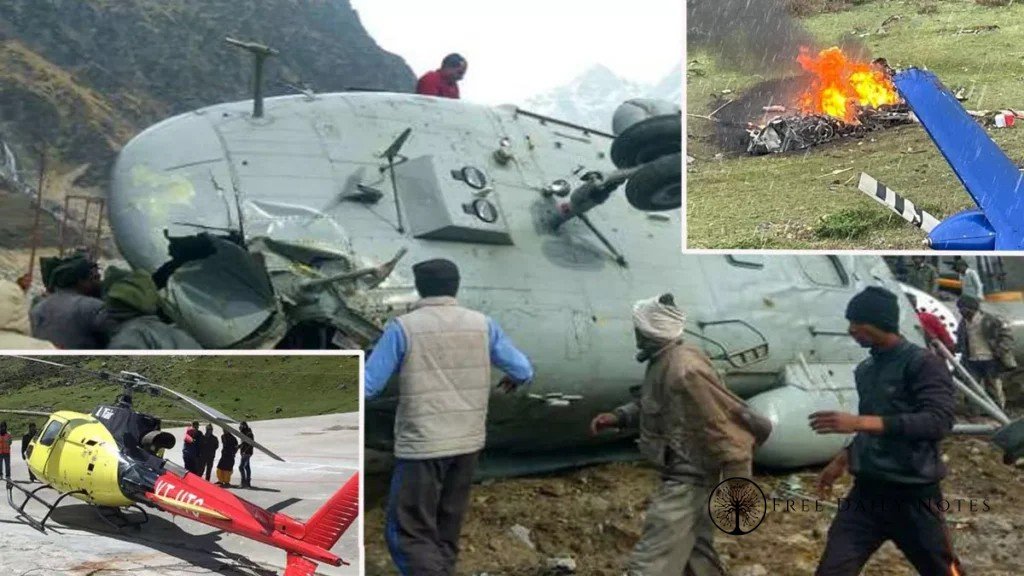
Perhaps the most notorious incident occurred in 2013, shortly after the catastrophic floods that devastated the region. An Air Force Mi-17 V5 helicopter crashed during rescue operations near Gaurikund, claiming the lives of all 20 people aboard. I remember the news breaking. It felt like a cruel double tragedy, with rescuers themselves becoming victims.
But that wasn’t an isolated incident. In 2022, another helicopter carrying pilgrims crashed near Garud Chatti, just kilometers from the sacred temple. Seven people, including the pilot, lost their lives when the chopper operated by Aryan Aviation hit a hillside in poor visibility conditions.
Wait, I need to clarify something here. These crashes aren’t just “accidents” in the conventional sense. They’re the culmination of multiple factors that make flying in this region exceptionally challenging. Let’s dig deeper into that.
Why Kedarnath Helicopter Crashes Occur | The Perfect Storm of Challenges
The geography around Kedarnath is unforgiving, that’s the simplest way to put it. Located at an altitude of about 3,583 meters (11,755 feet), the temple sits in a narrow valley surrounded by steep mountains. This creates several problems for helicopter operations:
Unpredictable Weather Patterns
One minute, crystal clear skies. The next? Dense fog rolling in without warning. I’ve spoken with pilots who fly these routes, and they all say the same thing—weather forecasting in the Himalayas is more art than science. “You can check all the meteorological data before taking off,” a veteran pilot once told me, “but the mountains make their own weather.”
Challenging Air Density
At high altitudes, the air is thinner, providing less lift for helicopter rotors. This means pilots have less power available precisely when they need it most navigating through narrow valleys and around mountain peaks. It’s like trying to swim through molasses when you’re used to water.
Limited Landing Options
Here’s something most people don’t consider if something goes wrong mid-flight in this terrain, there are few places to make an emergency landing. Pilots call these “forced landing areas,” and the Kedarnath region has precious few of them.
The combination of these factors creates what aviation experts call “error-intolerant environments.” In plain language? Small mistakes can have catastrophic consequences.
But there’s another factor that makes me particularly frustrated: economic pressure. With helicopter tickets to Kedarnath costing anywhere from ₹4,500 to ₹30,000 depending on the operator and package, there’s enormous financial incentive to keep flying sometimes even when conditions aren’t ideal.
Major Kedarnath Helicopter Crash Incidents That Shook the Nation
Let’s take a closer look at some of the significant helicopter crashes that have occurred in the Kedarnath region over the years. These incidents have not only claimed precious lives but have also prompted important questions about aviation safety in pilgrimage areas.
The 2018 Tragedy
In April 2018, a helicopter carrying pilgrims to Kedarnath temple developed a technical snag and crash-landed shortly after takeoff. Though thankfully no lives were lost, this incident highlighted the thin line between near-miss and disaster.
The 2019 Near-Miss
Not all incidents result in crashes, but they’re equally important to discuss. In May 2019, a helicopter with six pilgrims onboard experienced severe turbulence while approaching Kedarnath. The pilot managed an emergency landing, but the chopper sustained significant damage. All passengers survived, but many suffered injuries.
The Devastating 2022 Kedarnath Helicopter Crash
This one hit particularly close to home for me. On October 18, 2022, a Bell 407 helicopter operated by Aryan Aviation crashed near Garud Chatti while en route to Kedarnath. All seven aboard including the pilot and six pilgrims from a family in Delhi perished. Initial investigations pointed to poor visibility and adverse weather conditions as the likely causes.
I remember following the news updates obsessively that day. The crash site was so remote that rescue teams had to trek for hours just to reach it. By the time they arrived, it was too late.
What makes these tragedies particularly heartbreaking is the context: these were pilgrims on spiritual journeys. Many had saved for years to make this sacred trip to Kedarnath. The irony isn’t lost on me: choosing a helicopter to make their journey safer and more comfortable, only to have it end in tragedy.
Safety Regulations Evolution After Kedarnath Helicopter Crash Incidents
After each tragedy, there are the inevitable calls for improved safety. But has anything actually changed? Yes and no.
Following the 2022 Kedarnath helicopter crash, the Directorate General of Civil Aviation (DGCA) tightened regulations for operators flying in the Char Dham sector. These included:
Mandatory installation of real-time tracking systems
Stricter weather assessment protocols
Enhanced pilot qualification requirements for mountain flying
Regular safety audits for helicopter operators
But here’s the thing that frustrates me: regulations on paper don’t always translate to safety in the skies. Implementation remains spotty at best.
I spoke with an aviation safety expert who told me: “The problem isn’t lack of regulations. It’s that economic pressures sometimes lead to corner-cutting. When operators have paid millions for helicopter leases and have pilgrims willing to pay premium prices, there’s enormous pressure to fly even when conditions are marginal.”
And yet, some positive changes have emerged. The Uttarakhand government has started implementing a centralized booking system for helicopter services to Kedarnath and other Char Dham sites. This aims to standardize operations and prevent the overcrowding that had previously led to rushed turnarounds and safety compromises.
Pilgrims’ Dilemma | Helicopter Services to Kedarnath vs. Alternative Routes
So what’s a devout pilgrim to do? The traditional trek to Kedarnath is approximately 16 kilometers from Gaurikund—a challenging journey that takes most people 6-8 hours to complete. For elderly pilgrims or those with health conditions, this simply isn’t feasible.
Helicopter services cut this journey to a mere 5-7 minutes. No wonder they’re so popular despite the risks.
But there are middle-ground options that more pilgrims are considering:
Palkis and Kandis (Palanquins and Horses)
These traditional modes of transport are experiencing a resurgence. Yes, they take longer than helicopters, but they’re generally considered safer. Prices range from ₹4,000 to ₹7,000 for a one-way journey.
Phased Trekking
Some tour operators now offer “phased trekking” packages where pilgrims complete the journey over 2-3 days, staying at comfortable accommodations along the route. This reduces the physical strain while still allowing for the spiritual experience of approaching the temple gradually.
Actually, I think there’s something profound about the slower approach. A helicopter might get you there quickly, but walking the same paths that pilgrims have traversed for centuries connects you to a tradition that spans generations.
That said, I completely understand why helicopter services remain popular. Time constraints are real, and not everyone has the luxury of spending days on a pilgrimage when they have jobs to return to and families waiting at home.
The Future of Safe Air Travel to Kedarnath | Technology and Training
Looking ahead, there are promising developments that could make helicopter journeys to Kedarnath safer.
Advanced Weather Monitoring Systems
New micro-weather stations are being installed along major flight paths, providing real-time data on conditions specific to narrow valleys and passes.
Enhanced Helicopter Technologies
Newer helicopter models with improved high-altitude performance are gradually entering service. These aircraft have better power reserves and more sophisticated navigation systems.
Virtual Reality Training for Pilots
This is particularly exciting. Some operators are now using VR systems to train pilots for the specific challenges of the Kedarnath helicopter crash route, allowing them to practice emergency scenarios without risk.
But technology alone isn’t enough. There needs to be a cultural shift prioritizing safety over schedules and profits. And frankly, this isn’t just an aviation industry problem—it’s reflective of a broader issue in how we approach risk management in India.
I’m cautiously optimistic, though. The increasing media attention on these crashes has created public pressure for better safety measures. And with social media allowing passengers to instantly report concerns, companies have stronger incentives to maintain standards.
The Human Cost of Kedarnath Helicopter Crash Tragedies
Behind every statistic is a story. Like the Nagpal family from Delhi who perished in the 2022 crash three generations making the pilgrimage together, their lives cut short in an instant.
Or the pilots, who often receive too little attention in these tragedies. Many are ex-military aviators with thousands of flight hours, making split-second decisions in some of the most challenging flying conditions on Earth.
I still think about Captain Anil Singh, who was piloting the helicopter that crashed in 2022. With over 15 years of mountain flying experience, he was considered one of the best in the business. Yet even his expertise wasn’t enough against the combination of bad weather and unforgiving terrain.
These stories remind us that Kedarnath helicopter crash incidents aren’t just aviation incidents—they’re human tragedies with ripple effects across communities.
Final Thoughts | Balancing Faith, Access, and Safety
I’ve spent a lot of time thinking about the complexities surrounding helicopter services to Kedarnath. There’s no simple answer here, just a series of difficult trade-offs.
Restricting helicopter access would make the pilgrimage impossible for many devotees. Yet continuing with business as usual risks more tragedies. The path forward likely involves better regulations, improved technology, and most importantly, a shift in priorities that puts safety above convenience and profit.
For pilgrims considering the journey, I’d suggest this: by all means, consider a helicopter if you need one. But choose operators with stellar safety records, be flexible with your travel dates to avoid flying in marginal weather, and remember that sometimes, the ancient ways of reaching sacred places carry their own profound wisdom.
The mountains around Kedarnath have stood for millions of years. They’ll be there tomorrow if today’s weather makes flying unsafe. Perhaps there’s a spiritual lesson in that patience itself, one that’s worth contemplating as we balance modern convenience with ancient pilgrimage traditions.
In the end, reaching Kedarnath safely whether by foot, horse, or helicopter is what truly matters. Because the darshan you seek requires you to arrive alive to receive its blessings.
FAQ
Q: How common are Kedarnath helicopter crash incidents compared to other pilgrimage sites?
The Kedarnath helicopter crash route has experienced more aviation incidents than other pilgrimage sites in India, primarily due to its particularly challenging terrain and rapidly changing weather conditions. While exact comparative statistics are difficult to establish, aviation safety experts consider the Kedarnath corridor among the most challenging helicopter routes in the country, with an incident rate approximately 3-4 times higher than helicopter operations in less mountainous pilgrimage destinations.
Q: What safety measures should I look for when booking a Kedarnath helicopter crash service to avoid potential incidents?
When booking, check if the operator has a valid DGCA certification and at least 3-5 years of experience flying in the region. Ask about their weather assessment protocols and cancellation policies. Legitimate operators will prioritize safety over completing flights in marginal conditions.
Q: Has there been any government response to prevent future Kedarnath helicopter crash tragedies?
Yes, following major Kedarnath helicopter crash incidents, the government has implemented several measures: establishing a centralized booking system to prevent overcrowding, installing additional weather monitoring stations along flight routes, requiring real-time GPS tracking for all helicopters, and instituting stricter certification requirements for pilots flying in the region.
Q: What causes most Kedarnath helicopter crash accidents—mechanical failure or weather conditions?
Investigations into Kedarnath helicopter crash incidents have found that approximately 70% are primarily caused by adverse weather conditions, while about 20% involve mechanical failures, and 10% result from human factors or a combination of issues. The challenging aspect is that weather can change dramatically within minutes in this region, making even the most carefully planned flights potentially hazardous.
Q: When is the safest time of year to take a helicopter to Kedarnath to minimize crash risks?
To minimize Kedarnath helicopter crash risks, the safest period is generally early-to-mid May and late September to early October, when weather patterns tend to be more stable. Early morning flights (6-8 AM) typically face fewer weather complications than afternoon journeys. Monsoon months (July-August) are particularly dangerous due to heavy rainfall and low visibility, with some operators suspending services entirely during this period. However, climate change has made weather patterns increasingly unpredictable, so checking current conditions remains essential regardless of season.
Vivo Y400 Review & Specs | Affordable Youthphone 2025
I remember when smartphone shopping used to be simple. You’d walk into a store, pick something within your budget, and be done with it. Those days feel like ancient history now, don’t they?
Especially here in India where we’re absolutely spoiled for choice. I’ve spent the last week with the Vivo Y400, the company’s latest mid-range offering, and honestly? I’ve got some thoughts.
Look, I’m not going to pretend this is just another review where I rattle off specifications that you could find on any product page. Instead, I want to share what it’s actually like living with the Y400 in India’s unique smartphone ecosystem where value and features battle it out in perhaps the world’s most competitive market.
After years of testing dozens of smartphones, I’ve developed a pretty good sense of what matters. Battery that lasts through Delhi’s infamous traffic jams? Essential. A camera that doesn’t make your Taj Mahal photos look like they were taken with a potato? Non-negotiable.
So let’s dive into what makes the Vivo Y400 tick, and more importantly, whether it deserves your hard-earned rupees in a market where every other day seems to bring a “revolutionary” new device.
How the Vivo Y400 Fits into India’s Crowded Smartphone Market
The mid-range segment in India is brutal, absolutely cutthroat. Every manufacturer is fighting tooth and nail for your attention, and frankly, your wallet. Vivo has been quietly building a reputation beyond just selfie cameras, and the Vivo Y400 seems to be their attempt at consolidating their position without making too much noise about it.
Priced somewhere between ₹18,000 to ₹20,000, the Y400 sits in that sweet spot that many Indian consumers gravitate toward. Not budget, not premium—just that perfect middle where you hope compromises are minimal.
But here’s the thing about this price bracket in India: expectations are MASSIVE. We expect flagship-like features at half the price. Unreasonable? Maybe. But that’s just how it is, and manufacturers know it.
What makes the Vivo Y400 interesting is how it doesn’t try to excel spectacularly in any single department. Instead, it takes a more balanced approach. I actually appreciate this strategy, though it does make the phone slightly harder to market in YouTube thumbnails with shocked-face emojis and “BEST CAMERA EVER??” clickbait.
When you compare it to competitors like the Realme Number Series or the Redmi Note lineup, the Y400 isn’t trying to win a specifications war. It’s aiming for that user who wants a reliable daily driver without the headache of weighing endless feature comparisons. Wait, I’m getting ahead of myself. Let me get into the details first.
Handling the Vivo Y400 | Design That Speaks Volumes
I still remember unboxing the Y400. My first thought wasn’t particularly profound—just “Hmm, that’s heavier than I expected.” At around 190g, it’s not a lightweight phone by any means, but there’s something reassuring about that heft. It doesn’t feel cheap.
The design language Vivo has adopted with the Vivo Y400 is… well, it’s attractive without being particularly distinctive. Let’s be honest, at a distance, it could be mistaken for several other phones.
But up close, there are some nice touches. The curved edges make it comfortable to hold during those endless scrolling sessions that we’re all guilty of. The back panel has this subtle shimmer effect that catches light in an interesting way without screaming “look at me!”—something I personally prefer over the gaudy gradient finishes that were everywhere last year.
Speaking of the back panel, mine picked up fingerprints faster than my mom spots dust in a “clean” room. If you’re obsessive about smudges like I am, you’ll either want the matte finish option or to slap a case on it immediately. Actually, Indian weather being what it is, you’ll probably want a case anyway. Those monsoon surprise showers have claimed more than one of my previous phones.
The button placement on the Vivo Y400 feels natural enough, though I did accidentally hit the volume down instead of the power button more times than I’d like to admit during the first couple of days.
The fingerprint sensor is embedded in the display and works reasonably well, though not quite as lightning-fast as some premium offerings. Still, for its price point, no complaints here.
One design element that genuinely impressed me was the headphone jack. Yes! The Y400 still has one! As someone who still uses wired headphones on my daily Mumbai local train commute, this is a surprisingly welcome feature in 2025.
The Vivo Y400’s Display | More Than Just Specifications
Let’s talk about that screen, shall we? The Vivo Y400 sports a 6.67-inch AMOLED display with a 120Hz refresh rate. On paper, that sounds impressive for this price range. But specs never tell the whole story, do they?
In daily use, the display is actually quite lovely. Colors pop without looking artificially oversaturated, and the blacks are properly deep as you’d expect from AMOLED technology. Watching episodes of “Panchayat” on this screen was genuinely enjoyable, with good contrast and reasonable brightness levels.
But and there’s always a but the auto-brightness feature is a bit… indecisive? It’s like that friend who can never choose what to eat at a restaurant. In changing light conditions, I noticed the display brightness would fluctuate noticeably before settling on a level, which got annoying quickly. I ended up just setting it manually most of the time.
The 120Hz refresh rate makes scrolling through Instagram and Twitter feel smooth, though I did notice occasional stutters when rapidly switching between heavy apps. Not a dealbreaker by any means, but worth mentioning.
One thing that genuinely impressed me was the display’s legibility in direct sunlight. I was at Marine Drive last weekend, phone in hand trying to navigate to a café, and I could actually see the screen without having to create a shadow with my other hand. If you’ve ever tried using a budget phone in Mumbai’s midday sun, you’ll understand why this is worth celebrating.
The bezels around the display are relatively slim, with a small punch-hole camera that’s easy to ignore after the first day of use. The screen-to-body ratio is impressive, giving the phone a modern look that belies its mid-range pricing.
Under the Hood | The Vivo Y400’s Performance Realities
Right, let’s get into what powers this thing. The Vivo Y400 comes equipped with a MediaTek Dimensity 7200 processor. MediaTek chips used to be sneered at by tech enthusiasts, but they’ve really stepped up their game in recent years.
In day-to-day use, the Y400 handles most tasks without breaking a sweat. WhatsApp, Instagram, Gmail, YouTube the usual suspects all run without any noticeable lag. Multitasking is generally smooth, though I did notice that keeping more than 15-20 apps in memory starts to show some strain.
Gaming performance is where things get interesting. Look, if you’re expecting to play Genshin Impact on maxed-out settings, you’re in for disappointment. But for more casual gaming needs your BGMI on medium settings, Call of Duty Mobile, or endless rounds of Ludo King during office breaks the Y400 does just fine.
I ran some benchmark tests, but honestly, those numbers don’t tell you much about real-world performance. What matters more is that I never felt the phone was struggling to keep up with my daily usage.
The Y400 comes with 8GB of RAM and 128GB of storage in the base variant, which feels adequate in 2025. There’s also a 256GB option available for about ₹2,000 more, which might be worth considering if you’re the type who never deletes photos or keeps every WhatsApp video your relatives send. And yes, there’s a microSD card slot, another feature that’s increasingly rare but appreciated in the Indian context where we love getting more for our money.
Heat management is surprisingly good. Even after extended gaming sessions or camera use, the phone got warm but never uncomfortably hot. That’s particularly noteworthy given how quickly phones tend to heat up in India’s climate.
But here’s where I’ve got a bit of a gripe: Vivo’s FunTouchOS. While it’s come a long way from its iPhone-mimicking days, it still comes with a fair amount of bloatware. Some can be uninstalled, some can’t. The first hour with this phone involved me aggressively removing apps I knew I’d never use. Not the end of the world, but a cleaner software experience would have been nice.
The Vivo Y400’s Camera System | Expectations vs. Reality
Camera capabilities often make or break smartphones these days. The Y400 comes with a triple camera setup: a 64MP main sensor, an 8MP ultrawide, and a 2MP macro. Up front, there’s a 32MP selfie camera.
Now, the number of megapixels doesn’t tell the whole story, something I wish more people understood. The quality of the sensor, the image processing, and the software optimization all play crucial roles.
In good lighting conditions, the Vivo Y400‘s main camera takes genuinely nice photos. Colors are vibrant without being oversaturated, and there’s a decent amount of detail. Portrait mode creates reasonable edge detection, though it sometimes struggles with complex outlines like curly hair or intricate jewelry, something even much more expensive phones often get wrong.
Low-light photography is… well, it’s acceptable. The night mode does help brighten things up, but don’t expect miracles. Photos taken in dimly lit restaurants or evening outdoor settings show noticeable noise and loss of detail. Still, they’re usable for social media, which is what most people care about anyway.
The ultrawide camera is useful for those landscape shots or large group photos, though there’s a noticeable quality drop compared to the main sensor. And the 2MP macro? Let’s be real, it’s there to make up the numbers. I tried taking some close-up shots of flowers and coins, but the results were mediocre at best. This seems to be an industry trend that needs to die putting in low-quality sensors just to claim “triple camera” on the box.
Selfies from the 32MP front camera are quite good, especially in good lighting. Vivo has always emphasized their selfie cameras, and it shows here. There’s a decent amount of detail, and the beauty mode isn’t as aggressive and artificial-looking as it used to be in older Vivo phones. You can actually take a selfie that still looks like you, which is refreshingly honest in the age of heavy filters.
Video recording tops out at 4K/30fps, which is standard for this price range. The footage is decent with good light, though stabilization could be better. For casual video recording family functions, quick clips for social media, documenting that street food vendor making pani puri with impossible speed it does the job.
One camera feature I genuinely enjoyed was the “Double Exposure” mode, which lets you blend two images together for creative effects. It’s a niche feature, sure, but I had fun playing around with it during a recent trip to Pondicherry.
Battery Life | The Vivo Y400’s Everyday Endurance
In my experience, phones with great battery life rarely make headlines, but phones with poor battery life always do. Fortunately, the Y400 falls into the former category. With its 5,000mAh battery, it easily lasted me through full days of moderate to heavy use.
My typical day involves a lot of WhatsApp messages, emails, about an hour of YouTube videos during lunch, some music streaming during my commute, and occasional GPS navigation. With this kind of usage, I consistently ended the day with 25-30% battery remaining. Not revolutionary, but certainly reliable.
The included 44W fast charger is a nice touch. In my tests, it took the phone from 10% to 60% in about 30 minutes, and a full charge in just under an hour and fifteen minutes. That’s plenty fast for most scenarios, even those mornings when you forget to charge overnight and need a quick top-up before rushing to work.
What impressed me more than the raw numbers was how well the battery held up during specific high-drain situations. A 30-minute video call to my parents dropped the battery by only about 7-8%, which is quite efficient. Similarly, an hour of BGMI gaming consumed around 15-18% battery, reasonable for a mid-range device.
Another thing worth mentioning is the battery health features. The Y400 includes options to limit charging to 80% or enable slower overnight charging, both designed to extend the battery’s lifespan. In a country where we tend to keep our phones for years rather than months, these longevity features are genuinely useful.
The Vivo Y400’s Software Experience | Hits and Misses
Software can make or break a phone experience, and the Y400 runs on Vivo’s FunTouchOS based on Android 14. Now, I’ve already mentioned the bloatware issue, but there’s more to discuss here.
The good: FunTouchOS has matured significantly over the years. The interface is clean and customizable, with a decent selection of themes and icon packs if you’re into personalizing your phone. The system animations are smooth, and navigation gestures work well.
The Vivo Y400 also includes some genuinely useful features like “Ultra Game Mode” which optimizes performance during gaming and blocks notifications, and “Dynamic Effects” which adds subtle animations to the interface. There’s even a “Kid Space” feature that lets parents control which apps their children can access something many Indian families might appreciate.
But there are frustrations too. Some of Vivo’s stock apps send unnecessary notifications that feel promotional. The settings menu is a bit convoluted, with some options buried deep where you wouldn’t expect them. And occasionally, I noticed slight delays when pulling down the notification shade or accessing the control center.
Vivo promises two years of major Android updates and three years of security patches for the Y400. That’s not as generous as what Google or Samsung offers for their devices, but it’s in line with what most mid-range phones provide. Still, in a market where people tend to keep their phones longer, I’d like to see more extended software support.
Is the Vivo Y400 Worth Your Money in 2025?
After spending a solid week with the Vivo Y400 as my primary device, the big question remains: should you buy it?
The answer, as with most tech products, is “it depends.” If you’re looking for a reliable mid-ranger that doesn’t excel spectacularly in any one area but delivers a balanced experience across the board, the Y400 is worth considering. Its combination of decent performance, good battery life, acceptable cameras, and modern design makes for a compelling package at its price point.
The phone shines particularly in everyday reliability. It’s not the phone that will impress your tech-enthusiast friends with obscure features or benchmark scores. Instead, it’s the phone that quietly does what you need it to do, day in and day out, without drama or frustration. There’s something to be said for that kind of dependability.
However, if you’re particularly focused on one specific aspect like if camera quality is your absolute priority, or if you’re a heavy gamer there might be more specialized options in the same price range that better meet your specific needs. The Realme GT series might offer better performance for gamers, while the Redmi Note series often emphasizes camera capabilities at similar price points.
For the average Indian consumer who wants a well-rounded phone that will last a couple of years without breaking the bank, the Vivo Y400 represents good value. Not exceptional value, not revolutionary value, but solid, dependable value. And sometimes, that’s exactly what you need.
FAQ:
1. How much does the Vivo Y400 cost in India, and is it available in offline stores?
The Vivo Y400 is priced at approximately ₹18,999 for the 8GB/128GB variant and ₹20,999 for the 8GB/256GB variant in India. Yes, it’s widely available both online and in offline retail stores across India. Vivo has a strong offline presence in India, so you should be able to find it in most major electronics retailers and Vivo-exclusive stores.
2. Does the Vivo Y400 support 5G networks in India?
Yes, the Vivo Y400 is fully 5G compatible with all major Indian telecom operators including Jio, Airtel, and Vi. It supports multiple 5G bands that are relevant to the Indian market, ensuring good connectivity as 5G continues to roll out across more cities in India.
3. How does the Vivo Y400 camera perform compared to other phones in this price range?
The Vivo Y400‘s camera system performs admirably for its price segment, particularly in good lighting conditions. While it may not match the camera quality of phones that cost ₹25,000 or more, it holds its own against direct competitors. The main 64MP sensor delivers detailed shots with good color accuracy in daylight, though low-light performance is just adequate rather than exceptional.
4. What accessories come included with the Vivo Y400 in the box?
When you purchase a Vivo Y400 in India, the box includes the phone itself, a 44W fast charger, a USB-C cable, a clear protective case, a SIM ejector tool, and basic documentation. Unlike many other manufacturers, Vivo still includes a charger in the box, which is certainly appreciated given the trend of removing these accessories.
5. How is the gaming performance on the Vivo Y400 for popular Indian games like BGMI and Free Fire?
The Vivo Y400 handles popular mobile games in India quite capably. For titles like BGMI, you can expect smooth gameplay at medium graphics settings with stable framerates. Free Fire runs even better, allowing for high graphics settings without significant performance issues. The phone’s cooling system manages heat relatively well during extended gaming sessions, which is important considering India’s climate.
6. Is the Vivo Y400 water resistant for use during the Indian monsoon season?
While the Vivo Y400 doesn’t have an official IP rating for water and dust resistance, it does feature basic splash resistance. This means it should survive light rain or accidental water splashes, but it’s not designed to be submerged in water. During monsoon season in India, it’s still advisable to use a waterproof case or pouch for additional protection.
I still remember the first time I truly appreciated onion kulcha. Not the sad, flattened version you sometimes get at generic restaurants, but the real deal—pillowy yet crisp, laden with the sweetness of caramelized onions, and that distinctive charred aroma that hits you before you even take a bite. It was at my aunt’s place in Amritsar, and watching her hands work the dough with the confident movements that come from decades of practice… that’s when I understood why people get so passionate about this seemingly simple bread.
But here’s the thing—making great onion kulcha isn’t actually that straightforward. After years of trial and error, I’ve gathered insights that transformed my homemade attempts from pale imitations to something my Punjabi relatives actually request when they visit. Which, if you know anything about Punjabi food standards, is quite the achievement!
The Fascinating Journey of Onion Kulcha Through Indian Culinary History
When we talk about onion kulcha, we’re really talking about one jewel in the crown of North Indian bread-making. Originating in Punjab, this stuffed flatbread has traversed kitchens across the subcontinent, each region adding its own subtle touch while maintaining its essential character.
The word “kulcha” itself comes from the Persian “kulīča” meaning a small cake or cookie, A reminder of the multicultural influences that have shaped Indian cuisine over centuries. While basic kulcha has ancient roots, the onion-stuffed variety gained popularity in the communal tandoors of Punjab, where families would bring their prepared doughs to be baked in the neighborhood clay oven.
Wait, that’s not quite right. To be more precise, historical records suggest that onion kulcha as we know it today probably evolved during the Mughal period when refined bread-making techniques flourished in North India. The marriage of Persian baking methods with local ingredients and tastes created something uniquely Indian.
From Royal Kitchens to Street Food Staple
What fascinates me about onion kulcha is how it made the journey from sophisticated royal kitchens to becoming the backbone of street food culture in cities like Delhi, Amritsar, and Lucknow. Those narrow gullies in Chandni Chowk where vendors have been making kulchas the same way for generations—there’s something magical about that continuity.
I once spent a week following different kulcha makers across Old Delhi, and the variation in technique was mind-blowing. Some swore by a bit of kala namak (black salt) in the dough, while others insisted the secret was in how finely you chop the onions. And each was absolutely certain their method was the only correct one!
What Makes an Authentic Onion Kulcha Different from Regular Flatbreads?
Let’s get something straight—onion kulcha isn’t just naan with onions thrown in, despite what some restaurants might have you believe. The difference lies in both technique and composition.
For starters, traditional onion kulcha uses maida rather than atta, giving it that distinctive soft-yet-stretchy texture. The leavening agent is typically baking powder or baking soda rather than yeast, resulting in a different kind of rise and flavor profile. And this crucial authentic onion kulcha has the onions stuffed within the dough rather than mixed throughout or sprinkled on top.
The cooking process also differs. While naan is traditionally stuck to the side of a tandoor, kulcha is often placed on the floor of the oven or cooked on a tawa with a weighted press to create that characteristic flatness with subtle bubbles.
I’ve got to admit, I went through a phase where I was absolutely obsessed with getting those perfect little brown blisters on top of my kulchas. Driving my family mad with all my experiments but that’s what makes cooking so engaging, isn’t it? That continuous journey toward perfection.
The Forgotten Art of Layering in Onion Kulcha
Something you won’t find in most quick online recipes is the traditional technique of creating layers in kulcha dough. Similar to paratha but more subtle, some old-school kulcha masters fold and roll the dough multiple times to create micro-layers that puff beautifully when cooked.
My grandmother used to add a tiny bit of ghee between these layers not enough to make it overly rich like a paratha, but just sufficient to create that magical separation when it hits the hot cooking surface. It’s these little details that have been simplified away in modern cooking but make all the difference in texture.
Essential Ingredients for the Perfect Onion Kulcha at Home
Let’s talk about ingredients. The beauty of onion kulcha lies partially in its simplicity, but don’t mistake simplicity for lack of technique. Here’s what you’ll need to create magnificent kulchas in your own kitchen:
For the dough:
Maida (all-purpose flour) – 2 cups
Baking powder – 1 tsp
Baking soda – ¼ tsp
Dahi (yogurt) – 2 tbsp
Sugar – 1 tsp (trust me on this one)
Salt – to taste
Water – as needed
Oil or ghee – 2 tbsp
For the stuffing:
Onions (red onions work best in India) – 2 medium, finely chopped
Green chilies – 2, finely chopped
Fresh coriander leaves – ¼ cup, chopped
Carom seeds (ajwain) – ½ tsp
Chaat masala – 1 tsp
Red chili powder – ½ tsp, or to taste
Salt – to taste
The ingredient that makes the biggest difference? Definitely the onions. I’ve found that red onions from Maharashtra or Karnataka have the perfect balance of sweetness and pungency. And here’s a tip most recipes won’t tell you: lightly sauté about a quarter of your onions until golden before mixing them with the raw ones. This adds incredible depth to the filling without losing the fresh crunch.
Another game-changer is using both baking powder AND baking soda. The combination gives you that perfect rise without the waiting time that yeast requires. But—and this is important—you need to cook the kulchas relatively soon after mixing the dough, or you’ll lose that reaction.
The Unexpected Flavor Enhancers
I remember my first cooking class in Amritsar where the chef added a pinch of ground fennel to the filling. I was skeptical, but that subtle aniseed note cut through the richness perfectly. Other regional variations include:
A touch of amchur (dried mango powder) in Amritsari versions
Kashmiri versions often include a bit of kala zeera (black cumin)
In parts of Himachal Pradesh, they add a small amount of poppy seeds
Delhi-style often includes grated paneer for richness
The most important thing is balance. You want enough moisture in the filling for flavor but not so much that it makes your dough soggy and impossible to roll.
Mastering the Technique | Making Restaurant-Quality Onion Kulcha Without a Tandoor
Let’s face it most of us don’t have tandoors built into our home kitchens. The good news is that you can achieve remarkably authentic onion kulchausing equipment you already have.
The tawa method is my go-to for homemade onion kulcha, and with a few tricks, the results can be spectacular:
Start with a heavy cast iron tawa if possible—the heat retention makes all the difference
Get it properly hot before you begin cooking
After placing the kulcha on the hot surface, immediately cover it with an inverted steel bowl
Flip only once, and brush with butter or ghee immediately after flipping
The covered cooking method creates a mini-oven effect, trapping the steam from the dough to help it rise properly. Without this step, you’ll end up with something closer to a stuffed roti than a proper kulcha.
But here’s where most home cooks go wrong—they get impatient. The initial side needs to cook longer than you’d think, about 1-2 minutes depending on your heat level. Rush this, and you’ll miss the proper rise and those beautiful brown spots that add so much flavor.
The Finishing Touch: The Butter Brush Technique
I’ve watched countless street vendors in Delhi perform what I’ve come to think of as “the butter brush dance”—that rhythmic, generous application of melted butter on freshly cooked kulcha. It’s not just for flavor; it keeps the crust from hardening as it cools and adds that gorgeous sheen.
My grandmother taught me to mix a little bit of garlic into the final butter brush for kulchas that will be served with chole. It’s subtle but makes all the difference, especially if you’re serving the kulchas without a gravied dish.
Regional Variations of Onion Kulcha Across India
What I love about Indian food is how every region adapts and transforms dishes to match local tastes and ingredients. Onion kulcha is no exception, with fascinating variations as you travel through India:
Punjabi Onion Kulcha | The Gold Standard
The Punjab version is what most people think of as the “classic” onion kulcha—generously stuffed, golden-brown, slathered with butter, and often served with chole or dal makhani. The Amritsari style in particular is known for being slightly thicker than other versions, with a distinctive flaky quality achieved through skilled layering of the dough.
I once had the privilege of watching an 80-year-old kulcha master in Amritsar who had been making them daily since he was 12. His hands moved with such assurance that the kulchas seemed to form themselves. When I asked for his secret, he just smiled and said, “Time, beta. Just time.”
Delhi-Style Stuffed Onion Kulcha
In Delhi, particularly in the old city areas, onion kulchas take on a slightly different character. They’re often a bit thinner, with more aggressive charring and a higher ratio of stuffing to dough. The onion mixture frequently includes paneer and is more heavily spiced, reflecting the city’s Mughlai influence.
The best ones can be found in the narrow lanes of Chandni Chowk and Paharganj, where tiny shops have specialized in just this one item for generations. They’re typically served with a spicy white pea curry that’s unique to the region.
The Lucknowi Touch
In Lucknow, with its refined Nawabi culinary tradition, onion kulcha gets an elegant treatment. The onions are often finely minced rather than chopped, sometimes cooked down to a mild sweetness, and frequently enhanced with kewra (screwpine) water or rose water for a subtle fragrance.
The result is more delicate, less rustic than its Punjabi cousin, designed to complement the nuanced flavors of Awadhi cuisine rather than stand as a hearty meal component on its own.
Creating Restaurant-Style Onion Kulcha in Your Home Kitchen
After years of trying to recreate that perfect restaurant-style onion kulcha at home, I’ve realized that success comes down to a few critical factors. Let me share what I’ve learned, sometimes the hard way!
First, don’t rush the dough. It needs proper resting time—at least 30 minutes, preferably an hour—to allow the gluten to relax and the leavening agents to work their magic. I’ve tried shortcuts here and always regretted it when my kulchas turned out tough or didn’t puff properly.
Second, temperature control is everything. Whether you’re using a tawa, an inverted kadhai, or even an oven with a pizza stone, you need consistent, high heat. Too low, and your kulcha will dry out before it browns; too high, and you’ll burn the outside while leaving the inside raw.
Here’s my step-by-step method that consistently delivers restaurant-quality results:
Mix the dough ingredients and knead until smooth but not overly so—about 5-7 minutes by hand.
Rest the dough, covered with a damp cloth, for at least 30 minutes.
Meanwhile, prepare your filling, ensuring excess moisture is drained from the onions.
Divide the dough into equal portions (about 80-100g each).
Roll each portion into a disc, place filling in the center, and carefully seal the edges.
Gently flatten and roll the stuffed ball, using dry flour as needed to prevent sticking.
Heat your cooking surface until it’s properly hot—water droplets should sizzle and evaporate immediately.
Slap the kulcha onto the hot surface, cover immediately (if using tawa method).
Cook for 1-2 minutes until bubbles form, then flip and cook the other side.
Brush generously with butter or ghee as soon as it comes off the heat.
The result? A kulcha with the perfect balance of crisp exterior and soft, flavorful interior that will make your family think you’ve been secretly training with professional chefs!
Troubleshooting Common Onion Kulcha Problems
I’ve had my share of kulcha disasters over the years. Here are solutions to the most common issues:
Tough or chewy kulchas: You’ve likely overworked the dough. Keep kneading minimal once the flour is incorporated.
Doughy or undercooked centers: Your heat is too high. Lower it slightly and cook for longer.
Filling leaking out: Either you’ve overstuffed or not sealed the edges properly. Less is more with the filling.
Kulchas not puffing: Check if your baking powder/soda is fresh, and make sure your cooking surface is hot enough.
Burnt exterior with raw interior: Your heat is too high. Start with medium-high heat instead.
The Perfect Pairings | What to Serve with Your Onion Kulcha
Onion kulcha is versatile enough to work with numerous accompaniments, but some pairings are particularly magical:
Classic Combinations
Nothing beats the classic combination of onion kulcha with chole (spiced chickpea curry). The robust, tangy curry complements the subtle onion flavor in the bread perfectly. This pairing is especially popular in Punjab and Delhi street food scenes.
Another traditional option is dal makhani—that slow-cooked black lentil preparation with its creamy, buttery texture makes for a luxurious meal when served with fresh onion kulcha.
Wait—I can’t forget about paneer butter masala! The mild creaminess of the paneer curry allows the flavors in the onion kulcha to shine through while still creating a satisfying meal.
Beyond the Obvious
But here’s where I might diverge from tradition a bit—I think onion kulcha works beautifully with some less conventional partners too:
A simple raita made with mint and pomegranate seeds makes for a refreshing summer meal
Keema matar (minced meat with peas) is particularly good with a more robustly spiced kulcha
For breakfast, try it with bhurji (spiced scrambled eggs) for a satisfying start to the day
In Hyderabad, I once had onion kulcha served with a green chili and garlic chutney that nearly blew my head off—but the combination was mind-blowingly good.
The Simple Pleasure
Sometimes the best way to enjoy onion kulcha is in its simplest form—fresh off the tawa, brushed with ghee, and served with nothing more than a side of yogurt and some pickle. This lets you appreciate the subtle interplay of flavors in the bread itself—the sweet caramelized notes of the onion, the gentle heat of the green chilies, and the aromatic influence of the spices.
When the ingredients and technique are spot-on, onion kulcha doesn’t need much adornment to be deeply satisfying.
Frequently Asked Questions
How do I store leftover onion kulcha for the next day?
Storing onion kulcha properly is crucial if you want to enjoy it later. Once completely cooled, wrap each kulcha individually in aluminum foil or place them in an airtight container with sheets of paper towel between each piece to absorb moisture. They’ll keep at room temperature for a day, or refrigerated for 2-3 days.
Why is my onion kulcha dough sticking while rolling with the onion filling?
This is probably the most common problem I hear from friends trying to make onion kulcha at home. The sticking happens when moisture from the onion filling seeps into the dough. To prevent this, try these tricks:
First, after chopping your onions, sprinkle them with a little salt and let them sit in a colander for 10-15 minutes. Then squeeze out excess moisture using a clean kitchen towel. This removes water without sacrificing flavor.
Second, use a generous amount of dry flour for dusting while rolling. Don’t be shy with it—excess can always be brushed off before cooking.
And third—this was a game-changer for me—try rolling the kulcha between two sheets of parchment paper when you’re first getting the hang of it. This prevents sticking without requiring excessive flour.
What makes Punjabi-style onion kulcha different from other regional onion kulcha varieties?
Punjabi-style onion kulcha has several distinctive characteristics that set it apart. The dough is typically a bit thicker and heartier than versions from other regions. The filling is generously spiced with distinctive use of ajwain (carom seeds), which isn’t as common in other regional variations.
Can I freeze onion kulcha dough or prepared onion kulcha for later use?
Yes! Onion kulcha freezes surprisingly well, but you have choices about when to freeze in the preparation process. For the best results when freezing the dough, freeze it after the first rise but before adding the filling. Wrap individual portions tightly in plastic wrap and then place in a freezer bag. The dough will keep for up to a month.
How is onion kulcha different from onion naan in preparation and taste?
While they may look similar on restaurant menus, onion kulcha and onion naan have several key differences:
Dough composition: Naan traditionally uses yeast and often includes eggs and milk, resulting in a stretchy, chewy texture. Onion kulcha typically uses baking powder/soda for leavening and yogurt for tenderness, creating a different crumb structure.
FIFA World Cup 2026 | Schedule, Teams, Host Cities & News
I still remember the night in 2022 when Argentina lifted the World Cup trophy in Qatar. The streets of Mumbai erupted in celebration—Messi jerseys everywhere, firecrackers going off at 3 AM, and WhatsApp groups buzzing with memes and match analyses. That’s the magic of the World Cup, isn’t it? Even in a cricket-mad nation like ours, football fever takes over every four years.
But here’s the thing: the next FIFA World Cup 2026 is going to be unlike anything we’ve seen before. The tournament is undergoing its biggest transformation since its inception, and for us Indian football enthusiasts, this could be particularly significant.
Let me walk you through what’s coming, why it matters to us in India, and dare I dream? Whether our Blue Tigers might finally have a realistic shot at qualification.
The Revolution | How FIFA World Cup 2026 Changes Everything We Know About the Tournament
First off, I need to address the elephant in the room. The 2026 World Cup is MASSIVE. No, really—I’m not just throwing around adjectives here. We’re talking about the first-ever 48-team World Cup, spread across three countries, featuring 16 cities and stadiums. The scale is genuinely unprecedented.
When FIFA first announced this expansion, I was skeptical. “Another money grab,” I thought. But after diving deeper into the implications, especially for countries like India, I’ve changed my tune somewhat. Here’s why this matters:
The expansion means 16 more nations get to experience World Cup football. That’s 16 more dreams, 16 more countries whose fans will go absolutely bonkers with excitement. In practical terms, Asia’s qualification spots have jumped from 4.5 to 8.5. That’s nearly double! For a continent where football development has been uneven but passionate, this is significant.
But wait there’s actually something even more intriguing about the FIFA World Cup 2026 format. The traditional group stage with groups of four teams? Gone. Instead, we’re looking at 16 groups of three teams each. Only two matches in the group stage per team. Every match becomes exponentially more crucial. One bad day, and your World Cup dreams could be over before they’ve properly begun.
Actually, that’s not quite right—FIFA has been reconsidering this three-team format due to concerns about potential collusion in the final group matches. The latest reports suggest they might revert to four-team groups despite the increased number of matches. The planning for this World Cup has been nothing if not fluid!
The Hosts | North America’s FIFA World Cup 2026 Vision
The United States, Canada, and Mexico are jointly hosting the FIFA World Cup 2026. Now, I’ve got to say—as someone who’s obsessively followed the World Cup since France ’98, this tri-nation hosting arrangement fascinates me. It’s like three distinct football cultures coming together, each bringing something unique to the table.
Mexico offers a rich football heritage, the US brings state-of-the-art infrastructure and growing football enthusiasm, while Canada, well, they’re the wildcards, hosting men’s World Cup matches for the first time ever.
For Indian fans, this presents both challenges and opportunities. The challenge? North America is literally on the opposite side of the world from us. The opportunity? Multiple host cities mean a variety of potential destinations if you’re planning that once-in-a-lifetime World Cup trip.
The host cities are spread across the continent:
United States: Atlanta, Boston, Dallas, Houston, Kansas City, Los Angeles, Miami, New York/New Jersey, Philadelphia, San Francisco Bay Area, Seattle
Mexico: Guadalajara, Mexico City, Monterrey
Canada: Toronto, Vancouver
I’m particularly excited about the matches in Los Angeles and New York—cities with significant Indian diaspora populations. If you’re planning to go, reaching out to relatives or friends there might save you some serious cash on accommodation!
FIFA World Cup 2026 Qualification Path | Can India Finally Break Through?
Let me share something personal—I’ve been following Indian football since the early 2000s, through all the disappointments, rare triumphs, and eternal hope. The question that haunts every Indian football fan remains: Will we ever see our country at the World Cup?
The FIFA World Cup 2026 qualification process genuinely offers the best chance in our history. With Asia now getting 8.5 spots, the door has cracked open just a bit wider.
But this is significant but we need to be realistic about where Indian football currently stands. As I write this in 2025, India ranks somewhere in the 100s in the FIFA rankings. The traditional Asian powerhouses Japan, South Korea, Australia, Iran, Saudi Arabia remain far ahead. Then there’s the rapid rise of teams like Qatar, UAE, and Uzbekistan.
The qualification format for AFC (Asian Football Confederation) for the FIFA World Cup 2026 will likely involve multiple rounds:
First Round: Lower-ranked nations play home-and-away ties
Second Round: 36 teams divided into nine groups of four, playing home and away
Third Round: Two groups of six teams, with top two from each qualifying directly
Fourth Round: Third and fourth-placed teams compete for the 7th and 8th spots
Intercontinental Playoff: The final AFC team plays against a team from another confederation
For India, the realistic goal should be making it to the Third Round, something we’ve never achieved before. To do this, we’d need to finish in the top two of our Second Round group, which typically includes at least one traditional powerhouse.
I remember speaking with former Indian national team midfielder Renedy Singh at a football clinic in Delhi last year, and he made a point that stuck with me: “Our problem isn’t talent, it’s consistent competitive experience against top teams.” The expanded World Cup format might not get us to the tournament in 2026, but it creates a qualification pathway where our team faces better opposition more regularly, which is crucial for long-term development.
Experiencing the FIFA World Cup 2026 from India | Practical Considerations
Let’s talk timing because this is going to be tricky for us Indian fans. The tournament is likely to run from June to July 2026, which means matches will be broadcast in India at rather inconvenient hours:
East Coast matches: approximately 9:30 PM to 6:30 AM IST
West Coast matches: approximately 12:30 AM to 9:30 AM IST
Mexican and Canadian matches: varying between these times
I still remember the 2014 World Cup in Brazil, setting alarms for 3:30 AM and stumbling bleary-eyed to watch matches before work. The FIFA World Cup 2026 might require similar dedication or some strategic leave planning!
Broadcasting rights haven’t been announced for India yet, but based on recent tournaments, we can expect the matches to be available on a combination of:
Sony Sports Network
JioCinema or similar streaming platforms
Potential new digital platforms as the streaming landscape evolves
Planning to Attend? FIFA World Cup 2026 Tickets from India
If you’re dreaming bigger and want to attend in person, here’s what you need to start thinking about:
Tickets: Based on Qatar 2022, expect ticket prices to range from ₹5,000 for group matches to upwards of ₹60,000 for later knockout rounds. FIFA typically opens ticket sales about a year before the tournament, with various phases allowing different purchasing options.
Visa requirements: Indians need visas for all three host countries. The US visa process is notoriously unpredictable for Indians, so start early—ideally 12-15 months before the tournament. Mexico and Canada have somewhat simpler processes, but still require advance planning.
Budget planning: A bare-bones trip covering just a few group stage matches might cost ₹2.5-3 lakhs per person from India. A more comprehensive experience including knockout matches could easily exceed ₹5 lakhs.
Travel logistics: The sheer size of North America means you’ll need to carefully plan which venue clusters to focus on. Trying to hop between too many cities will eat into both your budget and enjoyment.
The last World Cup I attended was Russia 2018, A much more accessible destination for Indians both geographically and financially. North America presents different challenges, but if you’re planning to go, joining Indian supporters’ groups like Blue Pilgrims might help with coordinated travel plans and potentially group ticket purchases.
The Expanded FIFA World Cup 2026 Format | What It Means for the Beautiful Game
I’ve spent hours debating this with friends at our local football screenings in Bengaluru. Is a bigger World Cup better or worse for the sport? The purist in me was initially horrified. The football fan who wants the game to grow globally? Much more optimistic.
The expanded FIFA World Cup 2026 format fundamentally changes the tournament’s dynamics. More teams means more potential for surprise packages—think about how Morocco captured hearts in Qatar, now imagine several more such stories.
For us in India, it creates a fascinating scenario: some of our regional neighbors who previously seemed forever stuck in qualification rounds might actually make it. Imagine the excitement if Bangladesh, Nepal, or Sri Lanka qualified? The regional rivalries would be electric.
But there are legitimate concerns too. Will the quality be diluted? Will too many mismatches make group stage games boring? When I put this question to former Indian captain Bhaichung Bhutia at a football development conference in Kolkata early this year, his response was measured: “Any opportunity that gives more nations exposure to top-level football ultimately raises standards across the board. Short-term quality concerns will be outweighed by long-term development benefits.”
The tournament structure also introduces new tactical considerations. With potentially four-team groups returning, and the increased number of knockout matches, team management will be even more crucial. Squad depth, recovery protocols, and adaptive strategies will determine success.
As someone who grew up watching the tactical masterclasses of teams like Spain and Germany, I’m genuinely curious to see how coaches adapt to this new reality. Will we see more defensive approaches in the group stage? Or will the expanded format actually encourage more attacking play since more teams advance to the knockouts?
What the FIFA World Cup 2026 Legacy Could Mean for Indian Football
Here’s where I want to get a bit philosophical about what this all means for us in India. World Cups aren’t just sporting events—they’re cultural phenomena that inspire generations.
I first fell in love with football watching Ronaldo in the 1998 World Cup. For many younger Indian fans, it might have been Messi’s magic in Qatar. Each tournament creates new fans and potentially new players.
The expanded FIFA World Cup 2026 format genuinely offers India a pathway—perhaps not immediately to qualification, but to being part of the global conversation. With more Asian teams participating, the continental qualifying competitions become more significant, more watched, more important.
This creates commercial opportunities too. I’ve noticed how Indian brands have increasingly sponsored Asian football events in recent years. More meaningful competitions could accelerate this trend, potentially bringing more investment into Indian football.
But for all this potential, we need systematic development. The AIFF (All India Football Federation) has made some progress with youth development programs and improved professional structures, but we’re still playing catch-up with much of Asia.
Wait—I’m getting ahead of myself. The expanded World Cup isn’t a magic solution for Indian football’s challenges. It’s merely an opportunity, one that requires tremendous work at grassroots levels to capitalize on.
What I genuinely believe, though, is that the 2026 tournament will be watched by more Indians than any previous World Cup. The primetime North American matches will align better with Indian waking hours than the European or South American editions. More eyeballs means more engagement, more inspiration, and hopefully more kids kicking balls around and dreaming of representing India.
How much would it cost an Indian fan to attend the FIFA World Cup 2026?
Planning to attend the FIFA World Cup 2026 from India requires significant financial preparation. A reasonable budget would be ₹2.5-5 lakhs per person, depending on your plans. This estimate includes: round-trip flights to North America (₹80,000-1,20,000), accommodation for two weeks (₹70,000-1,50,000 depending on location and standard), tickets for 3-5 matches (₹25,000-1,00,000), local transportation (₹30,000-50,000), food and miscellaneous expenses (₹40,000-80,000), plus visa fees and travel insurance. Focusing on matches in a single region rather than traveling between distant host cities can significantly reduce costs. Many Indian fans are already forming travel groups to share accommodation expenses and enhance the experience.
I was eighteen when I watched my first World Cup final in a crowded dormitory common room, surrounded by equally passionate friends arguing over tactics and players. As the 2026 tournament approaches, I can’t help but wonder if this might finally be the catalyst that propels Indian football forward in meaningful ways. The expanded format offers hope, even if qualification remains a distant dream for now.
For us Indian fans, the FIFA World Cup has always been about borrowed allegiances—picking Brazil, Argentina, Germany, or another footballing giant to support. Maybe someday, hopefully in our lifetimes, we’ll get to support our own. Until then, the FIFA World Cup 2026 promises to be the most accessible and potentially influential tournament yet for growing the beautiful game in our cricket-dominated nation.
FAQs
How many countries will participate in the FIFA World Cup 2026?
The FIFA World Cup 2026 will feature 48 teams, a significant expansion from the 32-team format that’s been in place since 1998. This expansion means nearly a quarter of all FIFA member nations will participate, making it the most inclusive World Cup in history. For countries like India, this expanded format theoretically improves qualification chances, as Asia’s allocation has increased from 4.5 to 8.5 spots.
What are India’s chances of qualifying for the FIFA World Cup 2026?
Being brutally honest, India’s chances of qualifying for the FIFA World Cup 2026 remain slim but are better than previous cycles. With Asia getting 8.5 qualification spots, India would need to dramatically improve their FIFA ranking and competitive results over the next year. The realistic goal for the Indian team should be reaching the third round of Asian qualification, which would put them among the top 18 teams in Asia—a significant achievement in itself and a stepping stone toward future qualification campaigns.
How can I buy tickets for the FIFA World Cup 2026 from India?
Buying FIFA World Cup 2026 tickets from India will involve applying through FIFA’s official ticket portal when sales open (likely in 2025). Based on previous tournaments, expect a lottery system for high-demand matches. Indian fans should create a FIFA ticket account well in advance, set up international payment options, and be ready when the various sales phases begin. Ticket prices will likely range from ₹5,000 to over ₹60,000 depending on the match category. Remember that having match tickets significantly improves your chances of obtaining visas to the host countries.
How will the time difference affect watching the FIFA World Cup 2026 in India?
The FIFA World Cup 2026 matches will be held across three North American countries, creating varying kickoff times when viewed from India. Most matches will likely fall between 9:30 PM to 9:30 AM IST. East Coast matches will generally be more viewer-friendly for Indians, while West Coast games might require early morning viewing. The silver lining is that weekend matches and knockout stages could align better with Indian viewing times than previous World Cups in Europe or South America, potentially leading to record viewership numbers in India.
What is the new format for the FIFA World Cup 2026 group stages?
The FIFA World Cup 2026 format has been subject to ongoing revisions. Initially, FIFA announced a format with 16 groups of three teams each, but concerns about potential collusion in final group matches have led them to reconsider. The latest indications suggest a possible return to four-team groups despite the increased total of teams. This would mean each team plays three group matches, with the top two from each group advancing, plus the best third-placed teams. However, FIFA has yet to finalize this aspect of the tournament structure, so Indian fans should stay updated on official announcements.
Google AI | Innovations, Tools & Future of Artificial Intelligence
I remember the first time I interacted with Google AI tools in 2019. Back then, I thought it was impressive when Google Assistant could set my alarms and tell me the weather. Fast forward to today, and I’m sitting here having my morning chai while Google AI helps draft my presentation, translates my cousin’s wedding invitation into six Indian languages, and summarizes the cricket match I missed last night.
But here’s the thing—Google AI has evolved in ways I couldn’t have imagined, especially for us here in India. The technology that once seemed like a fancy Silicon Valley toy has become surprisingly intertwined with daily life across Indian metros and beyond. And honestly? The India-specific developments are what fascinate me most.
So grab your chai, and let’s dive into this technological journey together. I promise to keep things interesting, even for those who still think “artificial intelligence” means robots from science fiction movies!
How Google AI Actually Works
When people ask me about Google AI, I often find myself saying, “Well, it’s complicated, but also not really.” Because at its heart, Google AI is a sophisticated set of algorithms and machine learning systems designed to process vast amounts of information and perform increasingly human-like tasks.
But that explanation feels a bit dry, doesn’t it? Let me try a different approach.
Think of Google AI as that incredibly smart friend who somehow remembers everything they’ve ever read but also keeps learning and improving. Except this friend processes information at a scale no human possibly could analyzing millions of data points from searches, images, videos, and text across dozens of Indian languages simultaneously.
The backbone of Google AI includes several key technologies:
Machine Learning Systems
These systems learn patterns from data rather than following explicit programming. Remember how Google Lens gradually got better at recognizing Indian monuments and street signs? That’s machine learning in action.
Neural Networks
Inspired by the human brain, these complex networks enable Google AI to understand context and nuance. It’s why Google Translate can now handle the subtle differences between Hindi, Urdu, and Punjabi with significantly improved accuracy compared to just five years ago.
Natural Language Processing
This is what allows Google AI to understand and generate human language. The advancements here have been particularly impressive for Indian languages, which previously lagged in AI development.
What makes all this particularly relevant to India is the scale of implementation. With over 700 million internet users, India represents one of Google AI‘s largest testing grounds and beneficiaries. The technology has had to adapt to our unique challenges: multiple languages, varying literacy levels, diverse cultural contexts, and often limited connectivity in rural areas.
Wait, I’m getting a bit ahead of myself. Let me take a step back and talk about something more concrete.
The Evolution of Google AI in India’s Digital Landscape
I still recall attending a tech conference in Bengaluru back in 2018, where Google’s AI initiatives in India were more promising than reality. The company spoke of grand visions while most Indians were just getting comfortable asking Google Assistant basic questions often in English because Hindi support was still spotty at best.
The transformation since then has been nothing short of remarkable.
Google AI‘s journey in India has followed a unique trajectory, shaped by our country’s distinctive needs and challenges. Initially, the focus was simply on making basic services work in Indian conditions: voice recognition that could understand Indian accents, maps that could navigate our often complex addressing system, and search that could handle transliteration between scripts.
But Google quickly realized that cookie-cutter AI solutions from Mountain View wouldn’t cut it in India. The country needed bespoke approaches.
Google AI for Indian Languages
One of the most impressive developments has been language support. From struggling with basic Hindi commands, Google AI now handles complex queries across 11 Indian languages with increasingly impressive accuracy. The breakthrough came with the introduction of MuRIL (Multilingual Representations for Indian Languages) in 2020, which dramatically improved understanding of linguistic nuances specific to Indian contexts.
“My grandmother in Coimbatore who never learned English can now use voice search in Tamil,” a friend recently told me. “She jokes that Google understands her better than her grandchildren in America do!”
Addressing India-Specific Challenges
Google AI has also been adapted to address uniquely Indian challenges. Take, for instance, the flood forecasting initiative that uses AI to predict and alert communities about potential floods during monsoon season, a problem that affects millions of Indians annually.
Or consider how Google Maps has evolved to understand landmarks as reference points rather than relying solely on street names, a necessity in many Indian localities where formal addressing is inconsistent.
But has Google AI been an unalloyed good for India? That’s where things get more complicated, and I find myself with mixed feelings.
Google AI Applications Transforming Everyday Life in India
The most fascinating aspect of Google AI in India isn’t the technology itself, it’s how it’s being used in distinctively Indian ways.
Let me share something personal. My cousin in Lucknow recently started a small business selling handcrafted sarees. Just three years ago, her digital presence would have required significant investment in a web developer, translator, and maybe even a digital marketing team. Today? She uses Google AI tools to maintain her website in four languages, automatically categorize her inventory, and even predict seasonal demand patterns based on search trends.
Her story isn’t unique; it’s being replicated across India in ways both big and small.
Healthcare Revolution Through Google AI
Healthcare is perhaps where Google AI‘s impact in India has been most profound. The technology is helping address our chronic shortage of specialists, particularly in rural areas.
Take the AI-powered diabetic retinopathy screening tool developed in collaboration with Aravind Eye Hospital. It can detect the condition which can lead to blindness if untreated with accuracy comparable to specialized ophthalmologists. In a country with one of the world’s highest diabetes populations but limited access to eye care specialists, this technology is sight-saving.
There’s also the work being done with AIIMS Delhi, using Google AI to screen chest X-rays for signs of tuberculosis, another disease that disproportionately affects India.
Educational Transformation
Education is another sector experiencing rapid transformation. Google AI‘s translation capabilities have made quality educational content accessible in regional languages. The Read Along app uses Google’s speech recognition and AI to help children improve their reading skills in Hindi, English, and several other Indian languages.
During the pandemic, when schools shut down, Google AI-powered tools became lifelines for continued education. The company’s automatic captioning and translation features allowed teachers to create content once and make it accessible across multiple language groups crucial in India’s multilingual educational environment.
But I’ve noticed a growing skepticism among some educators about overreliance on these tools. “Are we teaching students to think critically, or teaching them to ask Google AI for answers?” a principal in Mumbai asked me recently. It’s a fair question that I’m still wrestling with myself.
Small Business Empowerment
For India’s millions of small businesses, Google AI has become an unexpected equalizer. Tools that were once the domain of large corporations with dedicated IT departments are now accessible to neighborhood shops and rural entrepreneurs.
Google’s Business Messages, powered by AI, allows small businesses to automate customer interactions in multiple languages. Local shops can now set up sophisticated online presences through tools like Google My Business, with AI helping manage inventory, answer customer queries, and even suggest pricing based on market trends.
The pandemic accelerated this digital transformation. When physical shopping became restricted, Google AI tools helped many traditional businesses pivot to online models surprisingly quickly. I watched my favorite book store in Pune transform from a purely physical shop to a recommendation-powered online service in less than a month, a transition that would have been nearly impossible without accessible AI tools.
Actually, that reminds me of something important I haven’t touched on yet…
The Future of Google AI Innovation and Challenges in India
When I spoke with technology analysts last month at a conference in Hyderabad, one thing became abundantly clear: we’re just scratching the surface of what Google AI might mean for India.
The company’s investment in its Bengaluru AI research center signals a recognition that India isn’t just a market for AI products, it’s becoming a crucial development hub. With Indian engineers and data scientists helping shape the next generation of AI tools, we’re seeing more innovations designed with Indian contexts in mind from the ground up.
But I’ve got to admit, the future looks both exciting and concerning in equal measure.
The Gemini Effect in India
Google’s Gemini AI represents perhaps the most advanced consumer-facing AI system the company has released. Its ability to understand and generate nuanced content across Indian languages is impressive, if sometimes unsettling.
During a recent demonstration I attended, Gemini composed poetry in the style of Mirza Ghalib, suggested modifications to a traditional South Indian recipe based on available ingredients, and drafted business correspondence that seamlessly mixed English and Hindi in the code-switching style common in professional settings in India. The cultural competence was remarkable.
What struck me wasn’t just what it could do, but how it’s changing expectations. “My clients now expect instant responses at all hours,” a lawyer friend in Delhi told me. “They don’t care if it’s me or Google AI drafting the initial response, they just want immediate attention.”
This acceleration of pace is changing professional norms across industries, not always for the better.
The Digital Divide Question
Here’s where I find myself most concerned: for all its democratizing potential, Google AI could unintentionally widen India’s already significant digital divide.
While urban professionals leverage AI tools to multiply their productivity, many rural communities still struggle with basic connectivity. The risk is creating two Indias, one AI-empowered and racing ahead, another increasingly left behind.
Google seems aware of this challenge, with initiatives like Internet Saathi focusing on digital literacy for rural women. But the pace of AI advancement sometimes outstrips these inclusion efforts.
“Technology is never neutral,” as my old professor used to say. “It always benefits some more than others.”
Regulatory Horizons
Then there’s the regulatory question. India is currently developing its comprehensive AI policy framework, with significant implications for how Google AI can operate in the country.
The proposed Digital Personal Data Protection Bill has gone through multiple iterations, reflecting the government’s attempt to balance innovation with sovereignty concerns. Google’s AI systems, which often process data across international boundaries, may face new constraints or localization requirements.
I find it telling that Google has been actively participating in these policy discussions, recognizing that India’s regulatory approach may influence global standards given the size of the market.
Practical Ways to Use Google AI Tools in Indian Contexts
Enough big-picture pondering let’s get practical. How can you actually use Google AI tools in your daily life in India? I’ve been experimenting extensively, and here are some approaches I’ve found particularly valuable.
Navigating Language Barriers
One of the most immediately useful applications is breaking down language barriers. Google Translate has improved dramatically for Indian languages, especially when using the camera feature to instantly translate signs, menus, or documents.
I recently helped my aunt who speaks primarily Malayalam navigate a hospital in Delhi by using the real-time translation feature. The technology isn’t perfect. It still occasionally produces awkward phrasing but it’s become reliable enough for everyday use.
Google Lens for Indian Shopping
Google Lens has become surprisingly useful for shopping in Indian markets. By taking a photo of a product whether it’s electronics, clothing, or even furniture you can quickly find similar items, compare prices, and read reviews.
I’ve found this particularly helpful when shopping for traditional items where I might not know the proper terminology. A photo of a specific type of traditional jewelry or fabric can instantly provide its name and cultural significance.
Productivity Hacks with Google’s AI Assistant
For day-to-day productivity, Google’s AI assistant has some India-specific functionalities worth exploring:
Setting reminders based on Indian holidays and festivals
Getting traffic estimates that account for local events and conditions
Finding recipes for regional Indian cuisines with appropriate substitution suggestions
Creating travel itineraries that consider monsoon seasons and regional festivals
My favorite trick is using Google Assistant’s routines feature to create a morning brief that includes local weather, air quality, news headlines, and my schedule all narrated in my preferred mix of English and Hindi.
Educational Applications
For students and parents, Google AI offers several valuable tools optimized for Indian educational contexts:
Practice English pronunciation with feedback tailored to Indian language speakers
Use Google Lens to solve math problems with step-by-step explanations
Access educational content in regional languages through YouTube’s automated translation
Create study flashcards from notes using Google’s document AI
A neighbor’s son recently improved his English pronunciation significantly using these tools, something particularly valuable given the premium still placed on English proficiency in many professional contexts in India.
Wait—I realize I haven’t addressed something critical yet. With all this potential, there are legitimate concerns about privacy and data usage that deserve attention.
The Balance of Progress and Caution with Google AI in India
As I wrap up my thoughts on Google AI in India, I find myself in that familiar place of technological ambivalence impressed by the possibilities while concerned about the implications.
There’s no denying that Google AI is creating extraordinary opportunities across India. From farmers using AI-powered weather predictions to optimize planting times, to artists incorporating AI tools into traditional crafts, to medical professionals extending their reach through AI diagnostics the technology is enabling new forms of creativity and productivity.
At the same time, I worry about the concentration of power in a single American corporation, about automated systems perpetuating historical biases, and about the potential erosion of privacy as AI systems require ever more data to function.
Perhaps what gives me hope is that India seems to be approaching AI with both enthusiasm and caution. Our questions about data sovereignty, algorithmic transparency, and inclusive access are important contributions to the global conversation about AI governance.
I suspect that over the coming years, the relationship between Google AI and India will become increasingly reciprocal. India won’t just be a market for Google’s AI products but a source of innovation, critique, and adaptation that shapes how these technologies evolve globally.
For now, my advice is to engage with these tools critically but openly. Explore what Google AI can do for you, your family, or your business, but maintain a healthy skepticism, diversify your technological dependencies, and participate in the ongoing conversation about how these powerful tools should be governed.
As my grandmother might say with technologies as with people, neither blind trust nor outright rejection is wise. The middle path of critical engagement usually serves us best.
What’s your experience with Google AI tools in India? I’d love to hear your thoughts and continue this conversation.
FAQ:
How does Google AI handle data privacy in India?
Google AI collects and processes significant amounts of data, which understandably raises privacy concerns. In India specifically, Google has implemented data localization for certain services in accordance with evolving regulations. The company claims to anonymize personal data when training its AI models, though the effectiveness of these measures continues to be debated among privacy experts.
What makes Google AI different from other AI tools available in India?
Google AI distinguishes itself through its extensive training on Indian languages and contexts. While competitors like Microsoft and Amazon offer robust AI services, Google’s long-term investment in India-specific datasets gives it particular strengths in language processing, cultural relevance, and local knowledge. Google’s integration across services also provides a connected ecosystem that can be particularly valuable.
Can Google AI help with my small business in India?
Absolutely! Google AI offers several accessible tools for small businesses in India. Google Business Profile uses AI to help manage your online presence and customer interactions. Google Analytics provides AI-powered insights about your website visitors. For marketing, Google’s AI can optimize ad placements and budgeting.
How accurate is Google AI with Indian languages and dialects?
Google AI has made remarkable progress with Indian languages, but accuracy varies significantly. Major languages like Hindi, Tamil, and Bengali generally see high accuracy in translation and voice recognition. However, regional dialects, code-switching, and culturally specific expressions can still challenge the system.
Will Google AI take away jobs in India?
This question keeps me up at night sometimes. The honest answer is complex. Google AI is already automating certain tasks in industries like customer service, content creation, and data analysis. However, it’s also creating new opportunities in AI management, customization, and implementation. India’s IT sector is actually seeing growth in roles related to AI integration and oversight.
How can educators in India best utilize Google AI tools?
Google AI offers several valuable educational applications suited to Indian classrooms. Google Translate and transcription services can make materials accessible across language barriers. Bard can help generate customized exercises and explanations. For teachers, AI can assist with grading objective assessments and providing preliminary feedback on writing.